Springs · Aurora
Torsion Spring Replacement
You heard a sharp bang from the garage, and now the opener hums for a second and gives up.
In plain words
Think of the opener as a helper, not a lifter. It is built to push and pull a door that already weighs almost nothing thanks to the springs; asking it to hoist a full-weight door strains the trolley, bends the top section and wears the gear drive. Spring replacement puts the load back where it belongs. After fitting and winding the new spring, the technician balances the door, then reconnects the opener and resets its force and travel settings so it runs within its design limits. Owners usually notice the opener sounds calmer and the door moves more evenly afterwards.
How the visit goesLooking up at the coil above the door, you can see a clean split with a gap of several centimetres between the two halves. The rest of the spring looks fine, but the door has become almost impossible to move by hand.
Torsion Spring Replacement
How the visit goes
Following the hardware the spring drives
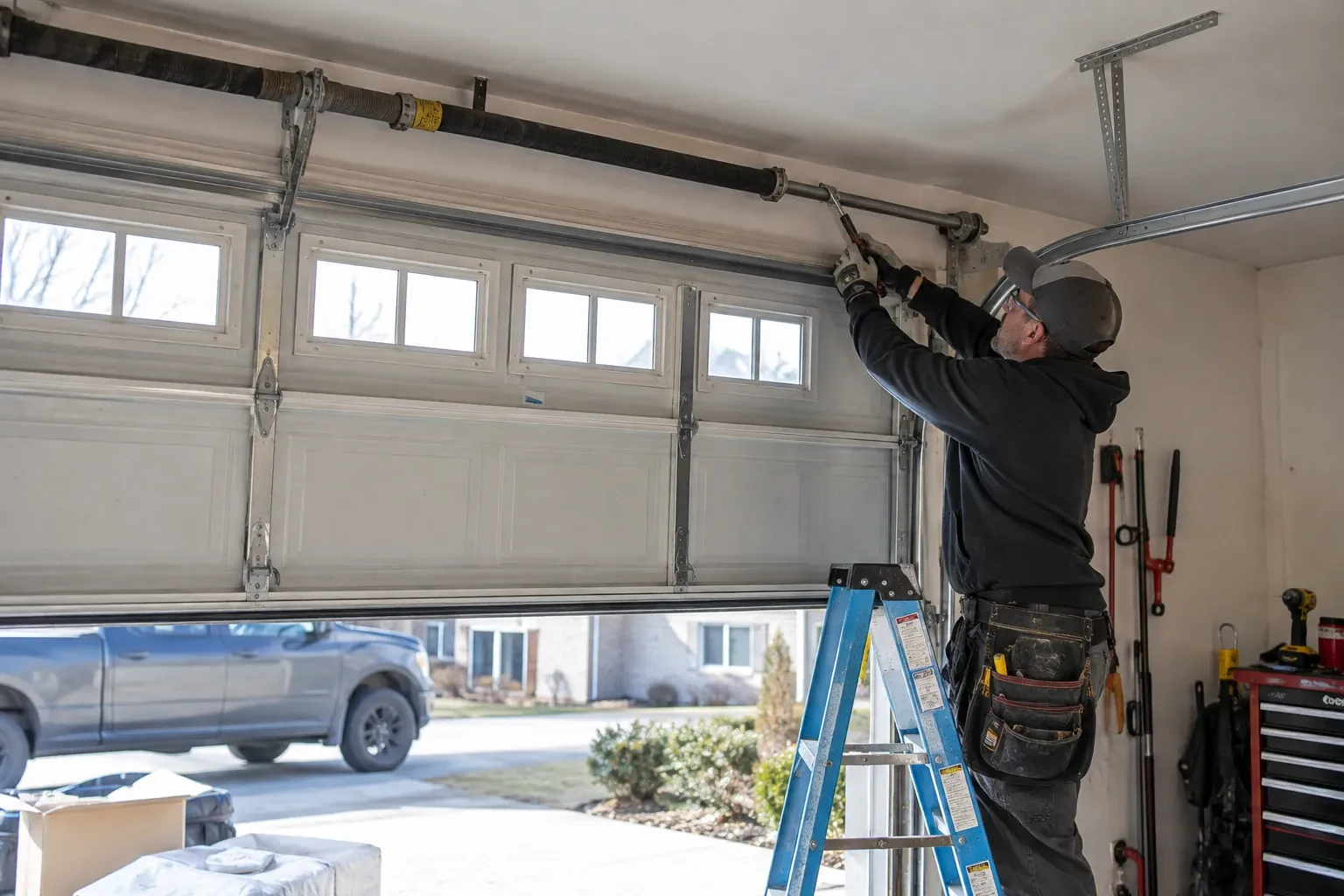
The spring is one part of a chain, so the check follows that chain from the shaft outward. The centre bearing and the end bearings are turned by hand to feel for roughness or wobble. Cable drums are inspected for cracked flanges and worn grooves, and lift cables are examined along their length and at the bottom brackets, where fraying and rust usually start. Bottom brackets and their fasteners are looked at for corrosion, and the shaft is checked for straightness. Findings here decide whether the visit is a spring swap alone or a spring plus a few tired companions.
Renewing the bearings while the shaft is out
Removing a spring frees the shaft, which is the moment to deal with bearings. The centre bearing, which sits in the bracket between the springs and carries the shaft under constant load, is pressed out and replaced if it grinds or has play. End bearings in the plates at each side are checked the same way. New bearings are seated square, and the shaft is slid back through them and turned by hand to confirm smooth rotation before any spring is wound. Smooth bearings reduce the effort the spring and opener have to overcome, which extends the life of both.
Relief for the opener
Your opener benefits as much as the door. With the spring carrying the weight again, the motor, gear drive, trolley and rail return to the light duty they were designed for, which tends to mean a longer working life and less noise. Force settings have been reset to suit a balanced door, so the safety reversal reacts to a genuine obstruction rather than to a heavy door. Once a year, repeat the simple reversal test by placing a length of wood flat on the floor in the door's path and confirming the door reverses on contact. The opener's photo-eye sensors deserve a wipe at the same time.
Torsion Spring Replacement
In the van
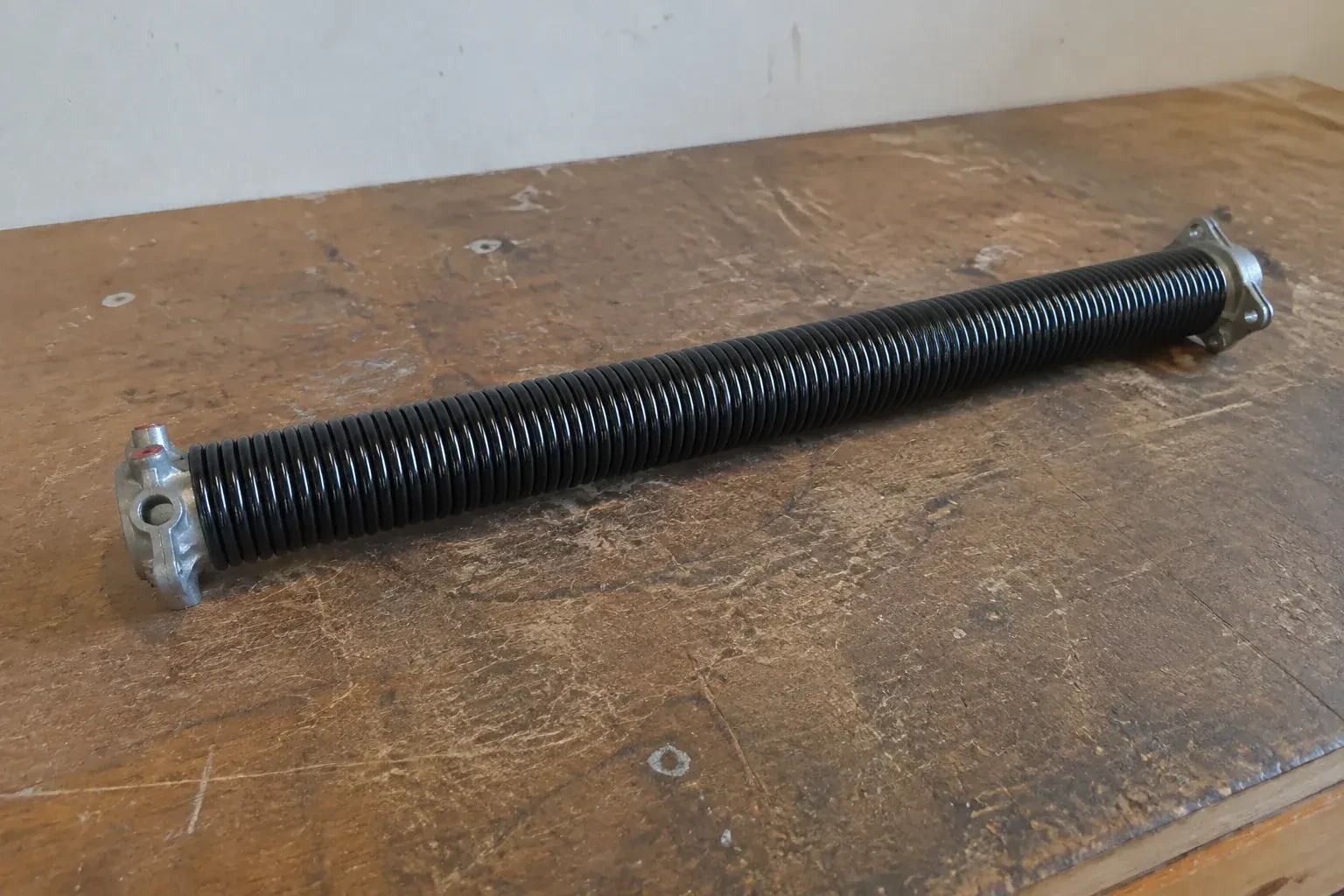
Torsion springs, oil-tempered or galvanized
Centre bearing bracket and bearing
Torsion shaft and coupler
Socket set and wrenches
Lift cables
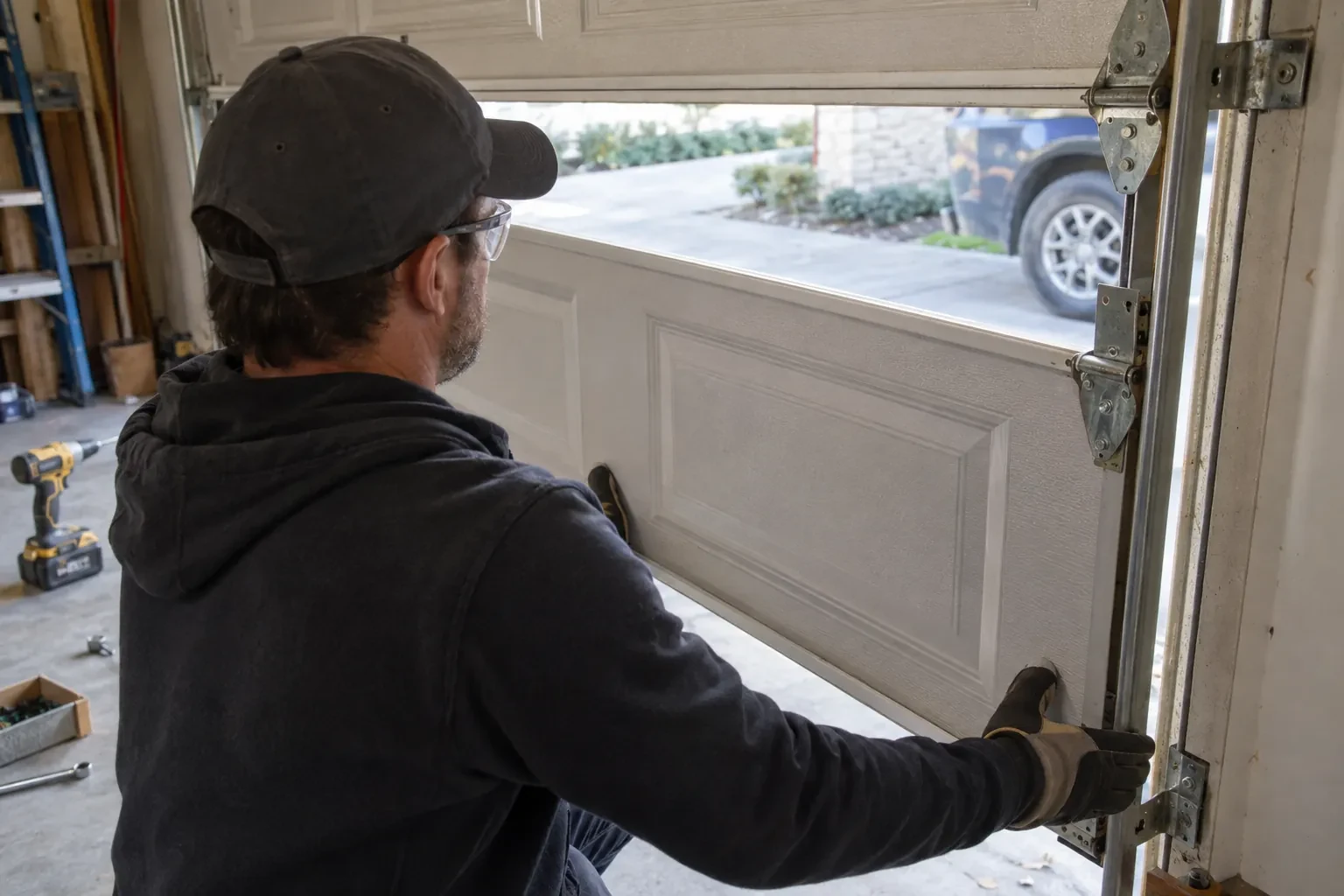
Torsion Spring Replacement
What affects the quote
Centre and end bearings
With the shaft out, bearings that grind, wobble or have seized are renewed. Smooth bearings reduce the load on the spring and opener, and their condition is confirmed by hand during the check.
Anchoring to the header
A centre bracket with pulled lag bolts, a split header or a corroded bracket needs refastening, reinforcing or replacement before the spring can be wound, which is included when found.
Spring finish
Oil-tempered and galvanized springs suit different garages. A coated or galvanized spring for a damp or salt-exposed space is a choice the customer can make when the specification is discussed.
What to have ready
- Can you see a gap in the spring above the door?
- Do you know the door's age or when the springs were last replaced?
- Did you hear a loud bang before the door stopped working?
Torsion Spring Replacement: questions
QuestionsHow often should the springs be lubricated, and with what?
Once or twice a year is a good rhythm, with autumn the most useful time because cold thickens grease. Use a garage-door lubricant, typically a silicone or lithium spray, applied along the coils so it works between them as the door cycles. Hinges, roller bearings and the end bearings benefit from the same treatment. Keep the track itself dry, since lubricant there gathers grit and slows the rollers.
Do I need to be home for the visit?
It helps to have someone present to open the garage, point out anything you noticed and hear how the door should feel afterwards. The technician needs power at the opener outlet, clear space under the shaft for a ladder, and access to both sides of the door. If a vehicle is inside, it stays until the door is working. Being there also lets you approve any extra items, such as bearings or cables, as they come up.
How can I tell if my springs are wearing out before they break?
Watch for a door that feels heavier by hand when the opener is released, an opener that strains or slows, a door that drops the last stretch rather than settling, or one that drifts down when stopped halfway. Visually, look for stretched gaps between coils, rust streaks or pitting on the steel, and any sag in the shaft. A balance check when you notice these lets you plan a replacement rather than react to one.
Related services
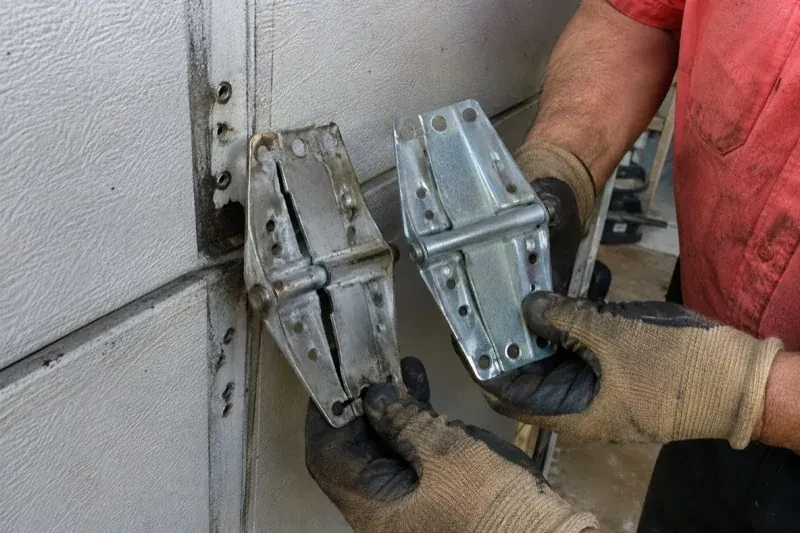
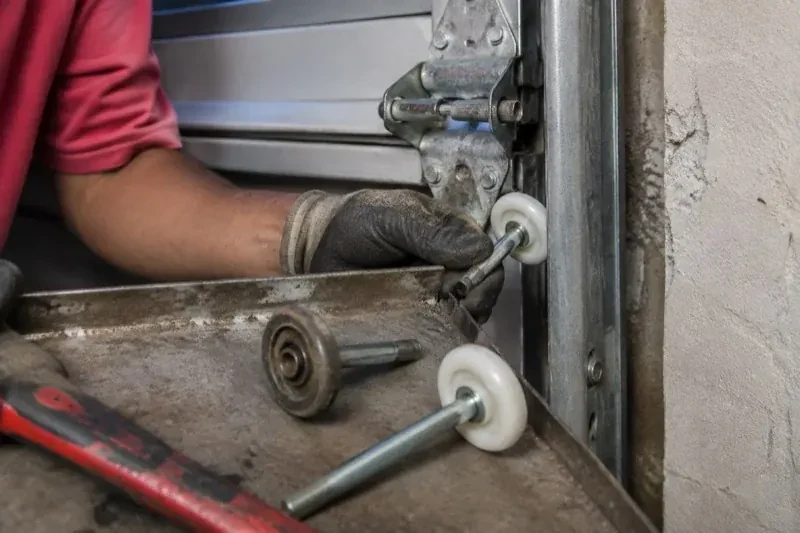
- Garage Door Hinge ReplacementThe roller at the top of the second panel is leaning outward and only half of the wheel is still in the track.
- Garage Door Track Repair or ReplacementBacking out this morning, the mirror caught the track beside the door.
- Garage Door Cable ReplacementAfter years of slushy winters the cables look thinner near the bottom brackets, with rust streaks running down the door where they attach.