Repairs · Aurora
Garage Door Safety Inspection
Your toddler has discovered the wall button.
In plain words
For a home you have just bought, or one you are about to sell, the inspection gives the door a starting point. The report records the door and opener models, the spring type, the condition of every wearing part and the results of the balance and safety tests, all against a date. Anything that needs attention is listed with a suggested order. From then on you have something to compare against: a noise that appears next year means something changed since the record, not a mystery, and a buyer or an insurer asking about the door gets a factual answer instead of a shrug.
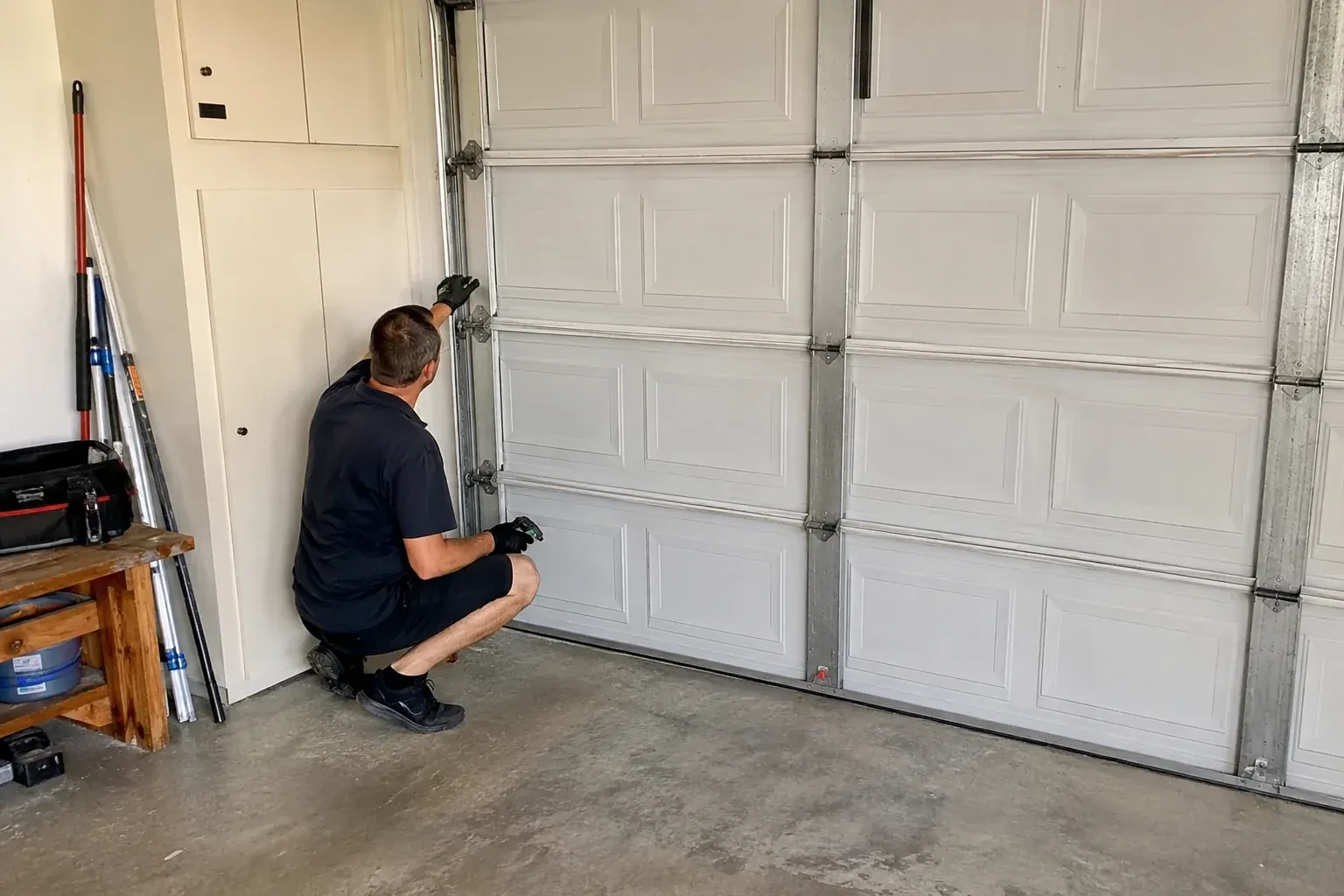
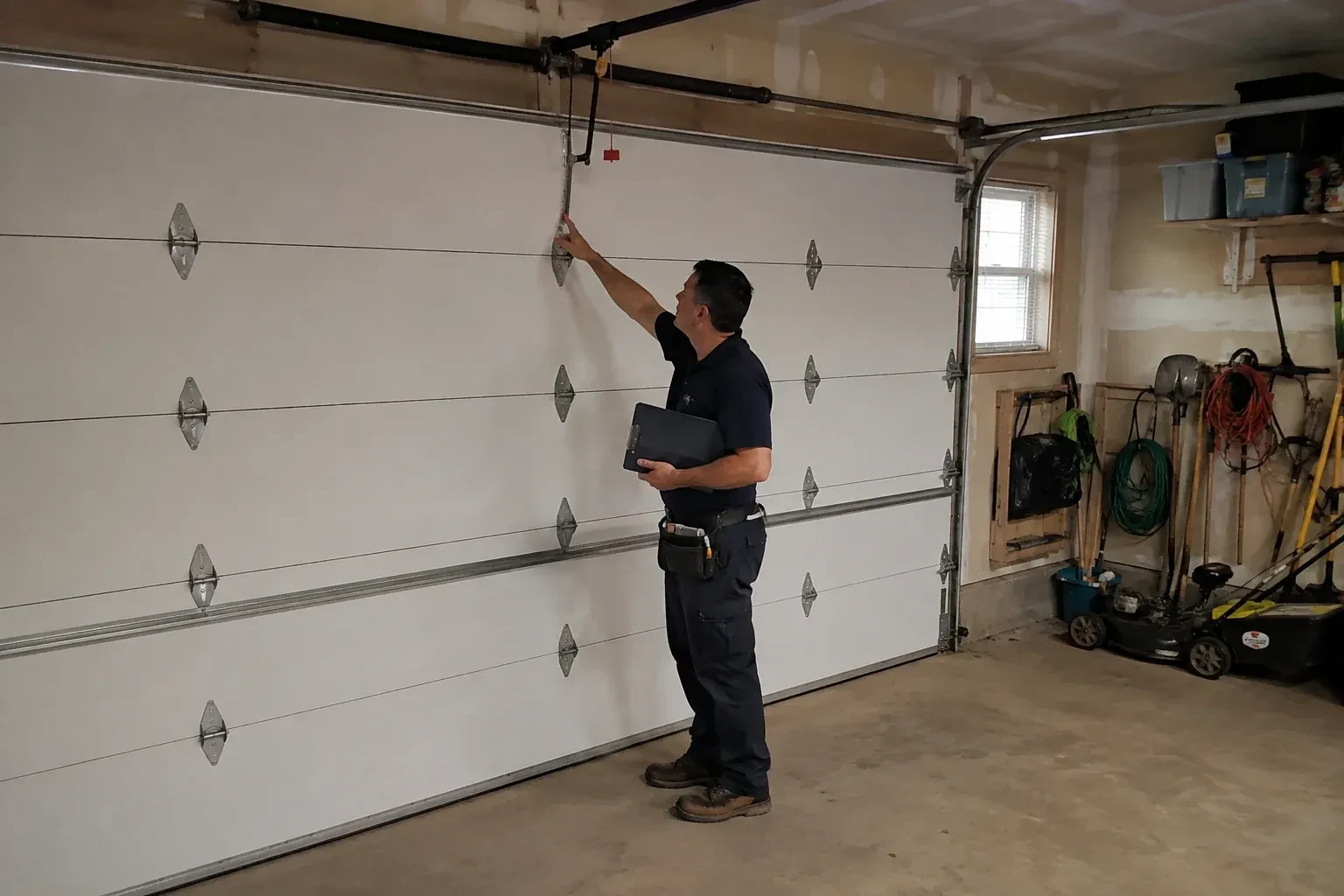
How the visit goesYou moved in three months ago. The door works, but nobody can say how old the springs are, when anyone last looked at it, or whether the little sensors by the floor have ever been tested.
Garage Door Safety Inspection
How the visit goes
Springs, cables and drums, looked at and left alone
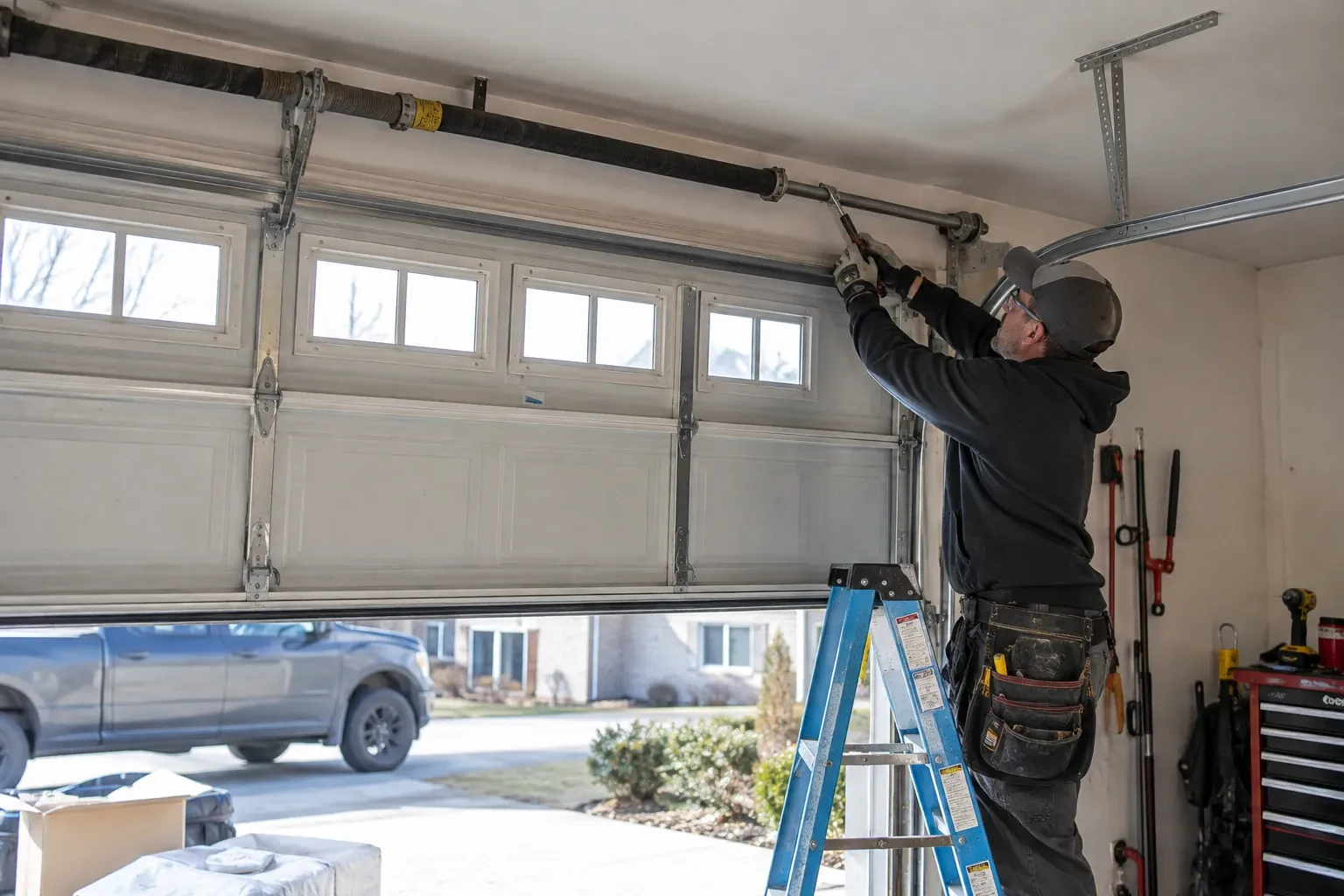
The counterbalance gets a careful look and nothing more during the inspection. On a torsion door the technician checks the spring coil for a gap, rust or a stretched section, confirms the cone set screws and centre bearing look sound, and follows each cable from the drum to the bottom bracket looking for broken wires, a rust bloom near the loop or a slack side. The drum wrap is checked for a single neat layer. On an extension door the springs, pulleys and containment cables are examined the same way. Any adjustment to these parts is a separate, planned job matched to that system, torsion tension controlled with winding bars rather than simply released; the inspection records their condition.
Testing contact reversal with a board
The opener is reconnected and a flat 2x4 offcut is laid on the floor across the centre of the opening. The door is sent down from the wall control. On meeting the board it should stop and reverse to fully open on its own. If it stalls on the board, pushes against it, or only reverses after a long pause, the opener's down-force or travel limit needs attention and the finding goes in the report. Older openers without photo eyes are tested this way too, and their behaviour is recorded against the test the maker specifies. The board is used every time; a hand or foot never stands in for it.
Carrying the door through winter
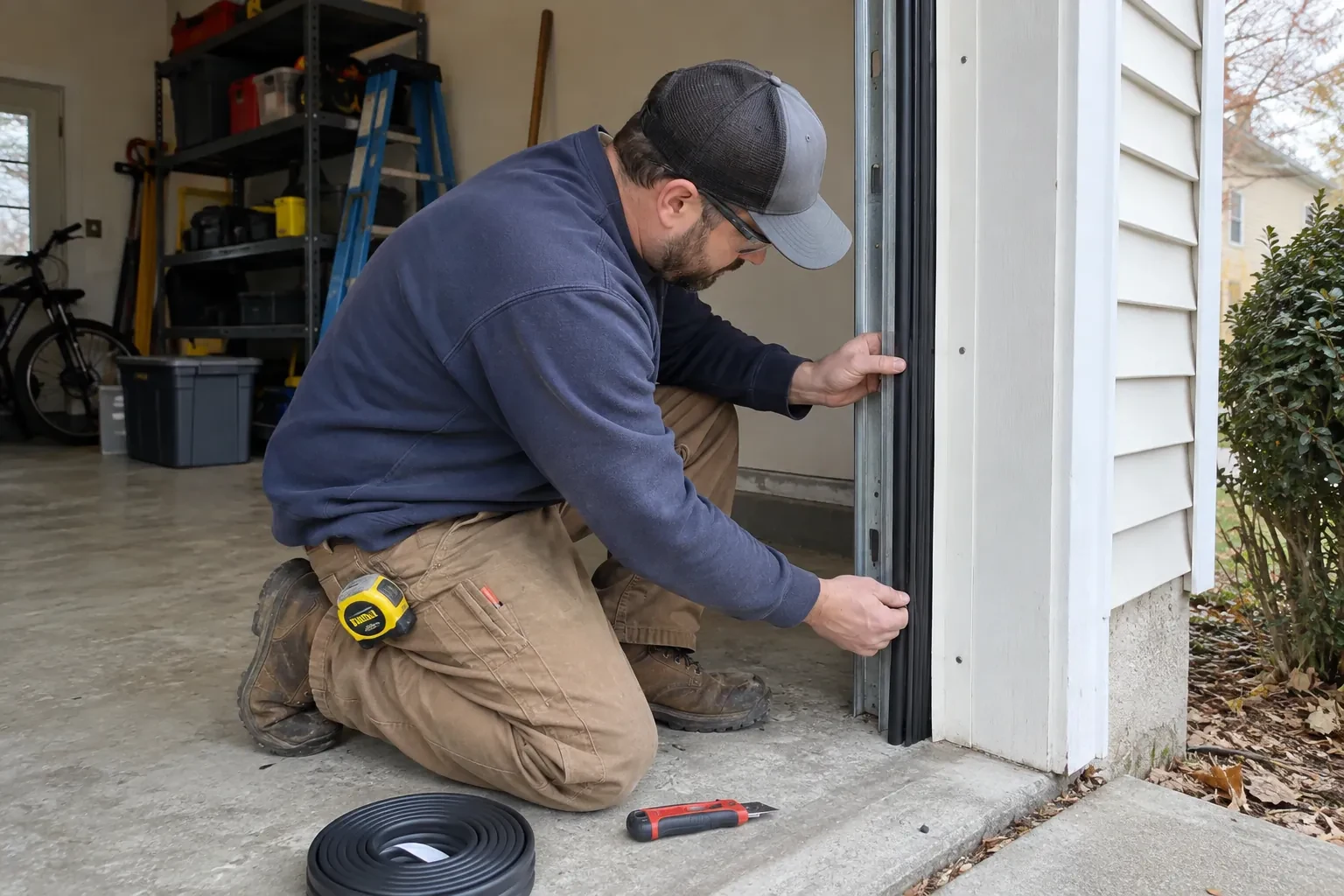
The technician leaves you with the handful of habits that matter in a cold climate. Keep the threshold clear of packed snow so the door closes on the floor and not on a ridge of ice. On a mild day, wipe the salt off the bottom brackets, the lowest hinges and the bottom stretch of each cable, then give them a light mist of lubricant. Wipe the photo-eye lenses when the grime of a slushy week builds up. If the bottom seal freezes to the slab, free it by hand before running the opener rather than asking the motor to tear it loose. These take minutes across a season and spare the cables, the seal and the opener.
Garage Door Safety Inspection
In the van
Replacement hinge and track fasteners
Flat 2x4 test board
Socket set and nut drivers
Work light and inspection mirror
Silicone garage-door lubricant
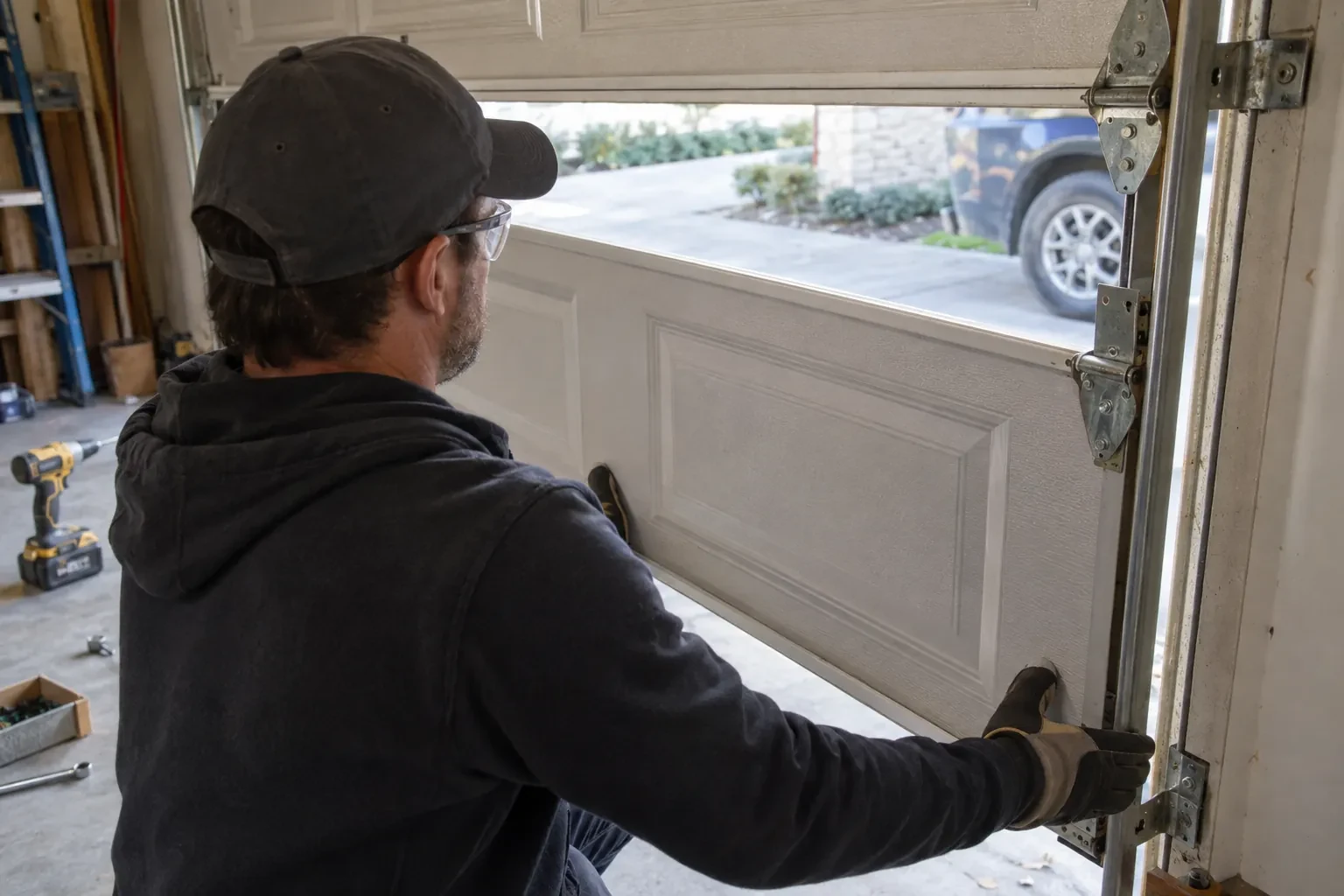
Garage Door Safety Inspection
What affects the quote
Maintenance done during the visit
Lubrication, photo-eye cleaning and alignment, fastener tightening and fresh batteries can be added on the spot. Each is a small line on the quote, chosen by you at the door.
Distance to the property
Travel is part of every visit. A property across town and one at the end of a rural road involve different driving time, and the quote reflects the trip.
Findings that change the scope on the day
If a stop-use item turns up, securing the door and explaining the correction takes extra time on the visit. That, and any work you approve, is quoted separately before it starts.
What to have ready
- When was the door last serviced, and do you have the paperwork?
- What prompted the call, and when did you first notice it?
- Has a vehicle or anything else struck the door or the tracks?
Garage Door Safety Inspection: questions
QuestionsMy opener is old and has no photo eyes. Can it still be inspected?
Yes. Older openers rely on contact reversal alone, so the board test carries more weight and is run carefully against the maker's procedure, along with the manual balance check, the force setting and the release. The report records what the opener has and how it performed. An opener built before photo eyes became standard is flagged for replacement in the report, since makers recommend moving off that generation of opener rather than treating photo eyes as a nice-to-have.
Is the inspection a repair visit?
It is a look and a record first. Small maintenance items such as lubrication, cleaning and aligning the photo eyes and tightening fasteners can be done on the spot if you wish. Anything involving spring tension, cables, drums, worn rollers or damaged sections is written up with a clear explanation and quoted as its own job, so you decide with the full picture in front of you.
How often should a garage door be inspected?
Once a year suits most households, and early spring, after the salt and freeze-thaw season, is a natural time. A door that opens many times a day, an older door, or one on a rental where nobody watches it closely does well with a look each season. Between visits, the monthly balance, reversal and photo-eye checks that industry guidance recommends catch most changes early.
Related services
- Off-Track Garage Door ResetYour car is inside and the door is stuck crooked across the opening.
- Garage Door Panel ReplacementThe top section has developed a bend where the opener arm pulls on it.
- Garage Door Bottom Seal ReplacementThe gap under the door is a finger wide at one end and nothing at the other.