Openers · Aurora
Chain-Drive Opener Repair
Halfway up, the door lurches.
In plain words
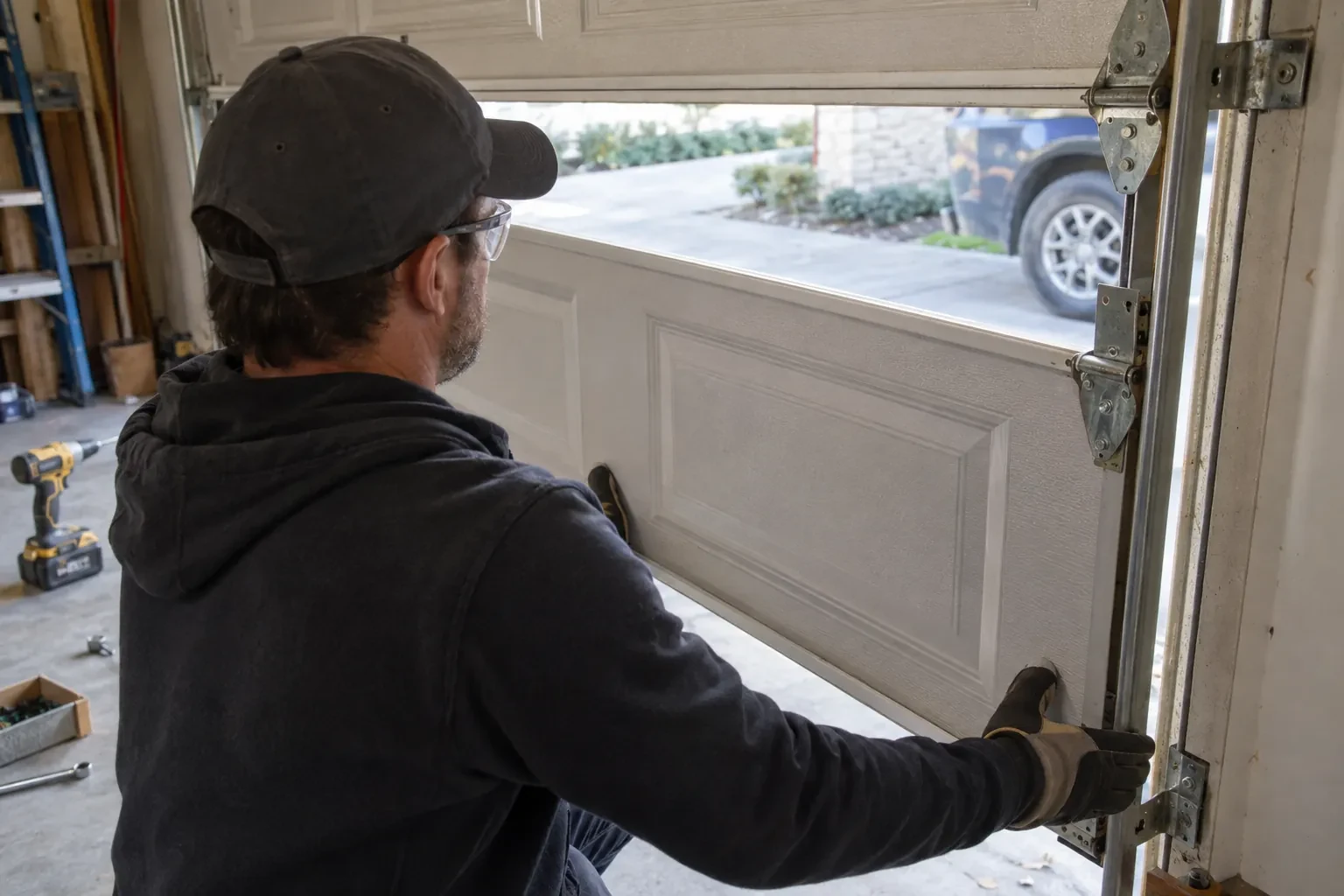
Chain tension is set by measurement, not by feel. With the door closed and disconnected from the trolley, a correctly tensioned chain sits at the height the opener's own manual specifies for its rail shape, measured at the middle of the rail, since the figure differs between makes and rail types. Two nuts on the trolley do the work: the outer one raises or lowers the chain and the inner one locks the setting. A chain that hangs lower slaps and skips; one pulled tighter than that wears the sprocket and loads the motor bearings. The technician checks the manual, sets the chain, locks it and runs the safety tests.
How the visit goesThe chain hangs in a loop under the rail and slaps against it on every cycle. It used to sit snug. Now the whole house hears the door leave, and the sound has a metallic clatter it never had before.
Chain-Drive Opener Repair
How the visit goes
Sprocket at the head, idler at the door
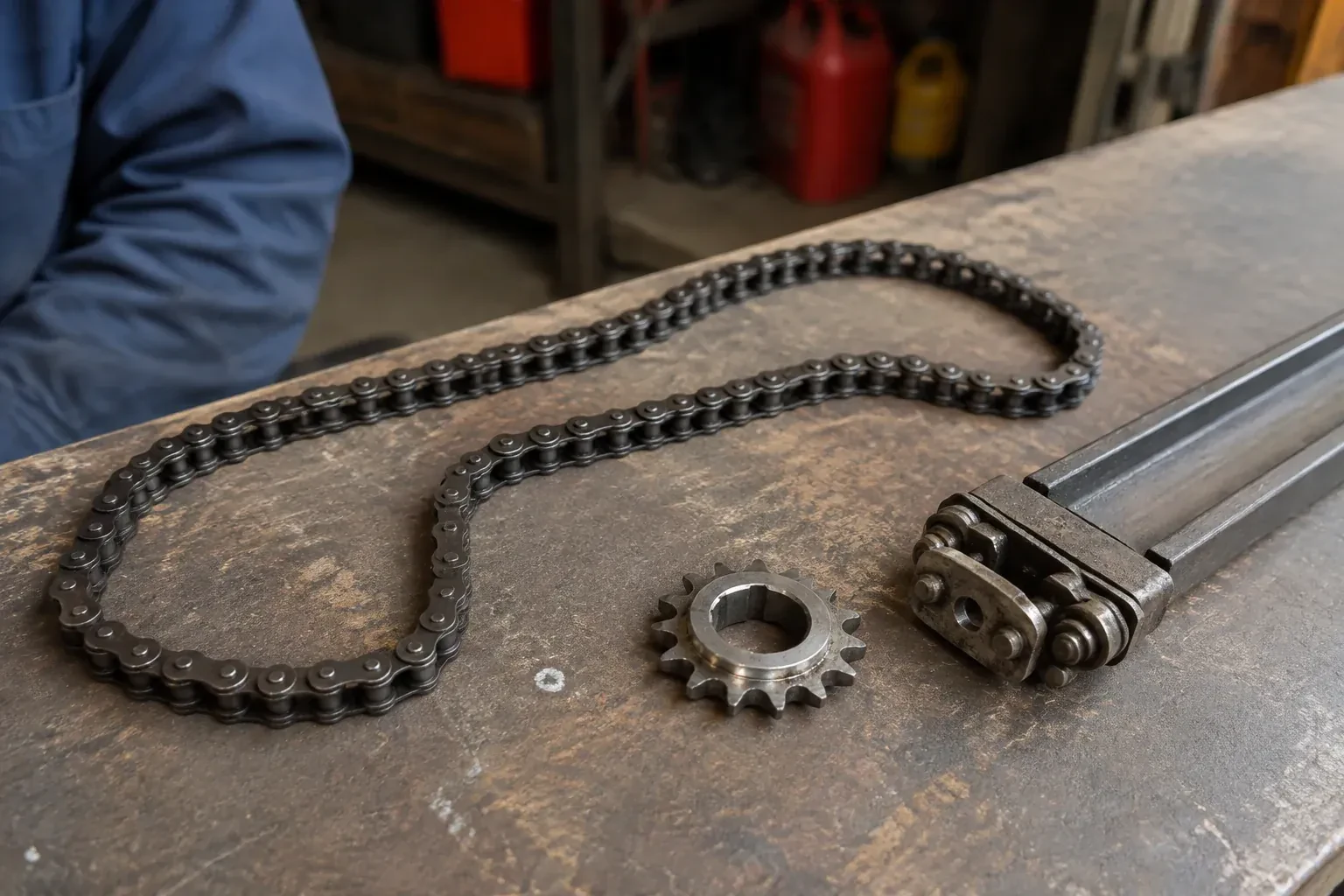
The chain runs over two wheels: the drive sprocket on top of the motor head and an idler sprocket or pulley at the far end of the rail near the door. Both are inspected. Sprocket teeth that have worn into hooks let the chain ride up and skip under load, usually at the same spot every cycle, and a sprocket that has loosened on its shaft turns a fraction behind the motor. The idler is checked for a seized bearing or a groove worn off centre, which drags the chain to one side of the rail. Matching wear on chain and sprocket usually means both are renewed together so a new chain is not run over old teeth.
Freeing the trolley and renewing the carriage
A trolley lodged against the stop bolt is released rather than forced. The door is disconnected at the red handle, the outer tensioner nut is backed off several turns to slacken the chain, and the operator is run so the trolley travels away from the stop under its own drive. The limit is then pulled back so the trolley stops short of the bolt in future. Where the inner or outer trolley shows wear, a cracked latch or a bent release lever, the worn piece is replaced with the model's part and the release is checked to pick the door arm up on the first pass. The chain is re-tensioned to specification afterwards.
Balance is what protects the new gear
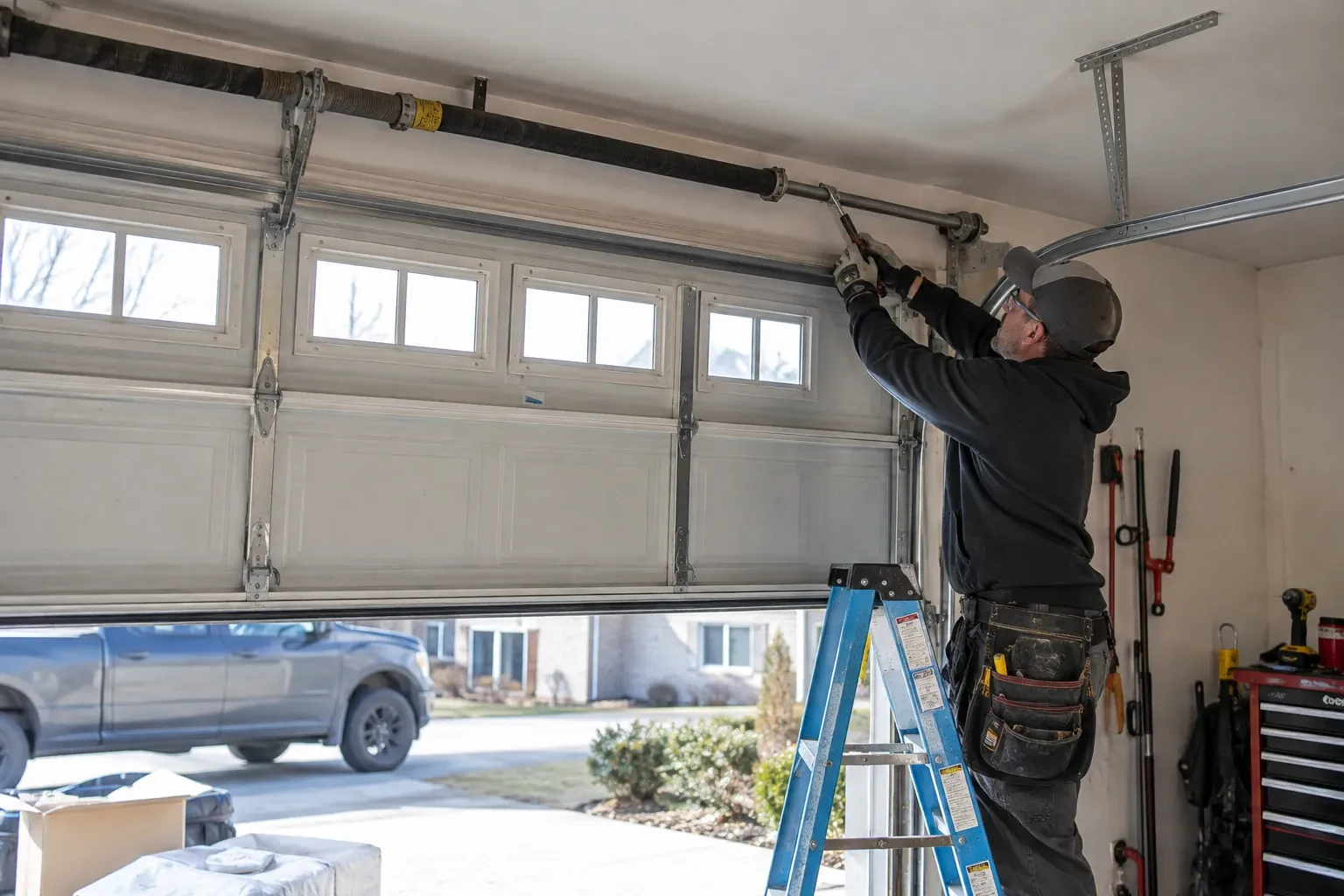
The drive gear that was replaced can wear out when it is asked to lift more than the chain should carry, though binding or wear elsewhere in the drive can share the blame. Keeping the load honest starts with the door's balance. Each season, with the door closed, pull the red release, lift the door by hand to about a metre and let go; it should stay put. If it sinks or creeps upward, the springs have drifted and a spring adjustment is due before the operator starts working harder to compensate. Reconnect by running the operator until the trolley picks up the arm. This one check does more for the gearbox than anything else you can do.
Chain-Drive Opener Repair
In the van
Cold-rated garage door lubricant
Sprocket and shaft assembly
Chain tensioner nuts and shaft
Rail hangers and header bracket
RPM sensor
Chain-Drive Opener Repair
What affects the quote
When the visit happens
An evening, weekend or holiday call costs the same amount as one on a weekday for a chain-drive repair. The exact figure is confirmed once the technician has looked at the chain, the rail and the gear kit in person.
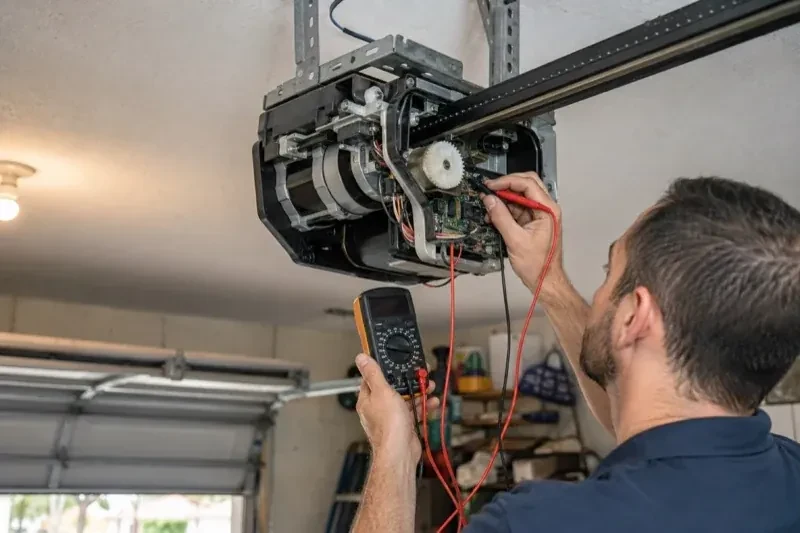
Electrical parts inside the head
A swollen capacitor, a failed RPM sensor or a damaged board found during the inspection are quoted separately from the mechanical drive, since each is a distinct component for that model.
Rail hardware and hangers
Loose hangers, a header bracket that has pulled from the framing, or splice plates that need renewing add fasteners, angle iron and time on the ladder to a job that might otherwise be an adjustment.
What to have ready
- Have you noticed pale plastic shavings on or under the motor housing?
- Is the trolley stuck at the very end of the rail, near the motor or near the door?
- Has anyone adjusted the limit or force screws, or run the opener with the chain off?
Chain-Drive Opener Repair: questions
QuestionsShould I use the slide lock on the door with a chain drive?
No. The manual slide lock on the door is disabled or removed once an operator is connected, and the technician checks that during the repair. A motor pulling against a locked door strains the chain, strips the drive gear and can bend the top section of the door. If you want the door secured against remotes, the lock button on the wall control switches them off, and a track lock designed to work with an operator does the rest.
What does it mean when the drive is out of phase?
The motor keeps track of the door's position by counting its own turns, and the trolley is meant to be at the closed end of the rail when the motor is at its closed position. If the operator has been run with the chain off the sprocket, or a chain was refitted at random, the two no longer agree and the door travels partway however the limits are set. Re-phasing means finding the motor's closed position and refitting the chain with the trolley closed.
Should I oil the chain?
Follow the opener's manual, and lean toward less. Many makers ask for the chain to be left dry or given only a very light treatment, because a heavily oiled chain collects grit that grinds the sprocket and drips onto the car. The grease that matters is white lithium on the rail where the trolley runs, renewed every two or three years, and on the gears inside the head, which the technician packs during a repair. Penetrating sprays are kept away from the whole drive.
Related services
- Belt-Drive Opener RepairPress the remote and the motor runs its full cycle, lights on, the usual whir, but the door does not move a centimetre.
- Garage Door Opener ReplacementThe remotes only work from the end of the driveway now, and one of them disappeared with a set of keys last month.
- Photo-Eye Sensor Alignment or ReplacementSomeone backed the car in a little too far, a bin or a bicycle brushed the track, and since then the door starts to close and comes back up.