Repairs · Aurora
Garage Door Tune-Up
Every morning the door announces itself to the whole street: a long metallic squeal as it climbs, a rattle at the top, and a groan on the way back down.
In plain words
What you receive from a tune-up is a door that runs better and a written picture of its condition. The technician records what was tightened, lubricated and adjusted, how the balance and reversal tests came out, and which parts are still healthy, which are worth watching and which have reached the point of a separate repair quote. That record turns the next visit into a comparison instead of a fresh start, and it lets you describe a new sound precisely when it appears. Maintenance and repair stay two different decisions, and you make the second one with the facts in front of you.
How the visit goesTwice this week the door started closing, stopped a metre from the floor and reopened on its own. One of the little sensor lights near the floor blinks instead of glowing steady, and the wall button has to be held to close it.
Garage Door Tune-Up
How the visit goes
The opener's connections and safety devices
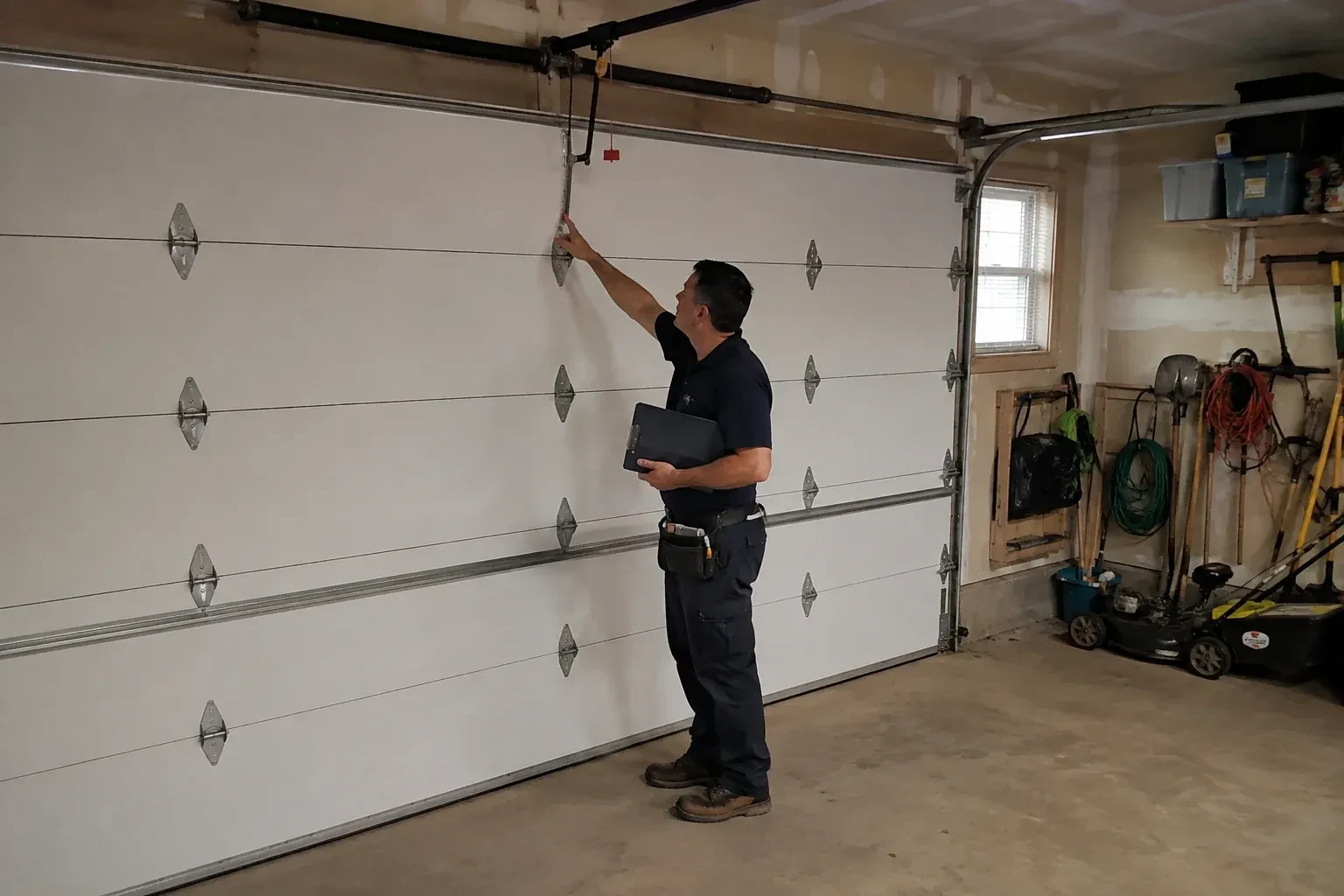
The opener is inspected as part of the door system, not as a separate appliance. The technician checks that the rail is firmly attached at the header and the ceiling hangers, that the chain or belt has the right sag, that the trolley and door arm are not worn or bent, and that the arm sits at the angle the manufacturer intends when the door is closed. Photo-eyes are located and their height measured, since the beam belongs no higher than about 15 centimetres off the floor. Indicator lights are read: steady means aligned, blinking means the pair are not seeing each other. The wall control and the red manual release are confirmed present and reachable.
Cleaning and aligning the photo-eyes
Photo-eyes work only when each sensor can see the other. The lenses are wiped clean of dust, cobwebs and salt film, the brackets are checked for the bends that a bin or a bicycle tire leaves behind, and the pair are aligned until both indicator lights hold steady. Height is confirmed at no more than about 15 centimetres off the floor, and the wiring is traced back to the opener head for a chafed or loose connection. Where low sun fools a sensor at a certain hour, a small shade or swapping the two units settles it. Once aligned, the beam is tested with the door closing to confirm it reverses and returns fully open.
Knowing what to listen for next
Part of the handover is a short lesson in the door's language, so the next change registers. A squeak returning means the hinge pins want lubricant. A new rattle at the top of travel means a screw is loosening and is worth a look. A door that starts to sink when lifted by hand is springs losing tension. A loud bang from the garage with the door then feeling very heavy is a broken spring, and the door stays closed until it is replaced. A door that reverses on its own with no obstruction is a sensor or force issue. With these signs in mind you can describe a problem precisely and decide whether it needs a call.
Garage Door Tune-Up
In the van
Replacement steel or nylon rollers
Lag screws for brackets and header
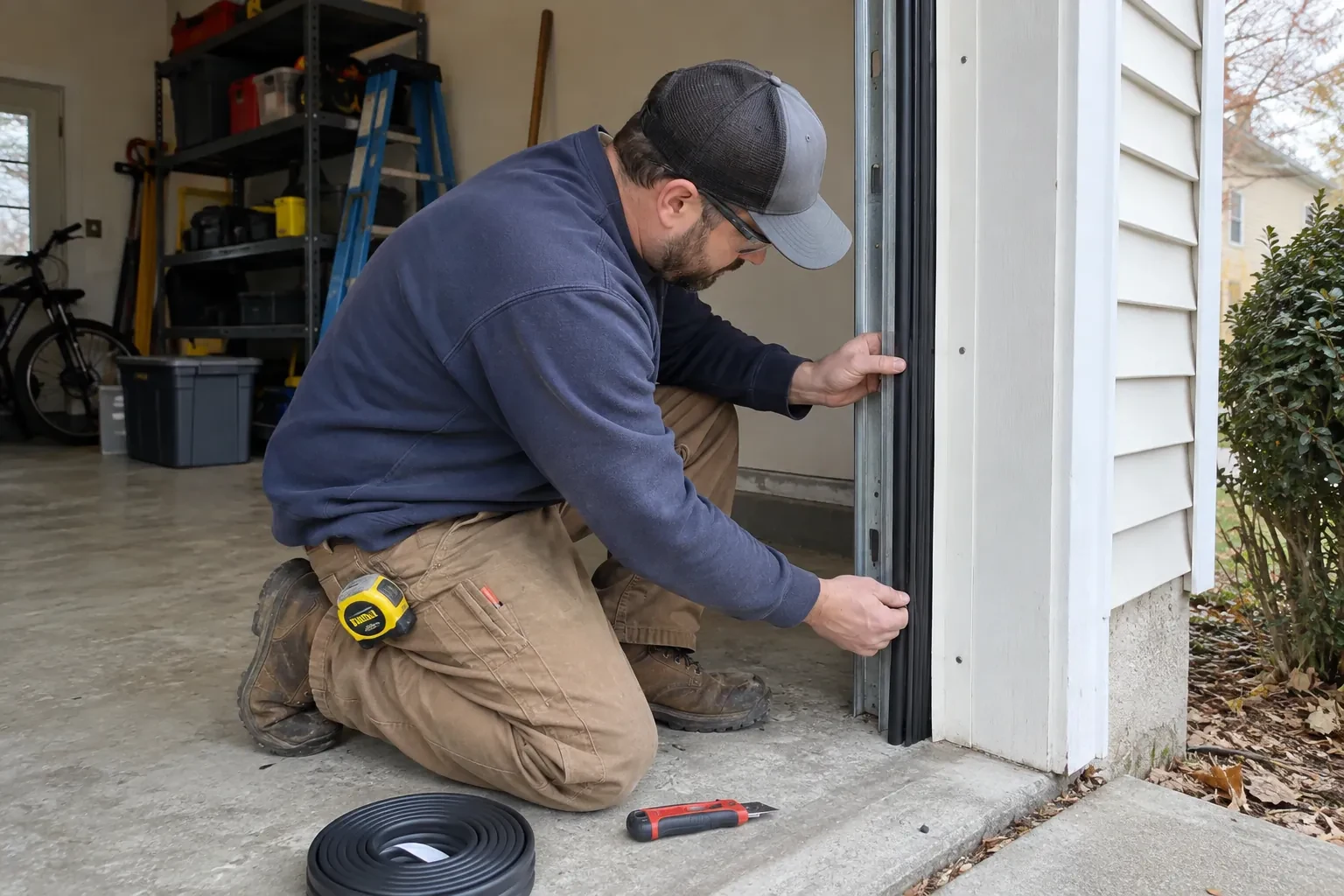
Jamb and header weatherstrip
Socket set and drivers
Replacement hinges
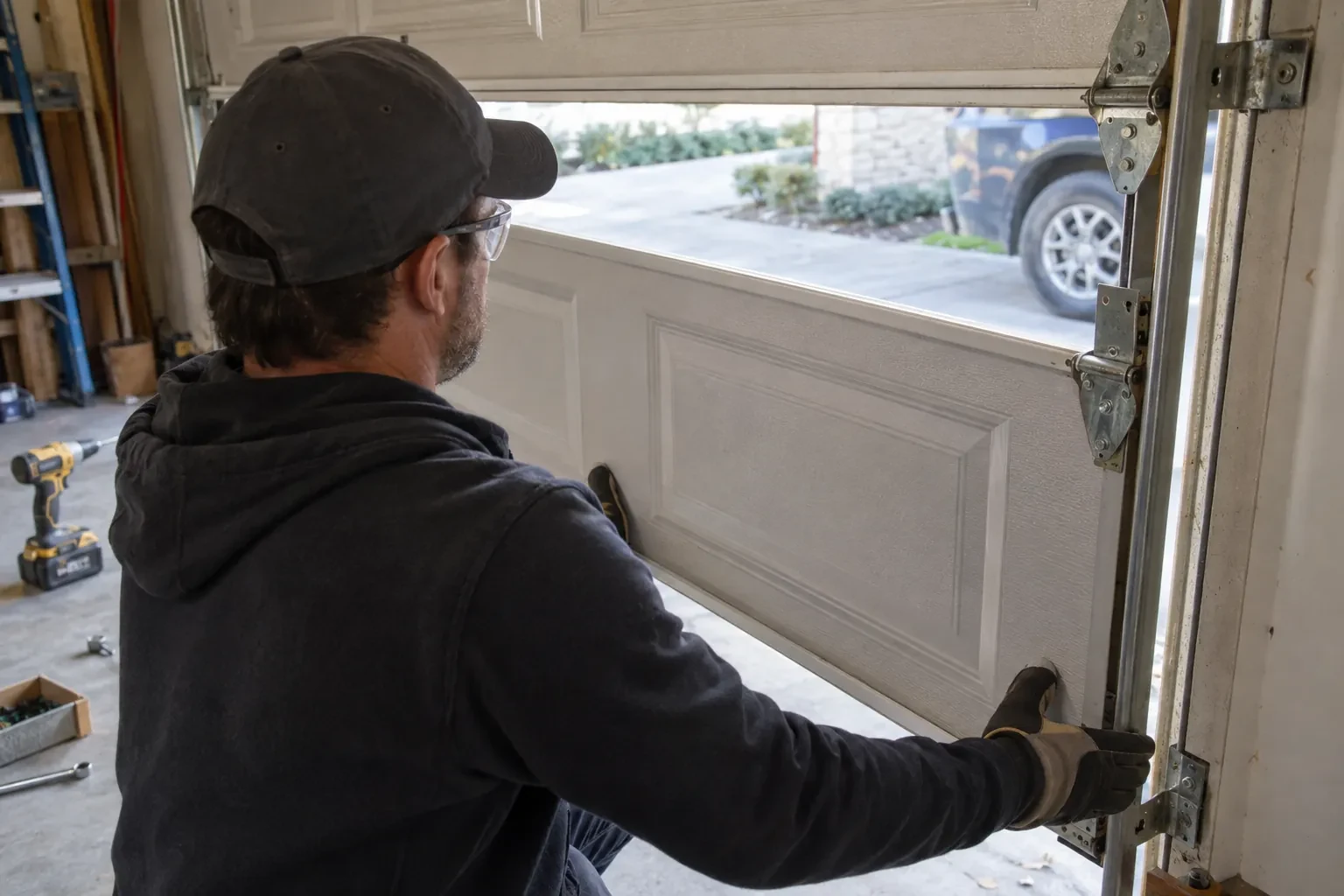
Garage Door Tune-Up
What affects the quote
Season and weather
A winter visit can include freeing a seal frozen to the slab and working with thickened lubricant before the tune-up proper can begin, which adds time to the visit.
Condition of rollers and hinges
Worn rollers or a cracked hinge found during inspection can be replaced on the spot if you choose, and each replaced part is listed as its own line on the quote.
Torsion or extension springs
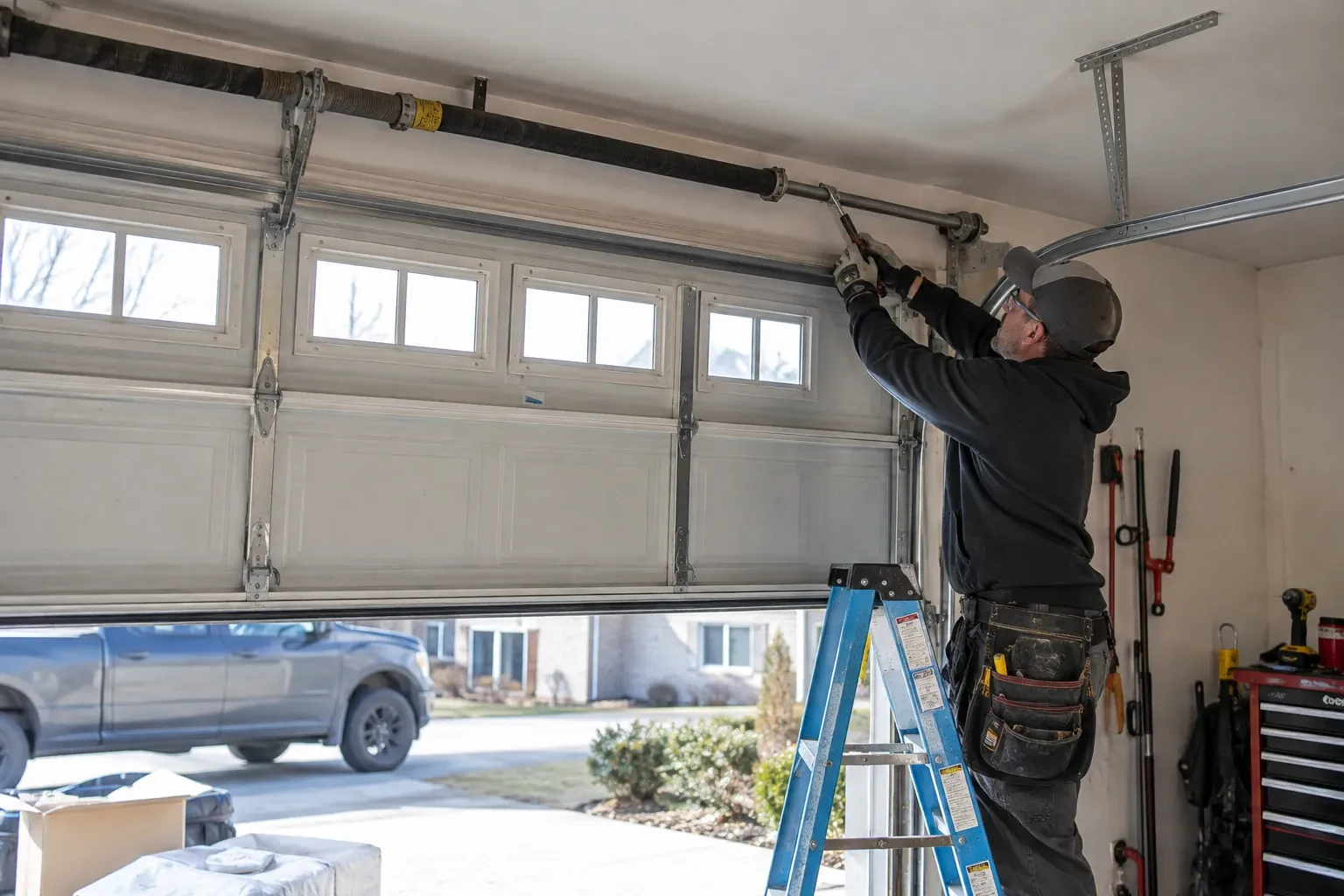
Torsion springs above the header and extension springs beside the tracks are inspected differently, and extension systems have pulleys and safety cables that add items to the checklist.
What to have ready
- Do both sensor lights near the floor glow steady, or does one blink?
- What have you noticed: noise, shaking, hesitation, slamming, or reversing on its own?
- Are the springs mounted above the door or along the sides beside the tracks?
Garage Door Tune-Up: questions
QuestionsWhat happens if a broken spring is found during the tune-up?
The door is left closed and not operated with the opener, because a door with a broken spring weighs its full weight and can drop. The technician explains what was found, shows you the break, and quotes the spring replacement as its own job, usually replacing both springs on a two-spring door so they wear evenly. The rest of the tune-up either waits or continues on the parts that can safely be serviced with the door down.
What does a garage door tune-up actually include?
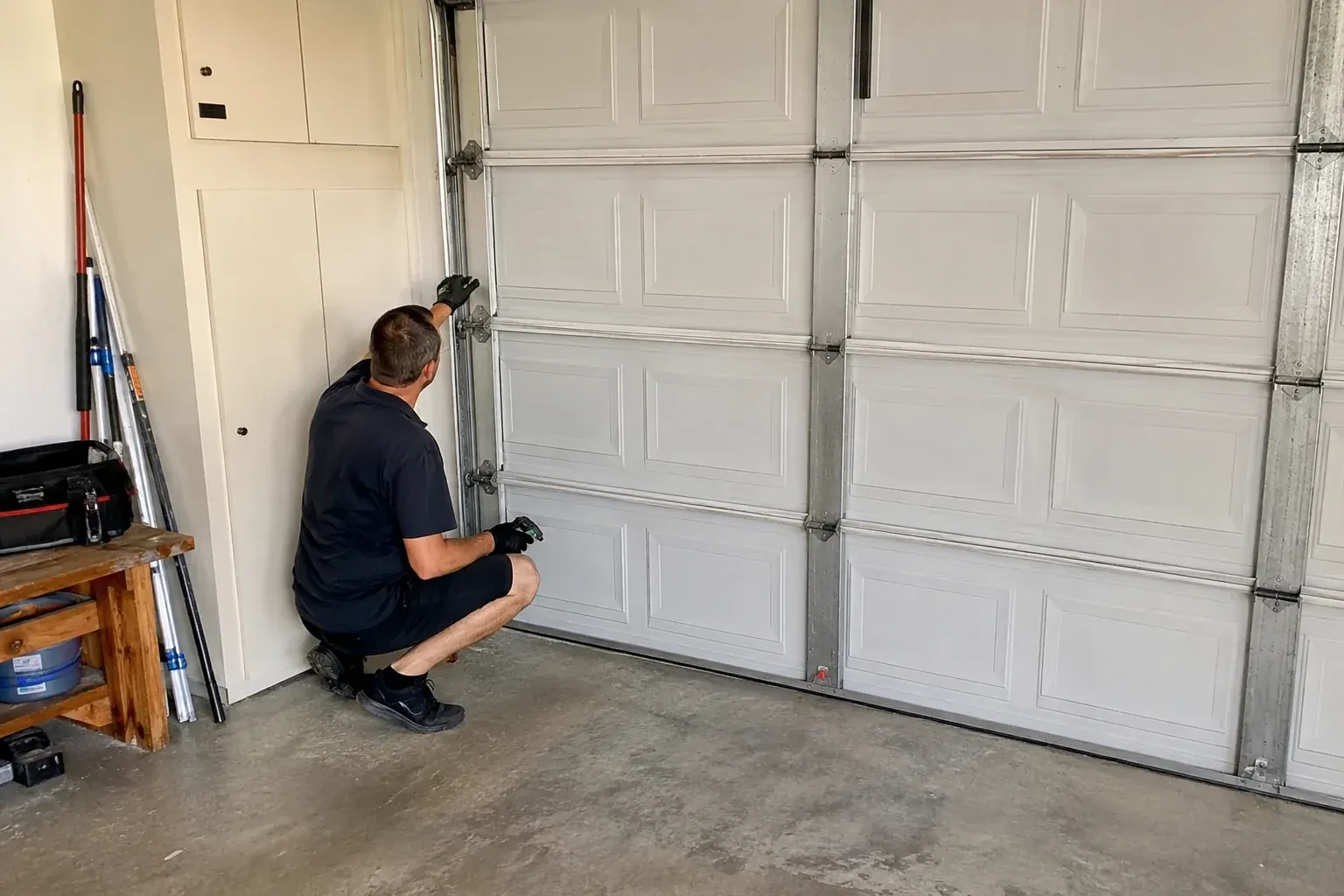
A full cycle observed before any work, a hands-on inspection of hinges, rollers, tracks, springs, cables, drums, brackets and the opener's attachments, tightening of the accessible fasteners, lubrication of the moving points with a garage door lubricant, a balance check with the door disconnected from the opener, adjustment of the opener's travel and force, cleaning and alignment of the photo-eyes, both reversal tests, a look at the seals, and a written record of the findings.
The sensor light is blinking. What does that mean?
On most openers a steady light on each photo-eye means the pair are aligned and seeing each other, and a blinking light means the beam is interrupted or the sensors are out of line. Common causes are a bracket nudged by a bin or a tire, dust or salt film on a lens, low sun at a certain hour, or a chafed wire. During a tune-up the lenses are cleaned, the brackets straightened, the pair realigned and the wiring checked back to the opener.
Related services
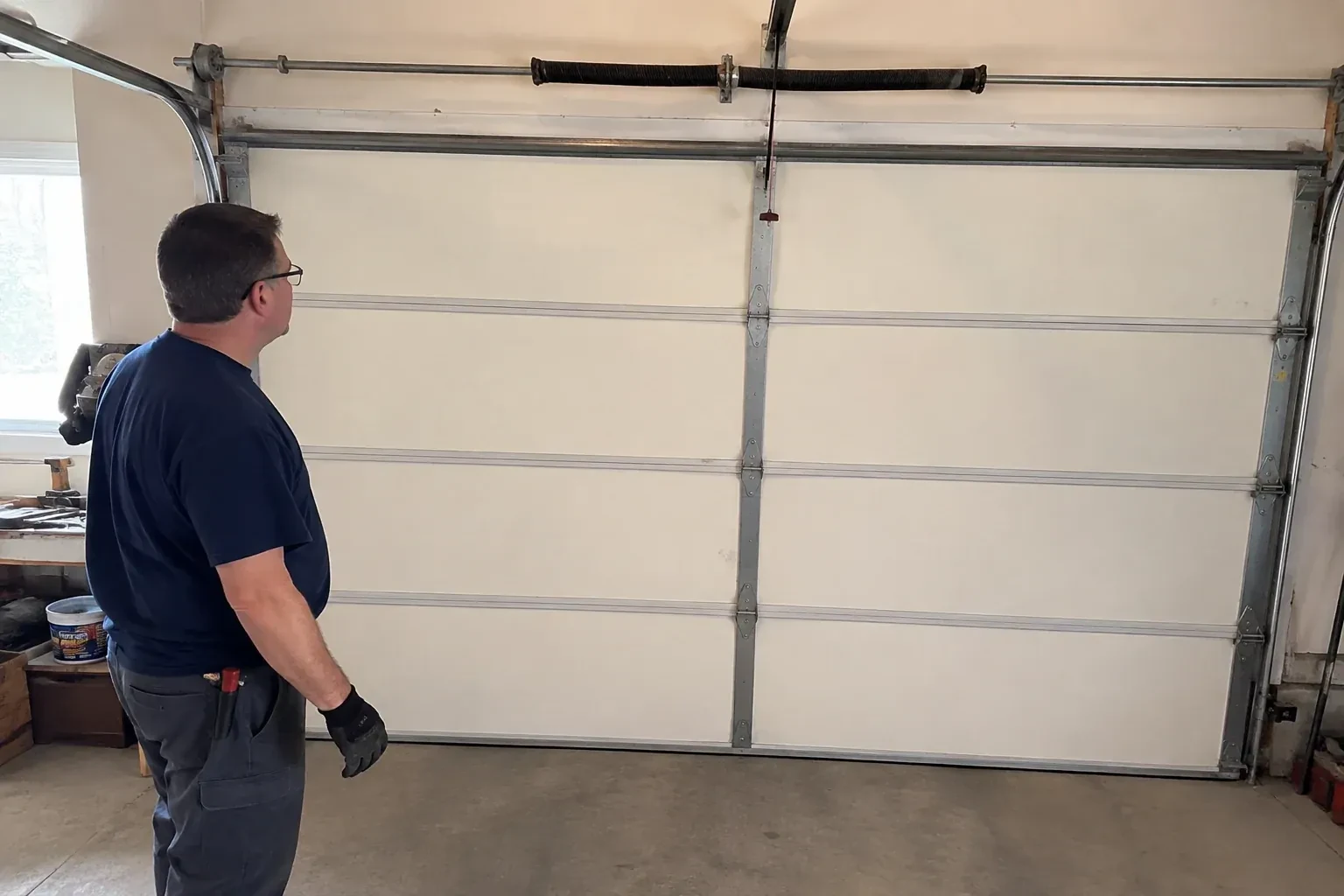
- Off-Track Garage Door ResetYour car is inside and the door is stuck crooked across the opening.
- Garage Door Panel ReplacementThe top section has developed a bend where the opener arm pulls on it.
- Garage Door Bottom Seal ReplacementThe gap under the door is a finger wide at one end and nothing at the other.