Springs · Aurora
Garage Door Hinge Replacement
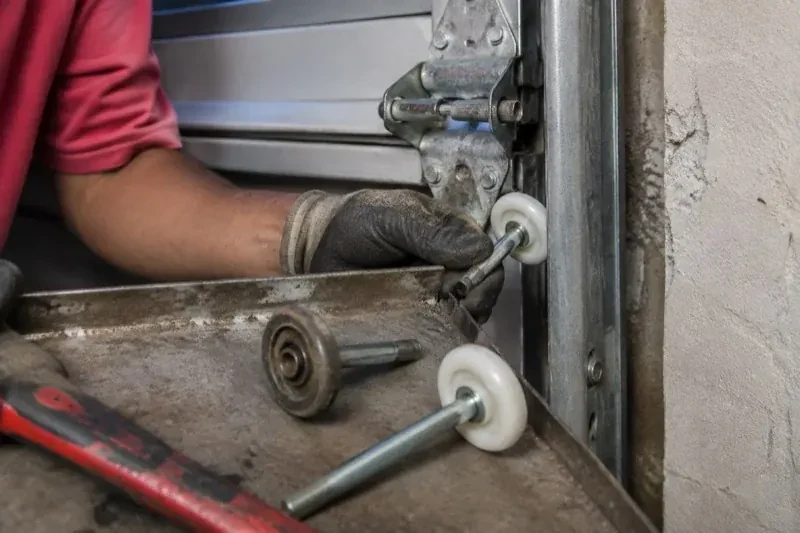
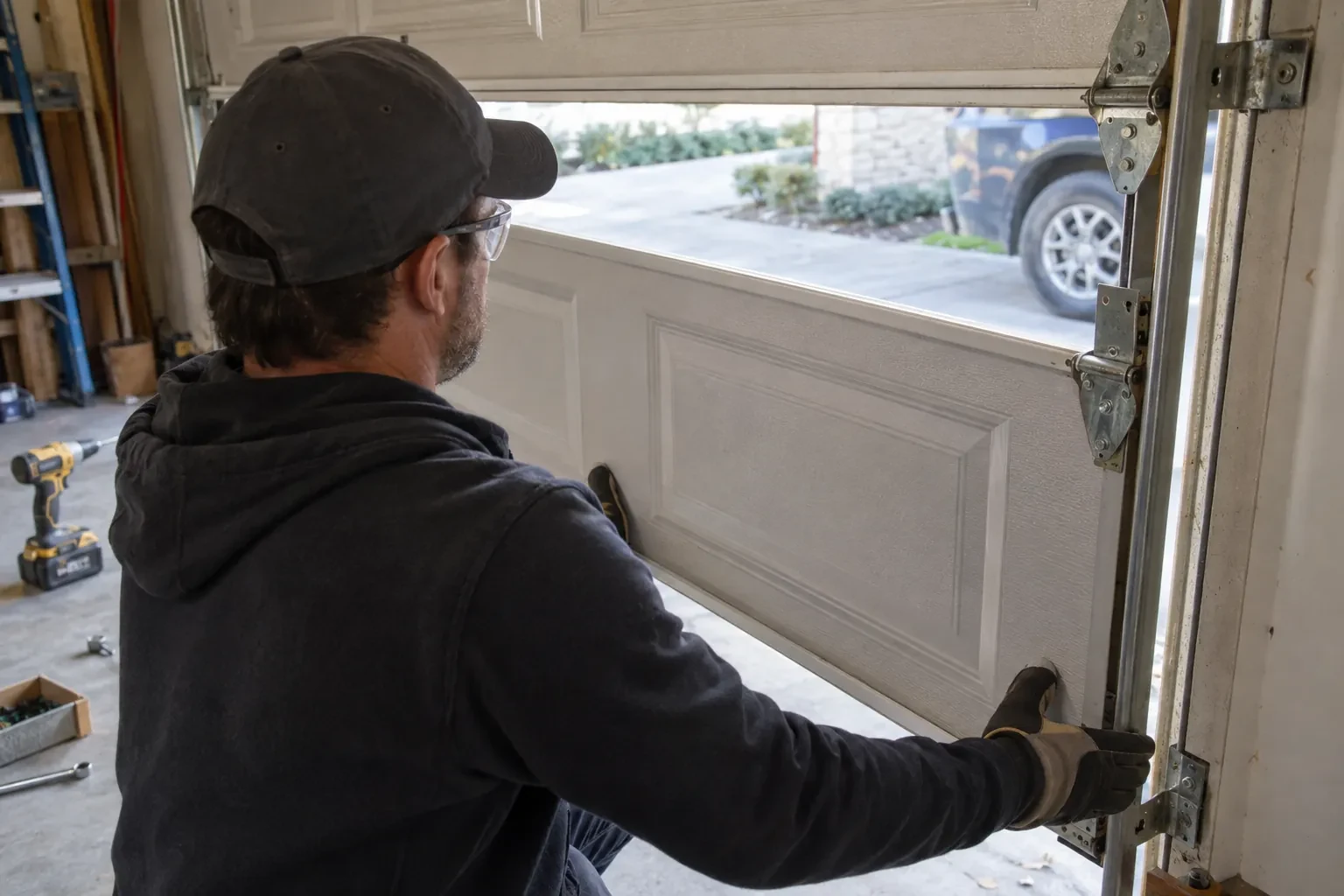
The roller at the top of the second panel is leaning outward and only half of the wheel is still in the track.
In plain words
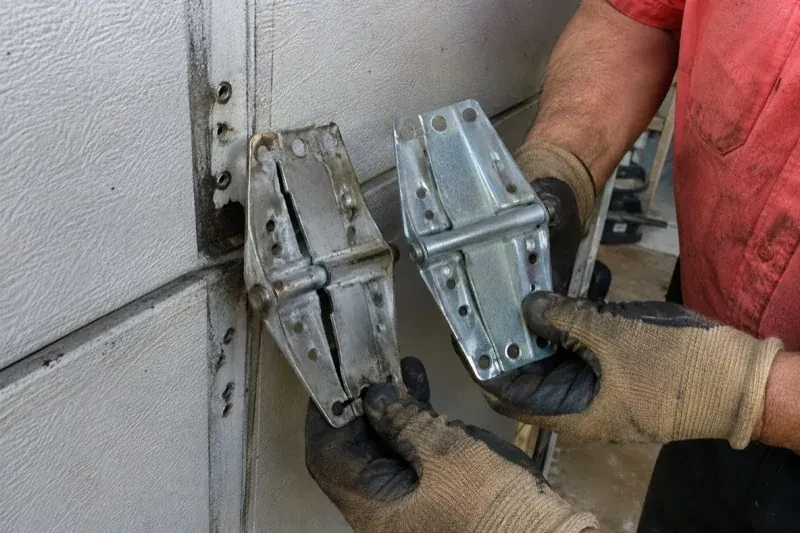
A hinge rarely fails on its own. A door that has drifted out of balance makes the opener drag it, and every hinge takes that strain on each trip. A roller whose bearing has seized twists the hinge that holds it. A track that has crept out of line makes the panels bind at the curve, and the hinge at that joint flexes until it cracks. Hinge replacement therefore begins with the whole door: rollers, track, balance and the panel edges around each hinge. The cause is corrected alongside the new hinge so the fresh part is not asked to absorb the same stress that finished the old one.
How the visit goesWatching from inside as the door opens, you can see the gap between the second and third panels open up on one side as they turn the corner into the ceiling, then close again. The other side stays tight.
Garage Door Hinge Replacement
How the visit goes
Why the hinge gave up
The technician wants the reason as much as the symptom. A door that is out of balance is dragged by the opener, and each hinge takes a share of that force many times a day. A vertical track that has shifted pinches the panels at the curve, and the hinge at that height flexes until it cracks. A bumper touch bends an edge hinge in a way that shows up as rubbing panel edges. Vibration alone works screws loose over the years. You will be asked what the door was doing before the hinge failed, because a stiff, jerky or noisy door before the break points to the cause.
Fresh anchoring for tired holes
Where screws spin or a hole has torn, the fix is a better anchor. The technician chooses from three approaches. First, shift the hinge slightly to sound metal within the stile, where the hole pattern allows it. Second, step up to a larger self-drilling screw that bites fresh threads in the existing hole. Third, drill through the panel and fit a bolt with a nut and washer, or a backer plate across the inside of the stile, so the load spreads across fresh material rather than a torn edge. On a wood door, a split stile is filled or reinforced before the hinge goes back on.
Keeping salt off the low hinges
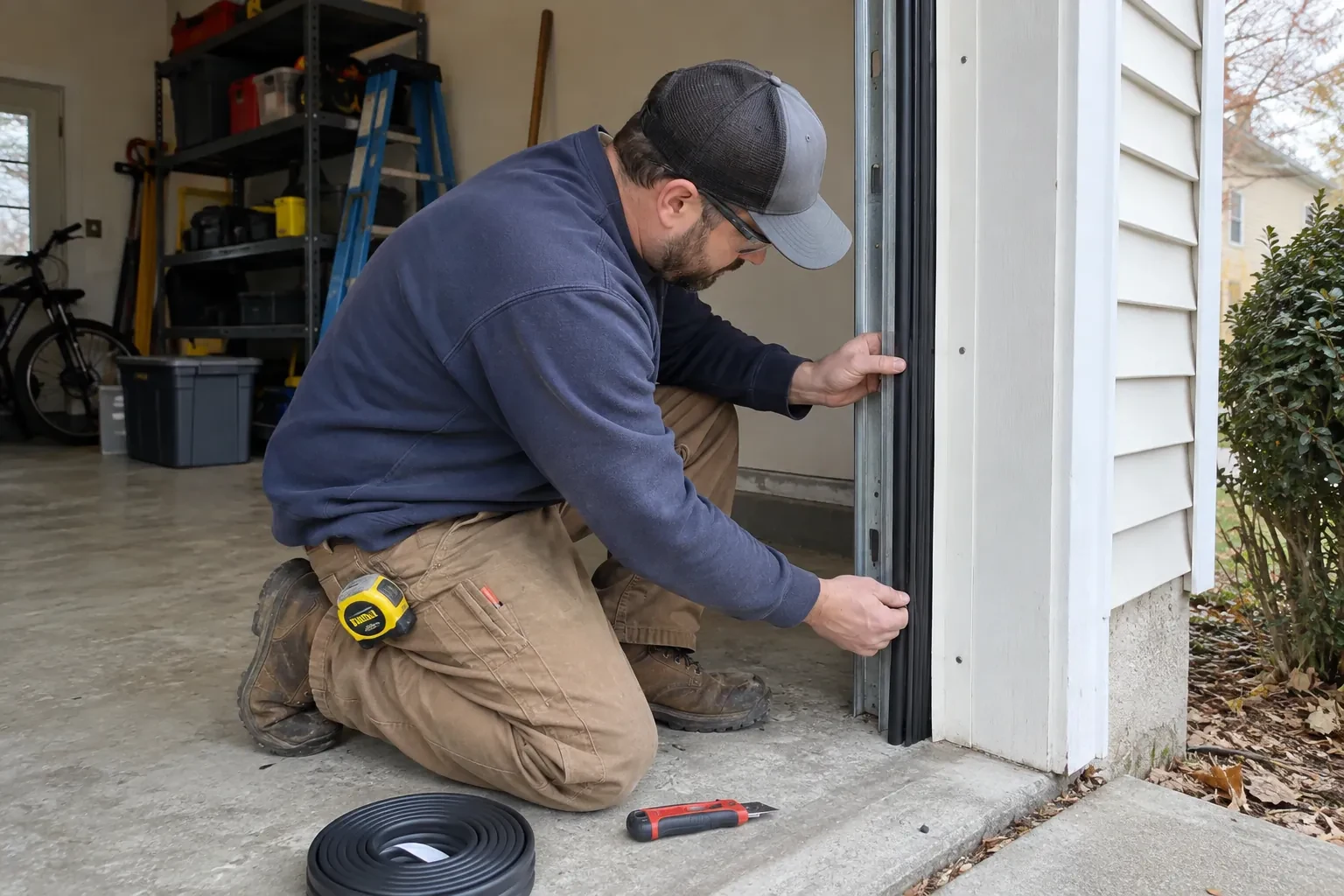
The two lowest joints live in the wettest part of the garage. Through winter, push slush away from the inside of the door rather than letting it sit against the bottom panels, and when a mild day comes wipe the road salt off the lower hinges, brackets and rollers with a damp cloth followed by a dry one. A light mist of silicone on the low knuckles in late autumn helps meltwater run off. Clear the ridge of ice that forms at the threshold before running the door, so the opener is never pulling against a panel frozen to the slab. These habits protect exactly the hinges that fail first here.
Garage Door Hinge Replacement
In the van
Silicone or lithium hinge lubricant
Hex-head self-drilling screws
Flashlight and level
Centre hinges
Socket set and impact driver
Garage Door Hinge Replacement
What affects the quote
Opener adjustment afterwards
A door that folds freely again sometimes needs the opener's force and travel settings reset and its reversal retested. That adjustment is named when it is needed.
Corrosion and seized fasteners
Screws rusted solid take time to drill out, and heavily corroded hinges on the lower joints are replaced rather than reused, which shows in the parts list.
Damage to the stile or panel
After an impact, straightening a stile, fitting a support plate or adding a strut comes with the hinge work and is quoted as separate items so you can see each one.
What to have ready
- Is the loose or broken hinge at the edge of the door or in the middle?
- Did the door feel heavy, jerky or noisy before the hinge failed?
- Is the door steel, wood or insulated steel?
Garage Door Hinge Replacement: questions
QuestionsWhat do the numbers stamped on garage door hinges mean?
They mark the joint the hinge belongs to, counted from the bottom. A 1 goes at the joint above the bottom panel, a 2 at the next one up, then 3, with 4 and 5 on taller doors. Each higher number stands the roller a little further off the door face, so the door leans into the jambs when closed and follows the track as it climbs. Centre hinges use the geometry of a 1.
Does hinge work affect the springs or the door's balance?
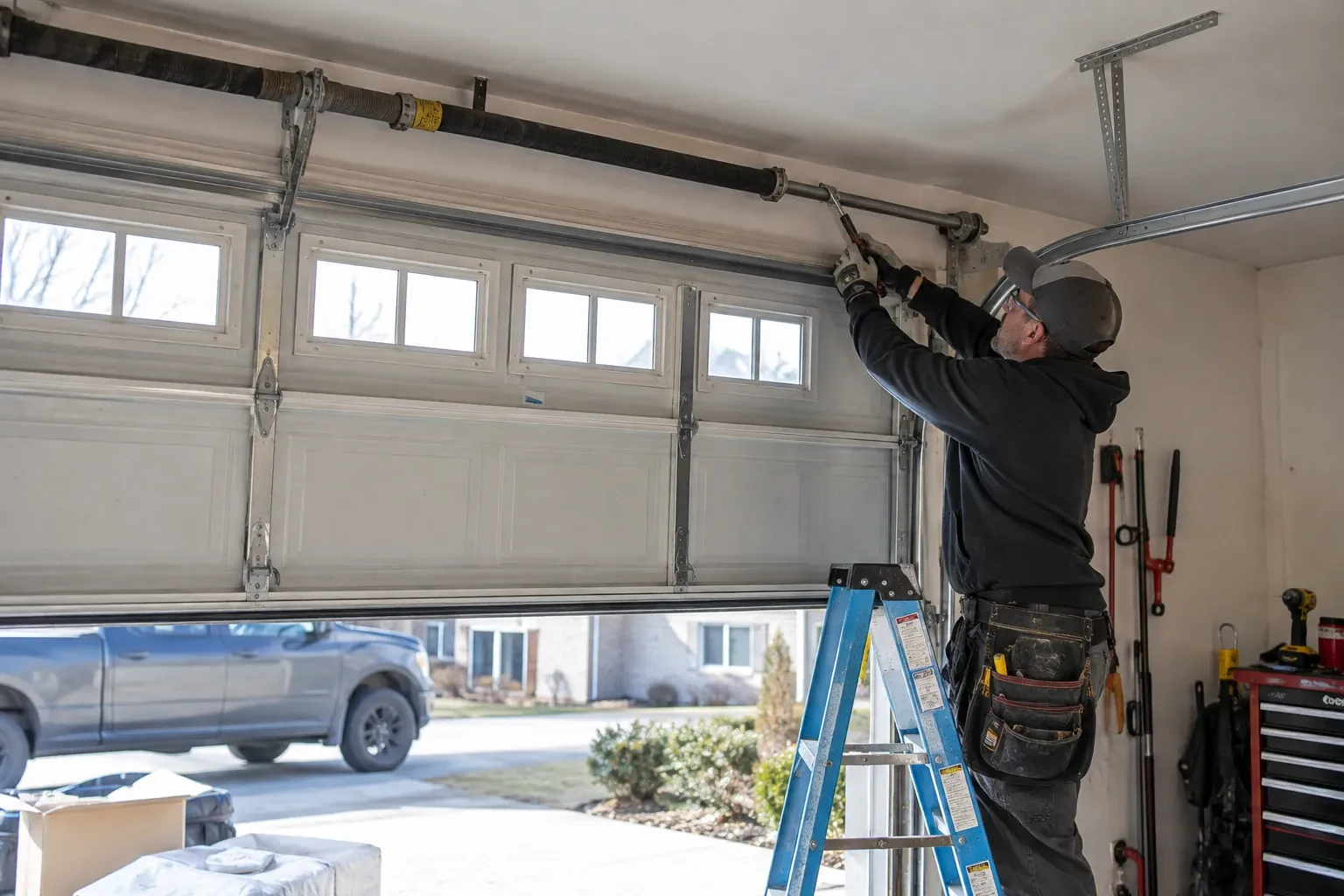
Hinge replacement leaves the springs untouched, since the door stays closed and the counterbalance is not unloaded. Balance is checked at the end all the same, because a door the opener has to drag is one of the main reasons hinges fail early. If the door drifts up or sinks when lifted by hand and released, the technician explains the spring adjustment needed and offers it as its own decision.
Can I tighten loose hinge screws myself?
Yes, hinge screws are a homeowner task. Disconnect the opener, leave the door closed, and snug each hinge screw with a socket wrench without forcing it, since overtightening strips the hole. Leave the bottom brackets alone; they anchor the cables and are under spring tension. If a screw spins freely or a hinge is cracked, stop there and have it looked at, because a stripped hole needs a fresh anchor rather than more turns.
Related services
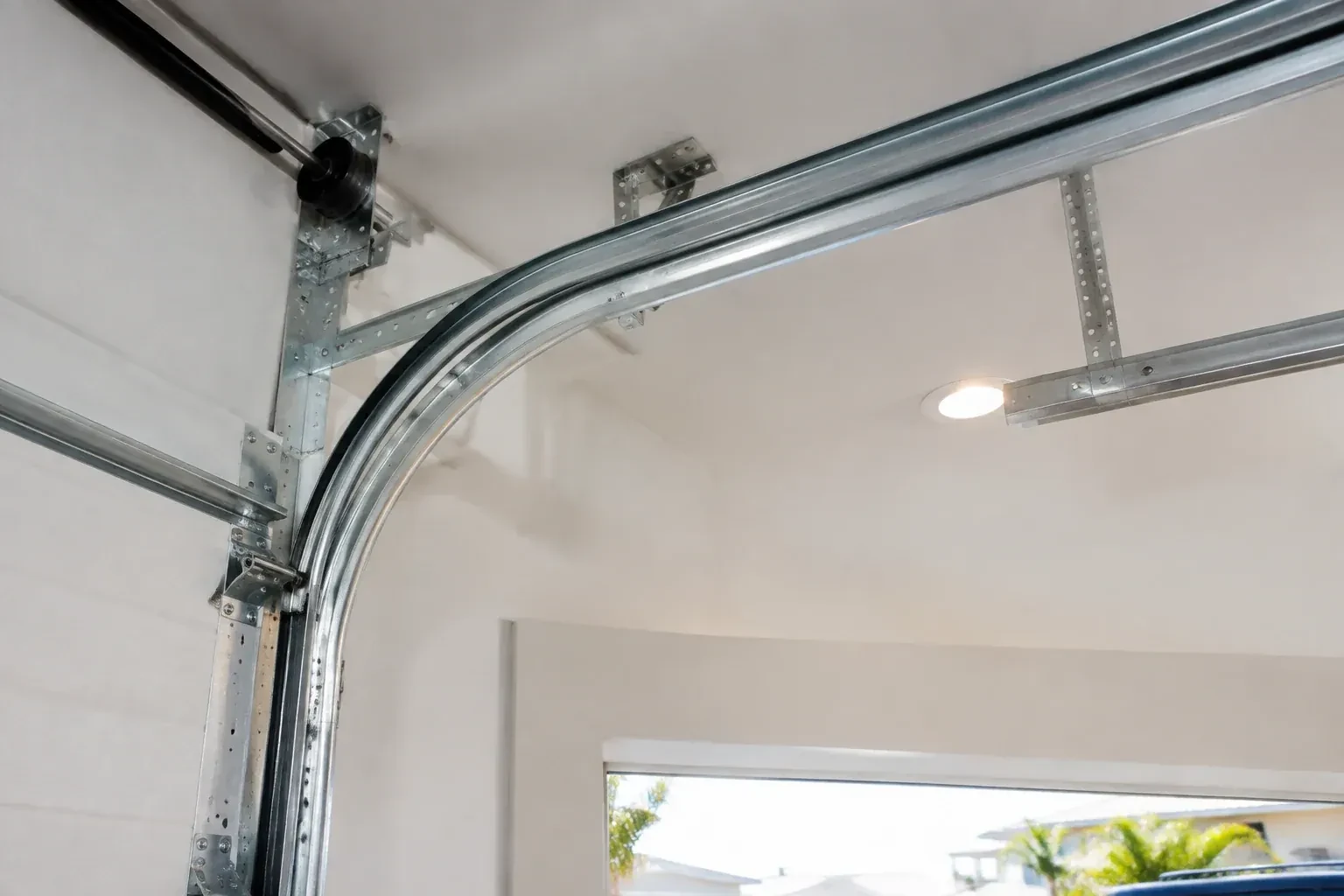
- Garage Door Track Repair or ReplacementBacking out this morning, the mirror caught the track beside the door.
- Garage Door Cable ReplacementAfter years of slushy winters the cables look thinner near the bottom brackets, with rust streaks running down the door where they attach.
- Torsion Spring ReplacementYou heard a sharp bang from the garage, and now the opener hums for a second and gives up.