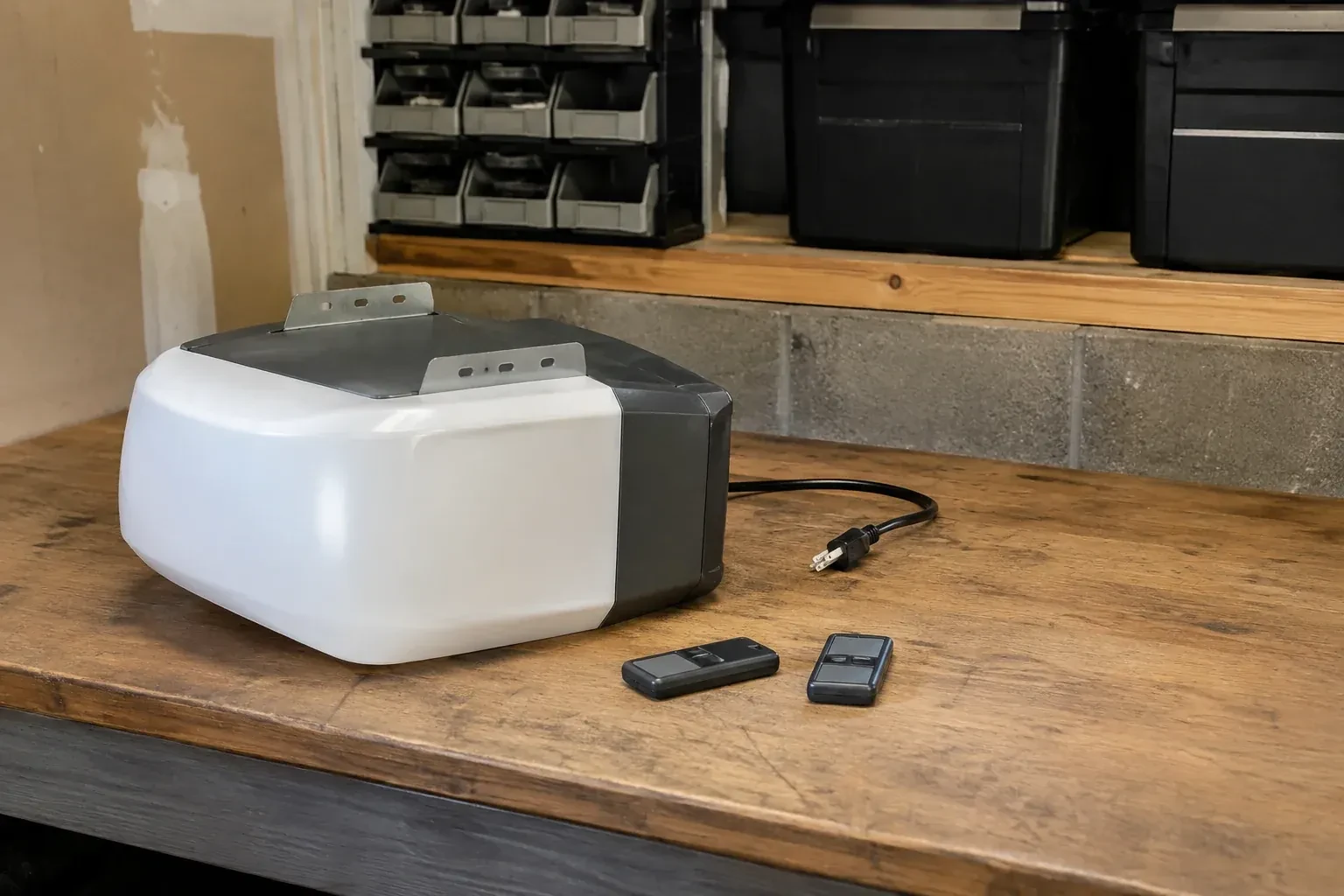
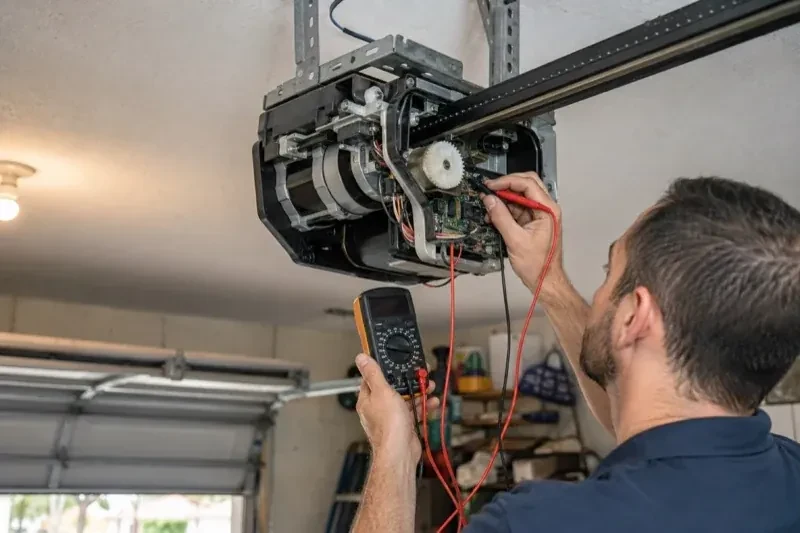
Openers · Aurora
Garage Door Opener Replacement
The remotes only work from the end of the driveway now, and one of them disappeared with a set of keys last month.
In plain words
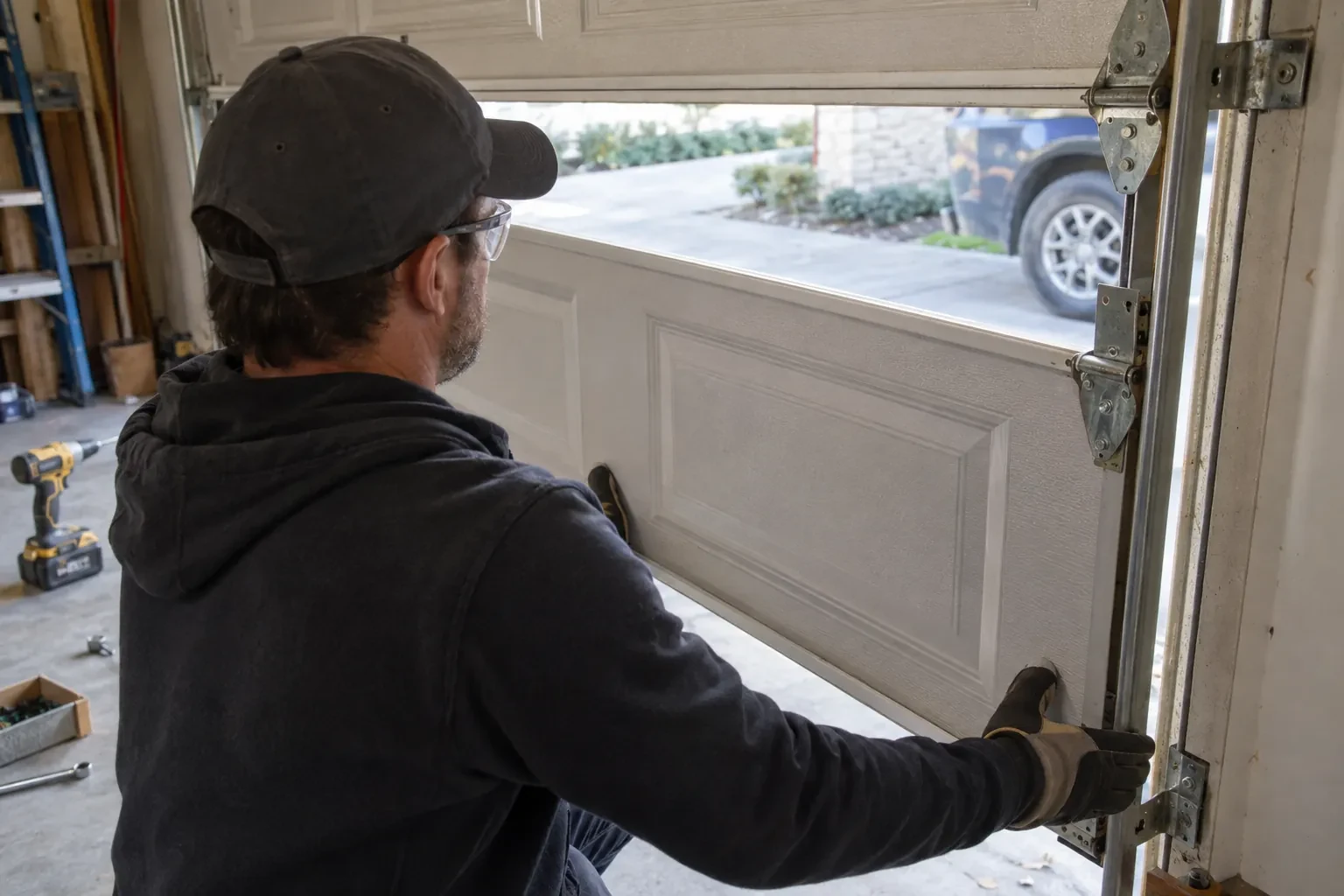
The most useful thing to know about a new opener is how little lifting it does. A garage door weighs as much as a small piano, and the springs hold nearly all of that weight so the door floats in the track. The operator only guides a door that is already balanced. That is why the replacement starts with the door disconnected and lifted by hand: if it holds its position partway up, the new operator will have a long, calm life. If it drops or drifts, the springs are tuned first, so the motor is never asked to do a job it was not built for.
How the visit goesYou swapped the old wooden door for a heavier insulated steel one, and the twenty-year-old opener that was kept has never settled. It strains on the way up, stops partway on cold mornings, and the rail shudders with every cycle.
Garage Door Opener Replacement
How the visit goes
Headroom, framing and where the rail will hang
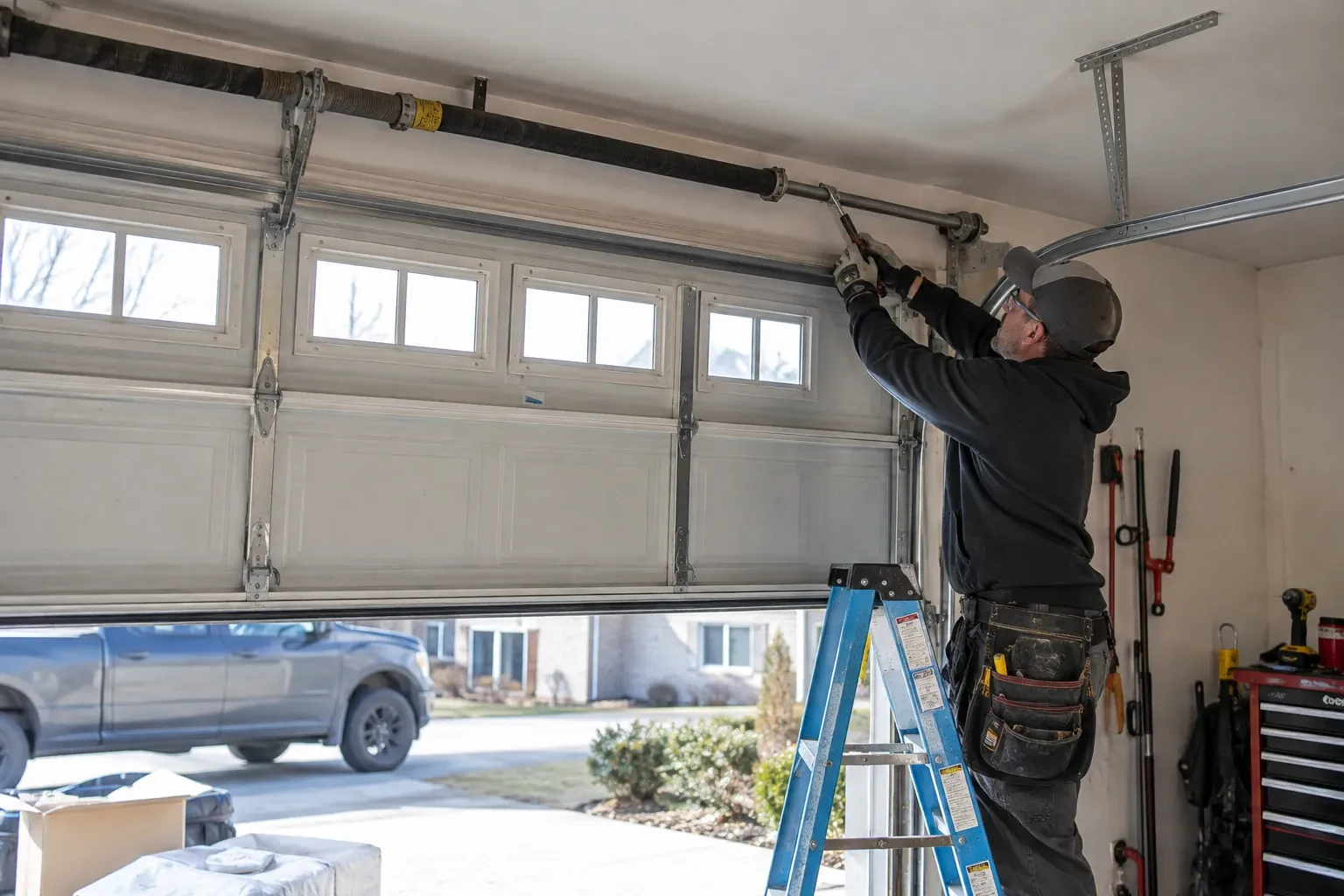
Looking up tells the technician how the new opener will fit. The gap between the top of the open door and the ceiling decides whether a standard rail has room or a low-headroom arrangement or a wall-mount operator is the better fit. The wall above the door is checked for solid framing to take the header bracket, and the ceiling for joists or trusses to carry the angle iron that hangs the head. Door height matters too: a 7 ft door takes a standard rail while an 8 ft door needs an extension. Storage racks, lights and ducts in the path of the rail are noted so nothing gets in the way on the day.
Fitting a wall-mount operator instead
When the choice is a wall-mount unit, the operator bolts to the wall beside the torsion spring shaft and turns the shaft directly, so there is no rail, trolley or anything hanging from the ceiling. The door must run on torsion springs with room at the end of the shaft, confirmed before the unit is ordered. A cable tension monitor is fastened to wall framing beside the cable, a few inches from the drum, so the operator stops if a cable goes slack, and an automatic deadbolt is mounted on the track since the door has no rail holding it shut. Photo eyes, console and remotes are set up as with any operator.
Getting the door through winter
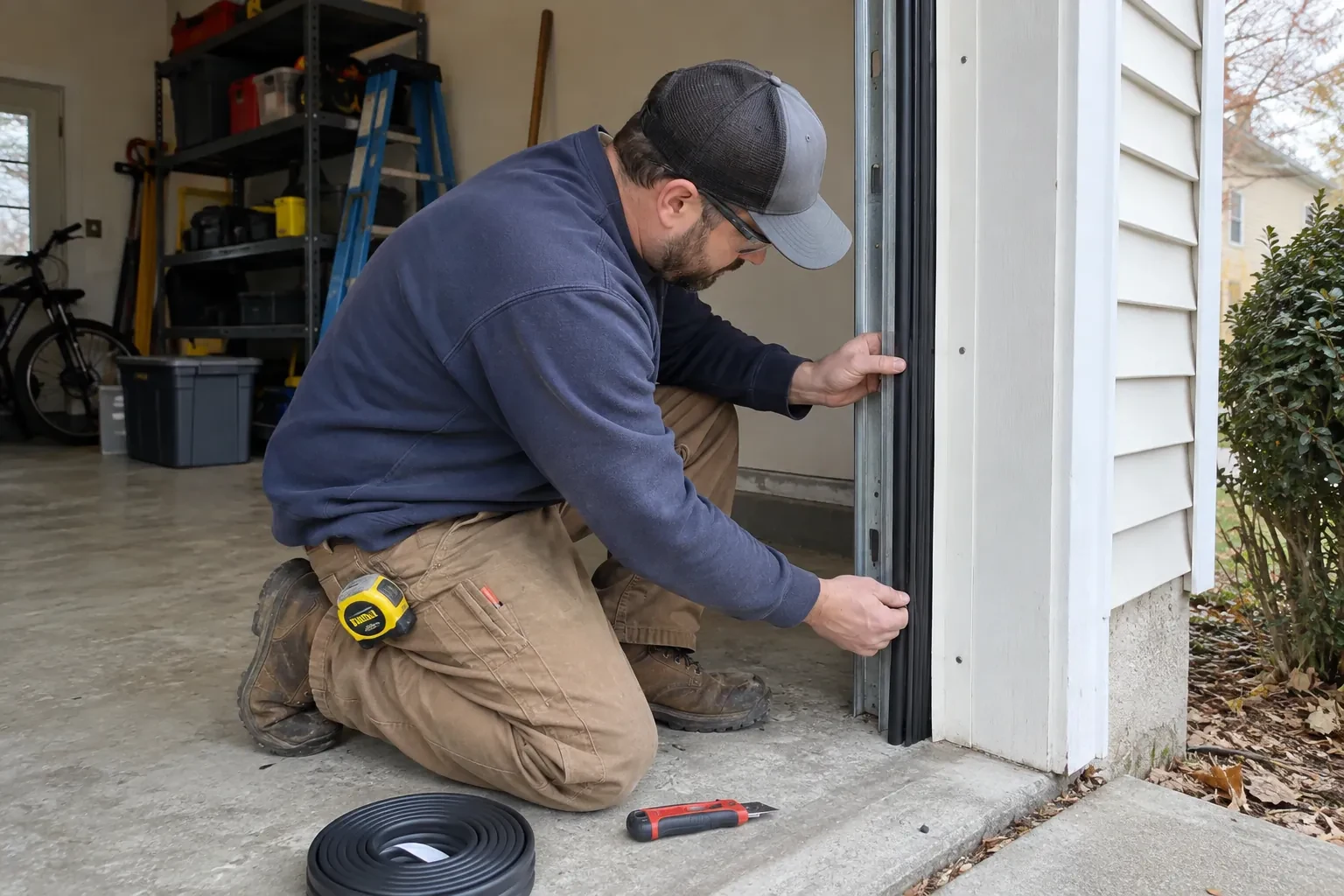
A modern operator runs at the smallest force that moves the door, so on a bitter morning when the bottom seal has frozen to the slab it will reverse rather than tear the seal or strain the top section. The right response is to free the seal, by breaking the ice along the threshold or warming it, then press the button again. Keep snow and slush cleared from the threshold, put a silicone wipe on the seal before the cold sets in, and expect the door to sound a little different at minus twenty. An operator chosen for a detached garage is rated for those temperatures, and the seasonal lubricant it was given keeps the hardware moving.
Garage Door Opener Replacement
In the van
Low-voltage bell wire and staples
Perforated angle iron hangers
Wall control console
Backup battery
Chain or reinforced belt
Garage Door Opener Replacement
What affects the quote
Detached or unheated garage
An operator rated for deep cold, a cold-rated lubricant and sometimes a heavier battery are chosen for a garage that sees winter temperatures, and those choices show in the equipment list.
Door height and rail length
A standard rail suits a 7 ft door. An 8 ft door or a taller custom door needs a rail extension, and a very low ceiling may call for a low-headroom arrangement, each an item on its own.
Ceiling height and mounting
A head unit hung from a high or cathedral ceiling needs longer angle iron and more time on the ladder than one mounted under a standard joist, and a finished drywall ceiling takes more care to fasten into.
What to have ready
- What make and model is printed on the old opener's label, and roughly how old is it?
- How much room is there between the top of the open door and the ceiling?
- Has a power outage ever left you unable to open the door?
Garage Door Opener Replacement: questions
QuestionsCan my phone control the door?
Yes, with a Wi-Fi capable operator or a small add-on hub for a compatible unit. The app opens and closes the door, shows whether it is up or down, sends an alert if it has been left open and can close it on a schedule. The garage needs a usable Wi-Fi signal at the head unit, which the technician checks during the assessment; a range extender solves a weak signal in a detached garage.
Will the new opener cope with an unheated garage in winter?
Yes, when it is chosen for it. Manufacturers publish an operating temperature range for each model, and the technician matches that to a detached or unheated garage. The force setting is tuned so the door moves in the cold without the operator being oversensitive, the hardware gets a cold-rated lubricant, and a backup battery is kept charged by the unit. Clearing ice from the threshold remains the one winter chore.
My garage ceiling is low and full of storage. What are my options?
Two good ones. A low-headroom kit lets a standard operator work where the open door sits close to the ceiling. Going further, a jackshaft unit mounts on the wall where the spring shaft ends and drives the door from there, so the whole ceiling stays empty for shelving, a mezzanine or a car lift. That route needs a door on torsion springs and a little clearance beside the shaft, which the technician measures on site.
Related services
- Chain-Drive Opener RepairHalfway up, the door lurches.
- Belt-Drive Opener RepairPress the remote and the motor runs its full cycle, lights on, the usual whir, but the door does not move a centimetre.
- Photo-Eye Sensor Alignment or ReplacementSomeone backed the car in a little too far, a bin or a bicycle brushed the track, and since then the door starts to close and comes back up.