Garage Doors
Between visits
The guides below are the explanations we give on site, written down. They cover the parts, the wear, the seasons and the upgrades, so you can revisit them whenever the door raises a question.
Homeowners ask
My opener is old and has no photo eyes. Can it still be inspected?
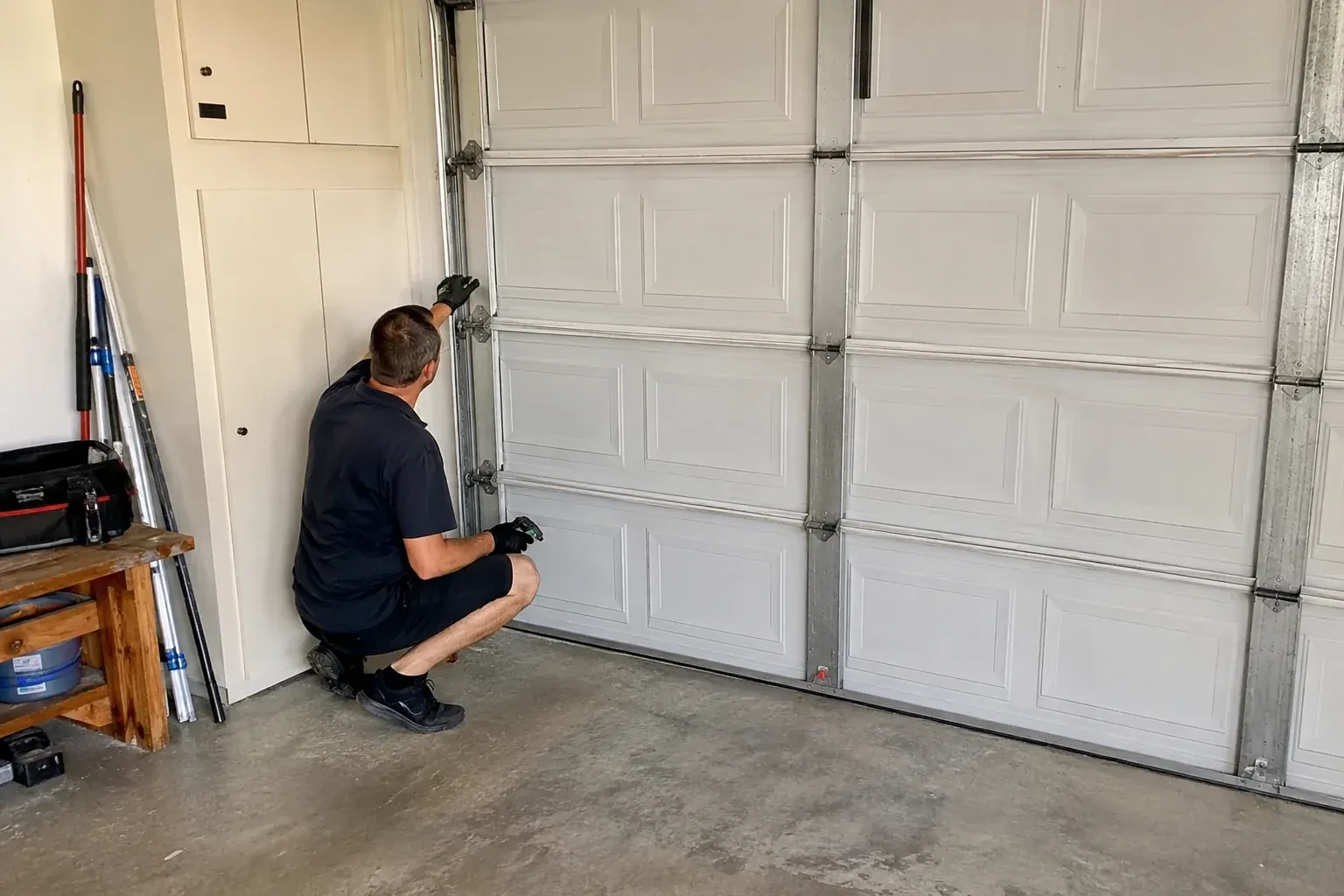
Yes. Older openers rely on contact reversal alone, so the board test carries more weight and is run carefully against the maker's procedure, along with the manual balance check, the force setting and the release. The report records what the opener has and how it performed. An opener built before photo eyes became standard is flagged for replacement in the report, since makers recommend moving off that generation of opener rather than treating photo eyes as a nice-to-have.
What happens if a broken spring is found during the tune-up?
The door is left closed and not operated with the opener, because a door with a broken spring weighs its full weight and can drop. The technician explains what was found, shows you the break, and quotes the spring replacement as its own job, usually replacing both springs on a two-spring door so they wear evenly. The rest of the tune-up either waits or continues on the parts that can safely be serviced with the door down.
Are the springs involved in an off-track door?
Frequently, in one of two ways. Springs that are worn, broken or mismatched to the door's weight make the opener carry a load it was never meant to, dragging the sections out of line. And whenever cables must be re-seated or replaced, the spring tension has to be released and rewound to do it. The technician assesses the springs at the start and tells you whether they are part of the fix.
Do the hinges and rollers get replaced at the same time?
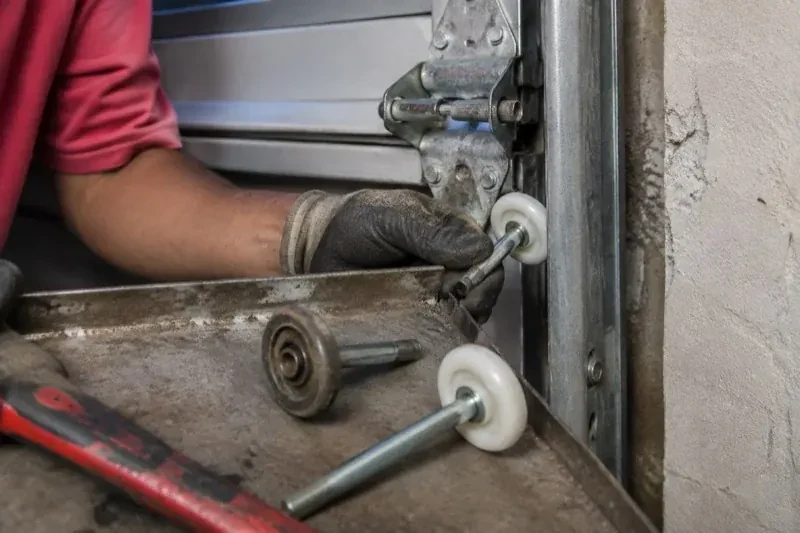
Hinges and rollers that are bent, cracked or worn are replaced with the section, and the technician checks each one on the affected joints. Sound hinges can be transferred, always by their stamped number, since each position in the door uses a different offset. Rollers that have flat spots, wobbly stems or dried bearings are swapped, often for nylon rollers that run quietly. Fasteners are always new, driven into fresh holes in the new stiles.
What are bottom seals made of, and which suits cold weather?
Most are vinyl, which resists sun and moisture well but stiffens in deep cold. Rubber compounds stay flexible at low temperatures and follow an uneven floor closely, though they can harden after many years of sun. Silicone stays supple in heat and cold and resists cracking, at a higher cost. For a door that faces the weather, a rubber or silicone profile is usually the sounder long-term choice.
What should I do before the technician arrives?
Move the car out of the garage or well back from the door, and clear anything stored against the jambs inside and any bins, planters or snow piled against them outside. Leave the door closed so the gaps can be seen as they are. If you have noticed where the daylight, drafts or snow come in, or where the mice appear, be ready to point it out.
Can a manual lock be added to a door that never had one?
Yes. An inside slide bolt is the simplest addition: it fixes to the door's edge stile and a slot is punched in the track to receive it. A keyed T-handle can also be added, with a cutout in the centre of a section, a centre mechanism and bars run to both tracks. Where an opener is fitted, the new lock is set up so the two are coordinated from day one.
How many rollers does a garage door have?
A standard four-section residential door has ten: one at each end of the three hinge lines between sections, one in each of the two top fixtures and one in each bottom bracket. A five-section door carries twelve, and taller doors more still. The technician counts and inspects every one, because replacing the full set together keeps the door's travel and sound even from side to side.
What do the numbers stamped on garage door hinges mean?
They mark the joint the hinge belongs to, counted from the bottom. A 1 goes at the joint above the bottom panel, a 2 at the next one up, then 3, with 4 and 5 on taller doors. Each higher number stands the roller a little further off the door face, so the door leans into the jambs when closed and follows the track as it climbs. Centre hinges use the geometry of a 1.
How often should the track and its fasteners be checked?
A glance each month from inside the garage, with the door closed, is enough to catch a bracket standing off the jamb or a hanger starting to lean. Twice a year, snug the bracket bolts and lag screws, wipe out the channel, and watch the door make a full trip to confirm every roller stays in the track. The industry guidance also suggests an annual visit by a trained door technician, who checks the track with the rest of the system.
Why is the door sitting crooked in the opening?
Each corner of the door is held by its own cable. When one cable stretches, slips its drum or breaks, that corner loses its lift and drops while the other stays up, so the door tips and usually wedges against the track. Setting both cables to the same length and tension is part of every cable replacement, and it is what brings the door back level.
How often should the springs be lubricated, and with what?
Once or twice a year is a good rhythm, with autumn the most useful time because cold thickens grease. Use a garage-door lubricant, typically a silicone or lithium spray, applied along the coils so it works between them as the door cycles. Hinges, roller bearings and the end bearings benefit from the same treatment. Keep the track itself dry, since lubricant there gathers grit and slows the rollers.
The door creeps open on its own. Is that a spring problem?
Usually, yes. A door that rises from the floor or from halfway without help has springs pulling harder than the door weighs, which happens when a heavier-rated pair was fitted, when the hooks were set with too much stretch, or when a door has been made lighter by a panel change. It also puts strain on the opener, which has to hold the door down. Weighing the door and fitting the correct rating, set evenly, settles it.
How long does a balance adjustment take?
A straightforward tension adjustment on a sound door is generally about an hour, including the inspection, the hand tests and the opener checks at the end. Resetting cables to level the door, replacing rollers to remove friction, or moving to a spring replacement adds time. The technician will tell you what the inspection found and how the visit is shaping up before the work continues.
What should I check before calling?
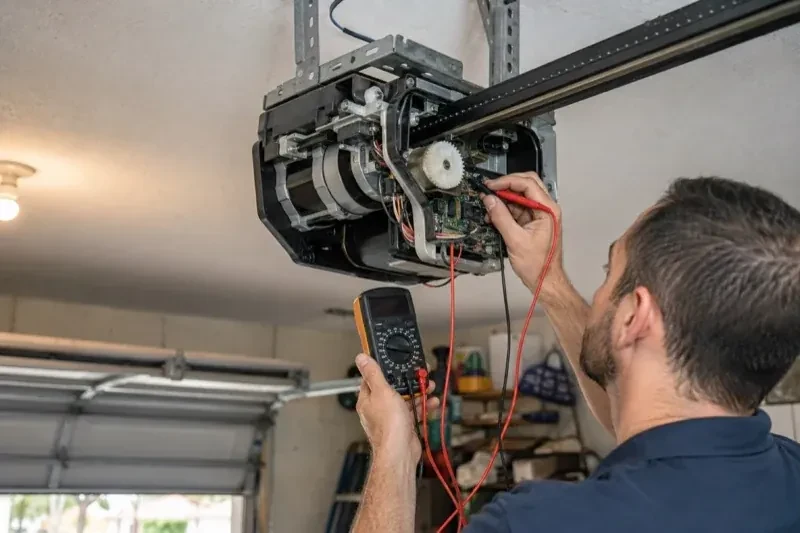
Look for the simple things: is the opener plugged in and its light working, has the wall control's lock indicator started blinking, does another remote work, is anything sitting in the path of the sensors, and are the little sensor lights steady. Note what the motor does when you press a button. Do not try to lift a door that is stuck if a spring looks broken. Whatever you find, tell the technician; it shortens the diagnosis.
Should I use the slide lock on the door with a chain drive?
No. The manual slide lock on the door is disabled or removed once an operator is connected, and the technician checks that during the repair. A motor pulling against a locked door strains the chain, strips the drive gear and can bend the top section of the door. If you want the door secured against remotes, the lock button on the wall control switches them off, and a track lock designed to work with an operator does the rest.
Why is the door tested by hand before the belt is touched?
Because the belt guides the door; the springs carry it. A door that lifts with moderate effort and stays put a metre off the floor is balanced, and a belt on that door lasts. A door that drops or drifts is loading the belt, trolley and sprocket far beyond their design, so a new belt would wear the same way. Spring work comes first in that case.
Can my phone control the door?
Yes, with a Wi-Fi capable operator or a small add-on hub for a compatible unit. The app opens and closes the door, shows whether it is up or down, sends an alert if it has been left open and can close it on a schedule. The garage needs a usable Wi-Fi signal at the head unit, which the technician checks during the assessment; a range extender solves a weak signal in a detached garage.
How long does a sensor visit take?
Alignment, cleaning and a bracket adjustment are done inside an hour on most doors, including the two tests at the end. Replacing the pair adds a little for wiring and setup. Re-running the wire all the way from the motor to both sensors is the part that stretches a visit, especially where the wire is behind a finished ceiling or the garage is full. Having the floor by the door clear before arrival helps.
We just moved in. Should the opener's memory be cleared?
Yes, it is sensible. The previous owners may have handed over two remotes while a third sits in a relative's car, and the keypad code may be known to their cleaner. Clearing the memory forgets every stored remote and keypad code, then your own remotes, a new keypad code and your vehicle buttons are programmed back; a connected app or account from the previous owner is removed separately, since clearing the memory alone does not always take it with it.
Can one controller handle two garage doors?
Many hubs support two doors from one unit, each with its own door sensor, and each door appears separately in the app with its own name, status and history. Openers with built-in radios register individually, so a two-door garage with two connected openers simply shows two doors under one account. The technician confirms which arrangement your hardware supports before the visit.
What exactly is the emergency release on a garage door opener?
It is the manual disconnect between the opener and the door: a red handle on a cord below the rail, connected to a lever on the trolley. Pull it and the trolley lets go of the door so you can move the door by hand, for instance during a power outage. Push the lever back, or run the opener, and the two reconnect. It is required on residential openers, coloured red so it stands out from everything else overhead.
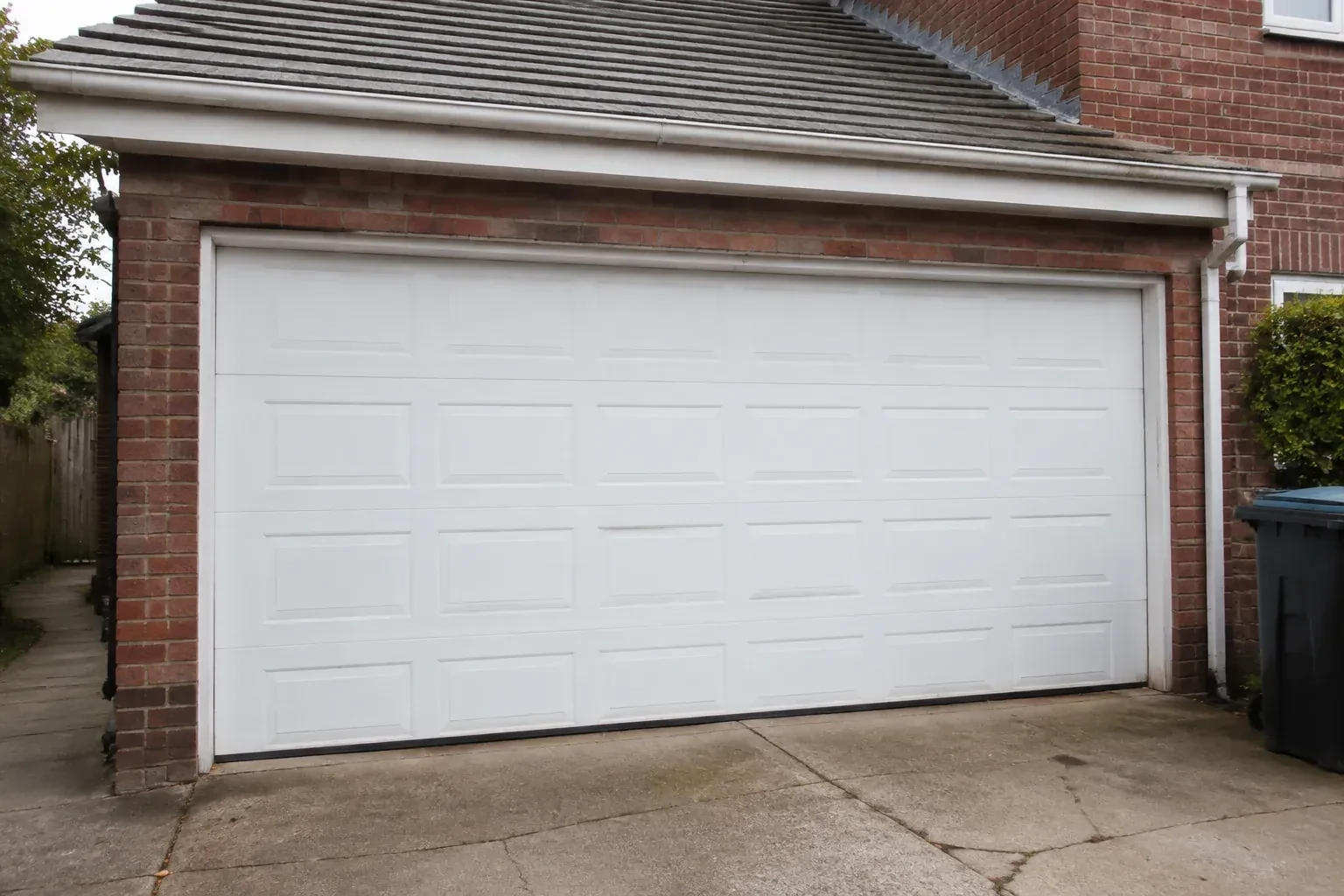
Why are springs and cables handled by technicians?
Springs store substantial energy, while lift cables and bottom fixtures transmit the forces that raise the door. Replacement requires the assembly to be secured, tension to be controlled and matched parts to be installed in a defined sequence. Trained handling, proper tools and the selected system's instructions keep that work orderly and precise.
How should painted steel sections be cleaned?
Use the care method provided for the selected finish. Common guidance involves mild soap, clean water and a soft cloth or sponge, followed by a thorough rinse. Work on a cool surface and avoid abrasive pads that can mark the coating. Seasonal washing removes road film and winter residue while giving you a chance to notice scratches, seal wear or developing corrosion.
What does wind-rated mean for a garage door?
It means a documented door configuration is designed and evaluated to resist stated inward and outward wind pressures at a particular size. The description covers the assembled system: sections, reinforcement, tracks, rollers, hinges, brackets, fasteners, and attachment details. Suitability still depends on matching that configuration to the opening and project criteria.
How are two side-by-side doors made to look consistent?
The layout uses shared reference lines for window height, panel divisions, handles, strap accents and exterior trim. Each opening is still measured separately because floors and jambs can differ. Samples and elevation drawings help resolve whether both doors use identical patterns or coordinated versions scaled to their widths. Installation then checks closed position and seal contact independently while preserving the planned visual alignment.
Does a glass door need different springs?
Spring selection follows the completed door weight, dimensions, lift arrangement and hardware configuration. Different glazing and frame options can change that load, so springs are specified from the actual order rather than from the appearance of the old door. Trained personnel fit and tension the counterbalance equipment with the door secured, then confirm controlled manual movement before connecting powered operation.
Does all framing need to be complete first?
The jambs, header, spring anchoring area and overhead attachment points used by the door system need to be complete, accessible and accepted by the responsible project party. Their locations depend on the selected track and counterbalance arrangement. If drywall or cladding will cover them, coordination happens before closing the surfaces. Structural design or framing changes remain separate project responsibilities, guided by the building drawings and door requirements.
What if the door is stuck partly open?
The opening is kept clear and the door is stabilized in its current position before diagnosis. A cable may be displaced, a roller may have left the track, a spring may have failed or the operator may be holding the load. Support and controlled energy handling come before any attempt to move or dismantle the affected assembly.
How is a rolling fire door repair different?
A labelled fire door is a closure in a fire separation, so labels, listed construction, compatible components, release hardware, clear closing path and required records shape the work. Routine operating repair and specialised fire-door inspection or release testing are defined explicitly. Substitutions are based on assembly information rather than appearance or approximate fit.
Which parts are commonly replaced in a conversion?
Typical system changes include vertical and transition track, raised horizontal track supports, high-lift drums, longer lift cables, calculated torsion springs and related shaft or bearing hardware. Top fixtures, rollers, brackets and the operator arrangement may also change according to the design. The final list follows measured compatibility rather than a universal kit applied to every door.