Openers
Openers & Access
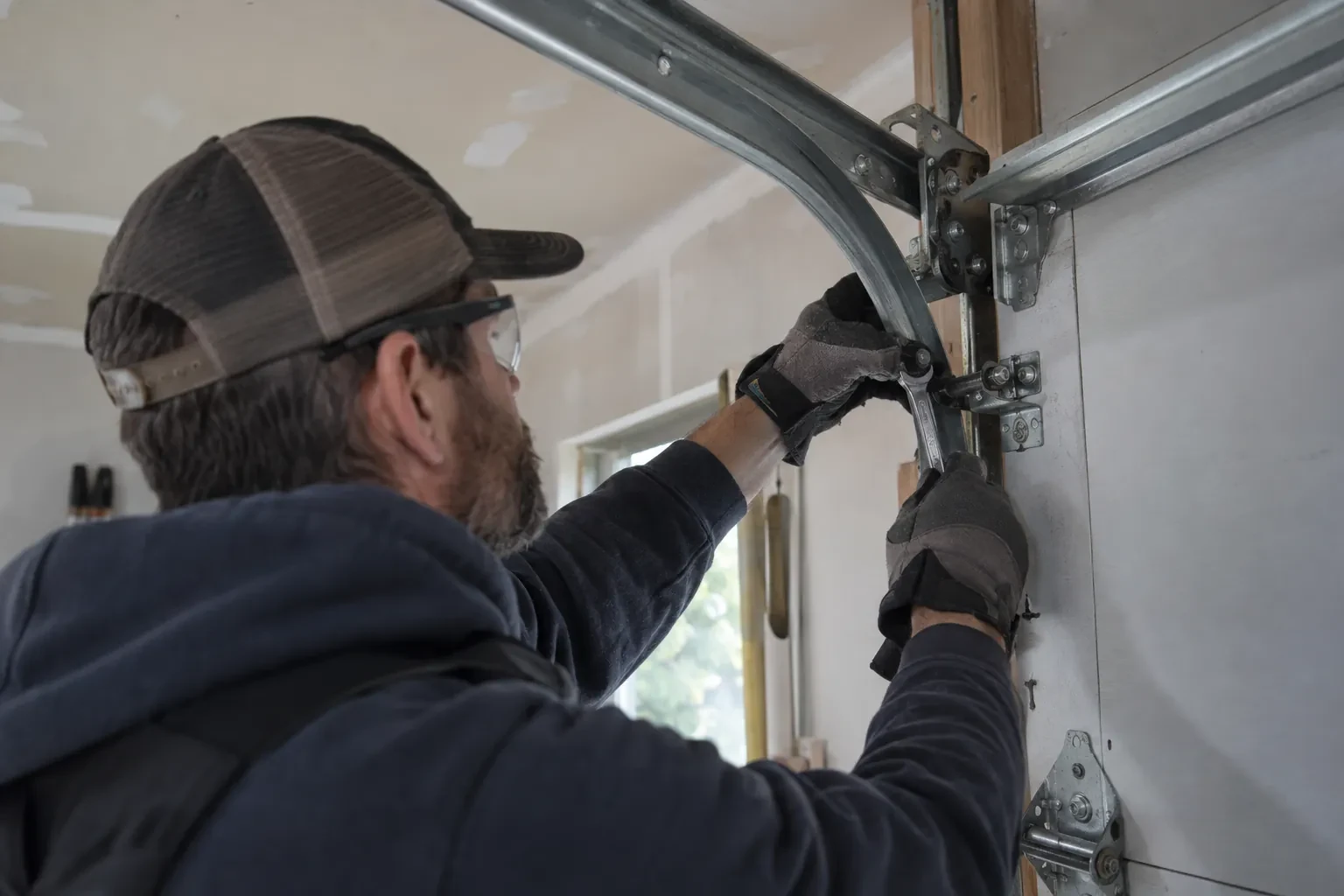
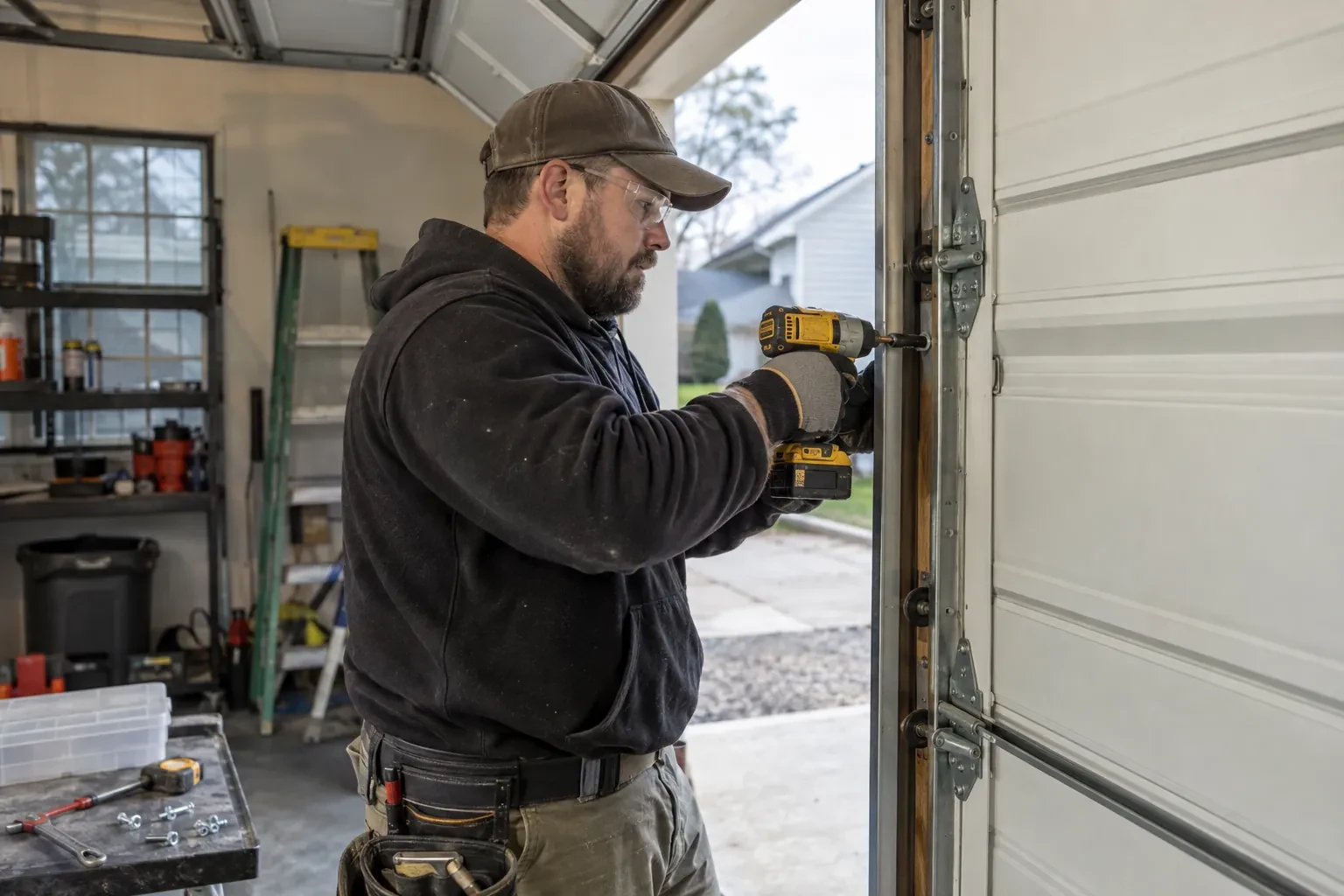
Openers connect to the door through the arm and the trolley, and a poor connection here makes the door jerk at the start of travel. Adjusting the arm, replacing a worn trolley and lubricating the rail smooth it out.
Which one do I need?
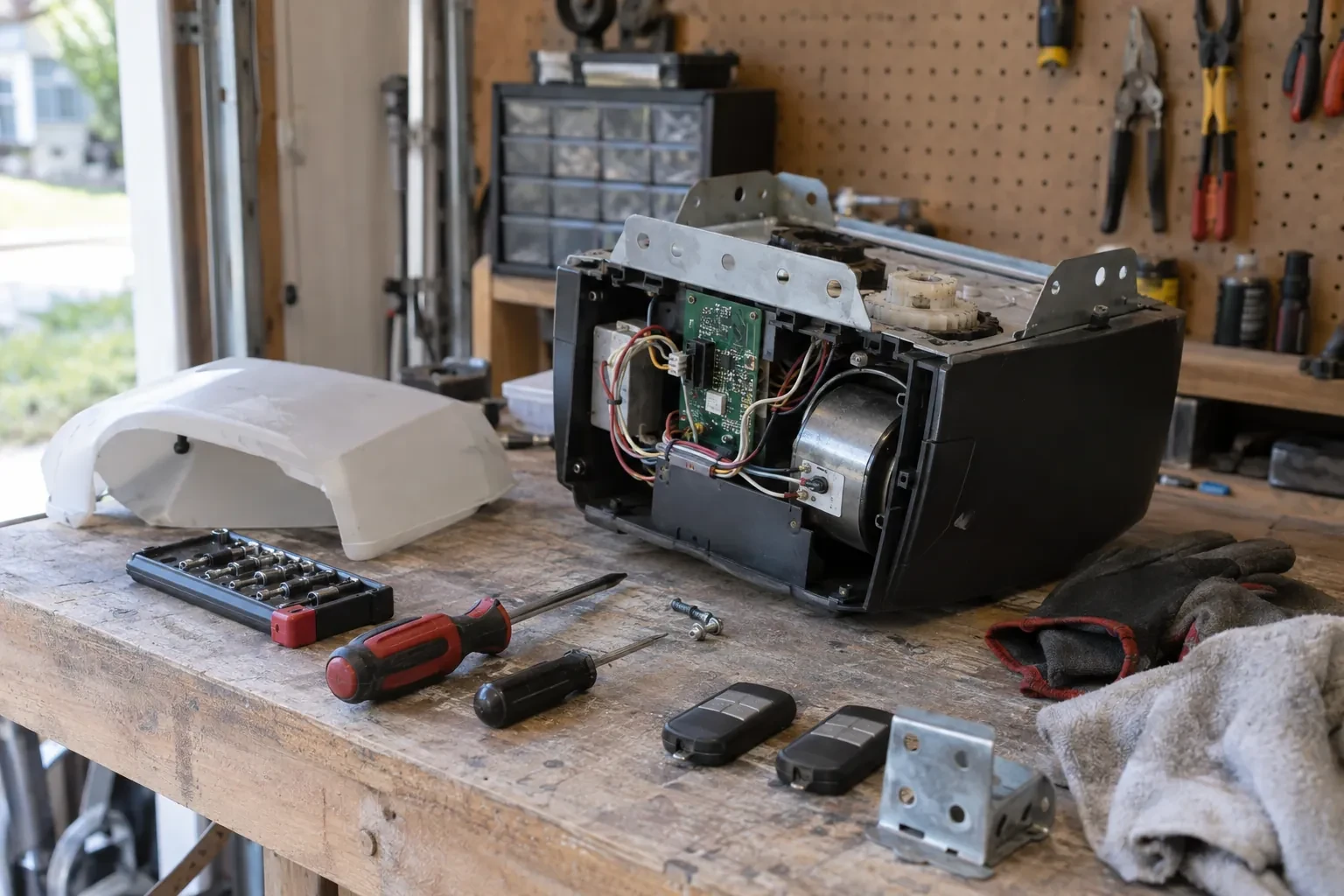
- The door goes up perfectly.Garage Door Opener Diagnosis and Repair
- Halfway up, the door lurches.Chain-Drive Opener Repair
- Press the remote and the motor runs its full cycle, lights on, the usual whir, but the door does not move a centimetre.Belt-Drive Opener Repair
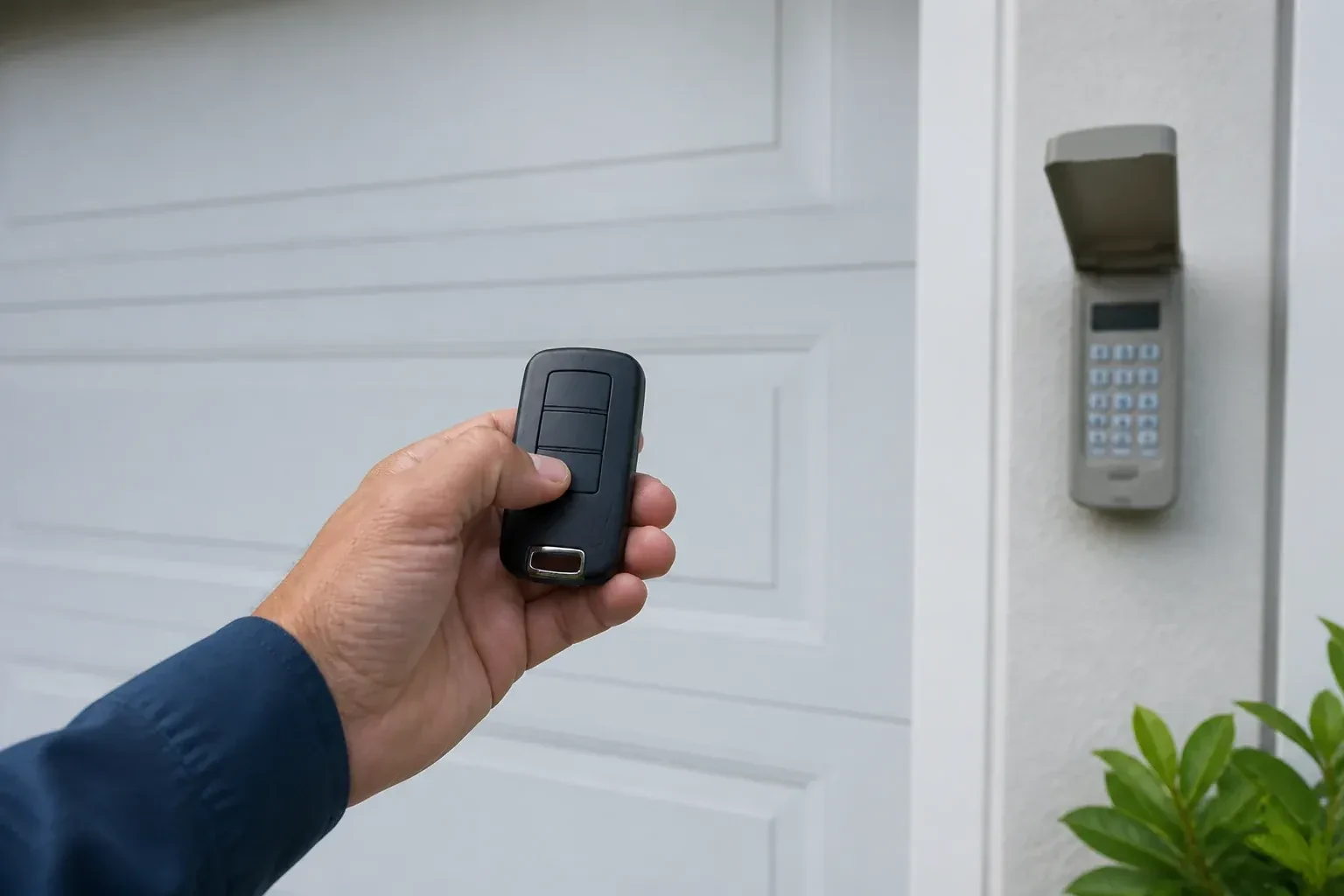
- The remotes only work from the end of the driveway now, and one of them disappeared with a set of keys last month.Garage Door Opener Replacement
- Someone backed the car in a little too far, a bin or a bicycle brushed the track, and since then the door starts to close and comes back up.Photo-Eye Sensor Alignment or Replacement
- The opener is an older one with a row of tiny switches inside the remote.Garage Door Remote and Keypad Programming
Openers & Access
Operators, safety sensors, controls, and access systems.
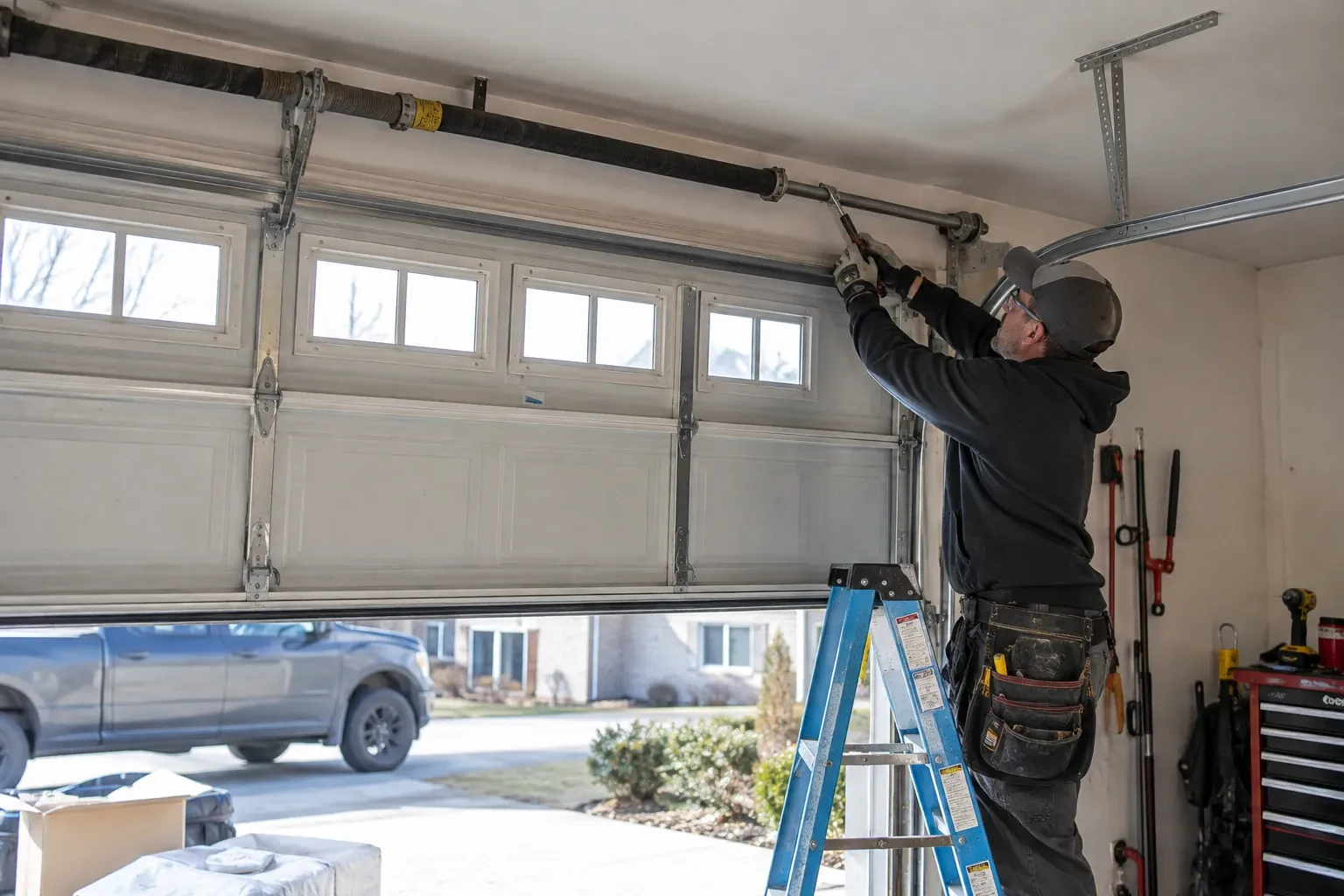
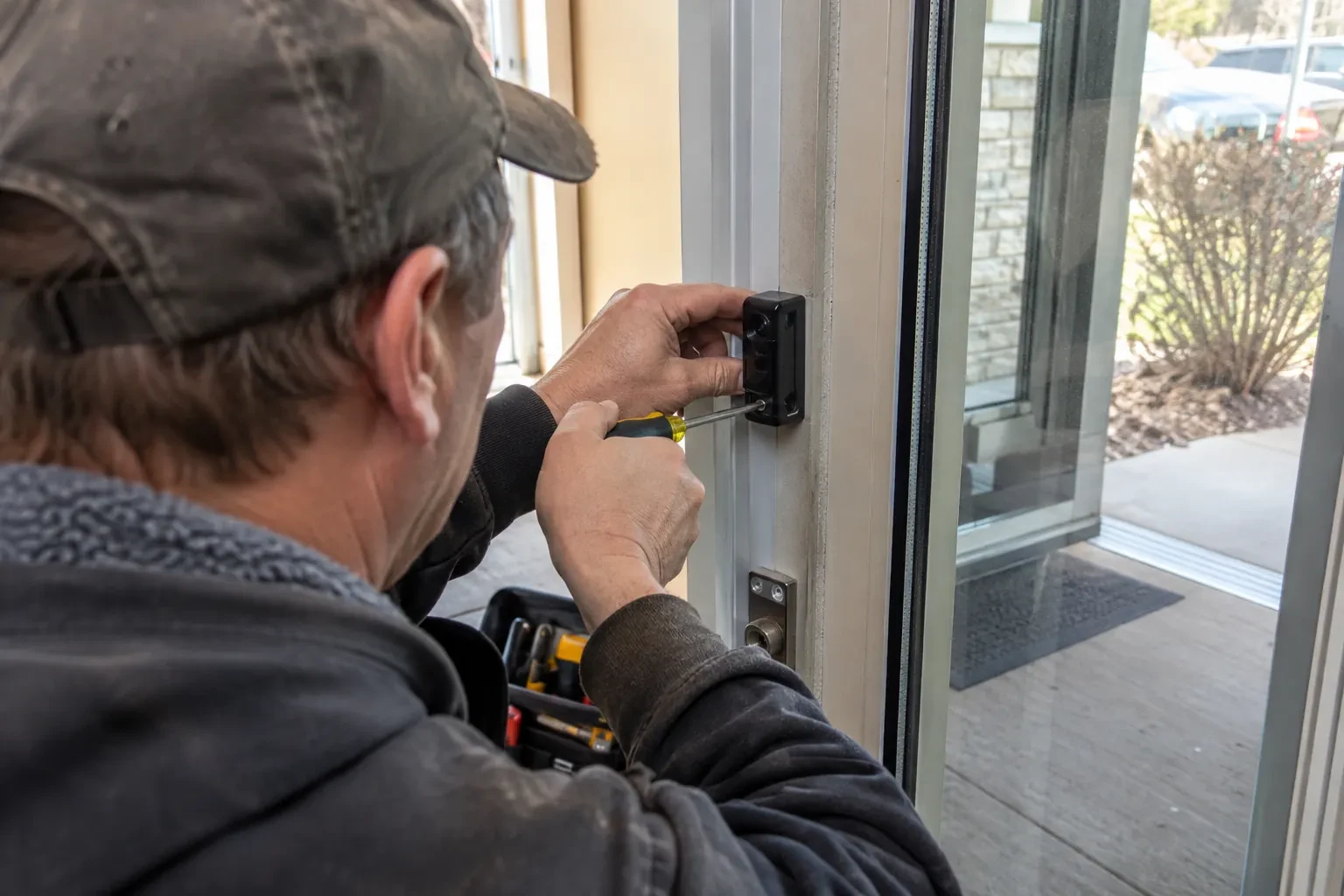
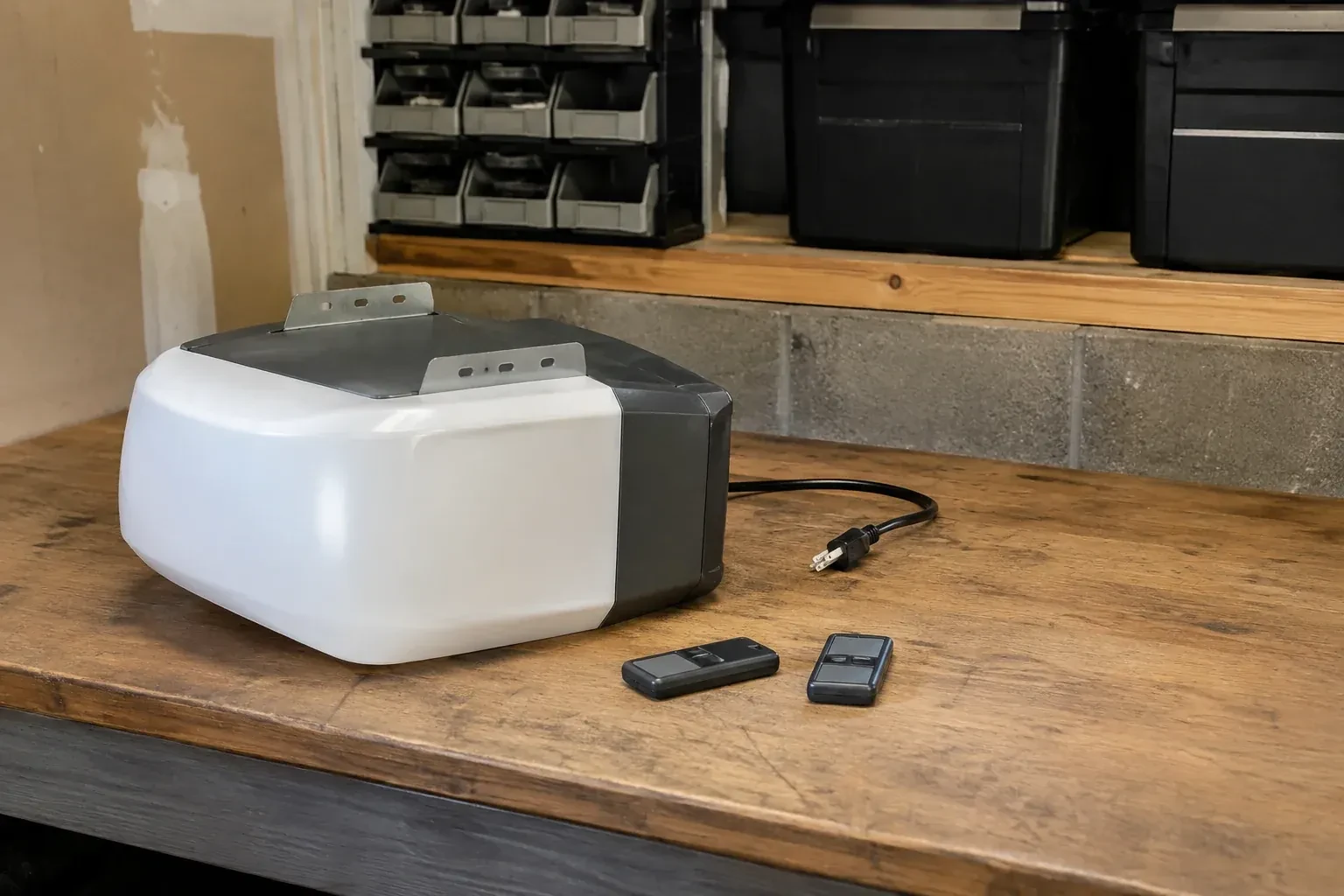
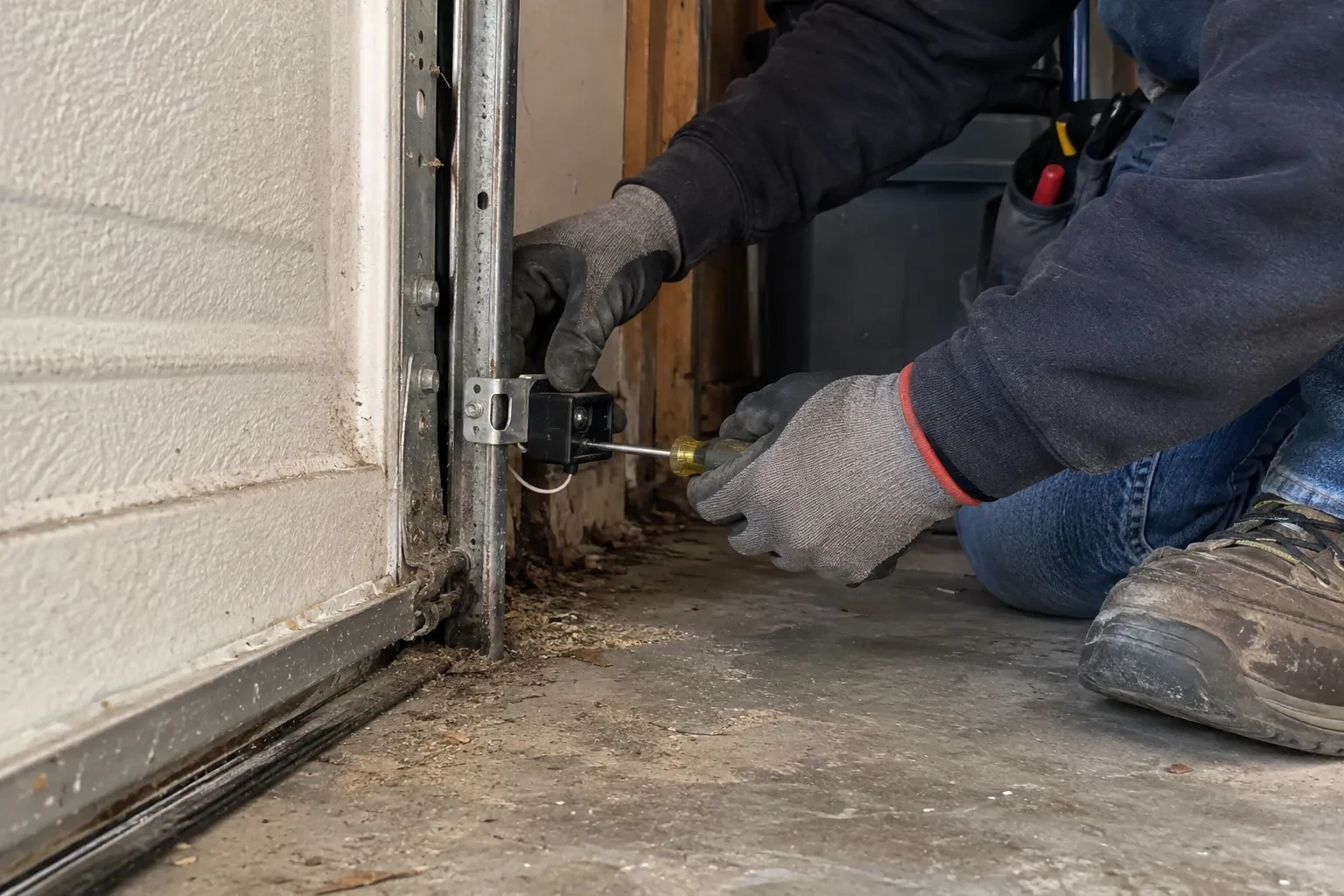
Garage Door Opener Diagnosis and Repair
The two small eyes near the floor
The photo-eye sensors are inspected together with their wiring. Each sensor carries a small indicator; a steady light on both means the beam is aligned, while a flicker, a dark light or one that goes out when the bracket is nudged points to misalignment, a loose mount or a damaged wire. The technician sights along the beam, looks for obstructions, cobwebs, frost and low sun on the receiving lens, checks that the sensors sit no higher than about fifteen centimetres off the floor, and traces the wire back to the head unit for staples, kinks and chew marks.
Sensor faults are the single commonest reason a door refuses to close.