Openers · Aurora
Emergency Release Repair
It is the coldest morning of the year.
In plain words
Most households meet the release for the first time in a power outage, usually in winter. The door is shut, the car is inside, and the red handle is the only way to move the door. This service makes that moment go smoothly: a handle that hangs where a person can reach it, a cord strong enough to throw the lever, a trolley that lets go cleanly, and a door that lifts without a fight once it is free. The technician also shows everyone in the house the sequence, including how to hold the trolley out for a few days of manual use and how to reconnect afterwards.
How the visit goesAfter a week of lifting the door by hand you pressed the button, hoping it would catch. Instead the motor grinds, the trolley thumps against the end of the rail, and the little lever that should snap back stays stubbornly upright.
Emergency Release Repair
How the visit goes
Where the handle hangs
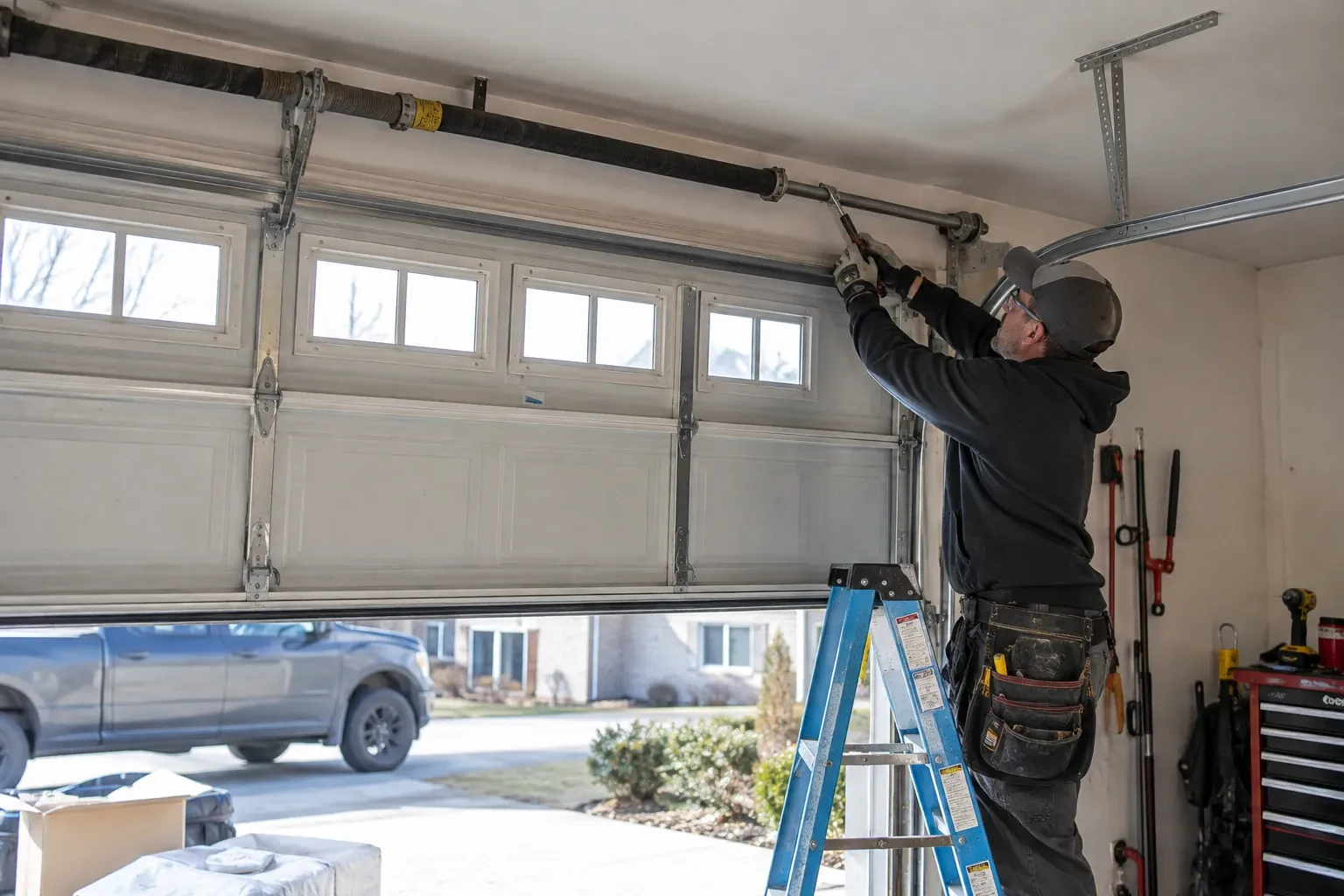
Height and position are measured, not guessed. The handle should hang no more than about 1.8 metres above the floor so a person standing on the slab can reach it, and it should clear the roof and antenna of the vehicle parked beneath. The technician also looks at what surrounds it: shelving, bikes on hooks, a storage loft, a cord tied up around the rail by a previous owner. A handle nobody can find in the dark is as good as no handle at all, so obstructions and a cord that was shortened after a door change are recorded as part of the fault, not as clutter.
Fitting or repairing the outside key release
For a garage with no other way in, an outside release is fitted or repaired. A hole is cut for the cylinder where the kit and door call for it, the top section on a sectional door or mid-height on others, the lock is mounted with its plate, and a cable is run from the back of the cylinder to the release lever on the trolley, clear of the section joints and the top bracket as the door bends into the track. The cable is set with slack enough that turning the key and pulling the cylinder throws the lever fully. A seized cylinder is replaced, a stretched cable re-set or renewed, and two keys are handed over.
A record of what was done
You receive a short note: the opener model, which release parts were replaced, the handle height as set, whether the trolley was freed or renewed, what the travel and tension settings are now, and whether an outside release was fitted. Keep it with the house papers. It tells the next technician what is on the ceiling, gives a buyer confidence the door has been cared for, and saves looking up the model when a replacement rope or key is needed years from now. Old parts are left with you or removed, whichever you prefer.
Emergency Release Repair
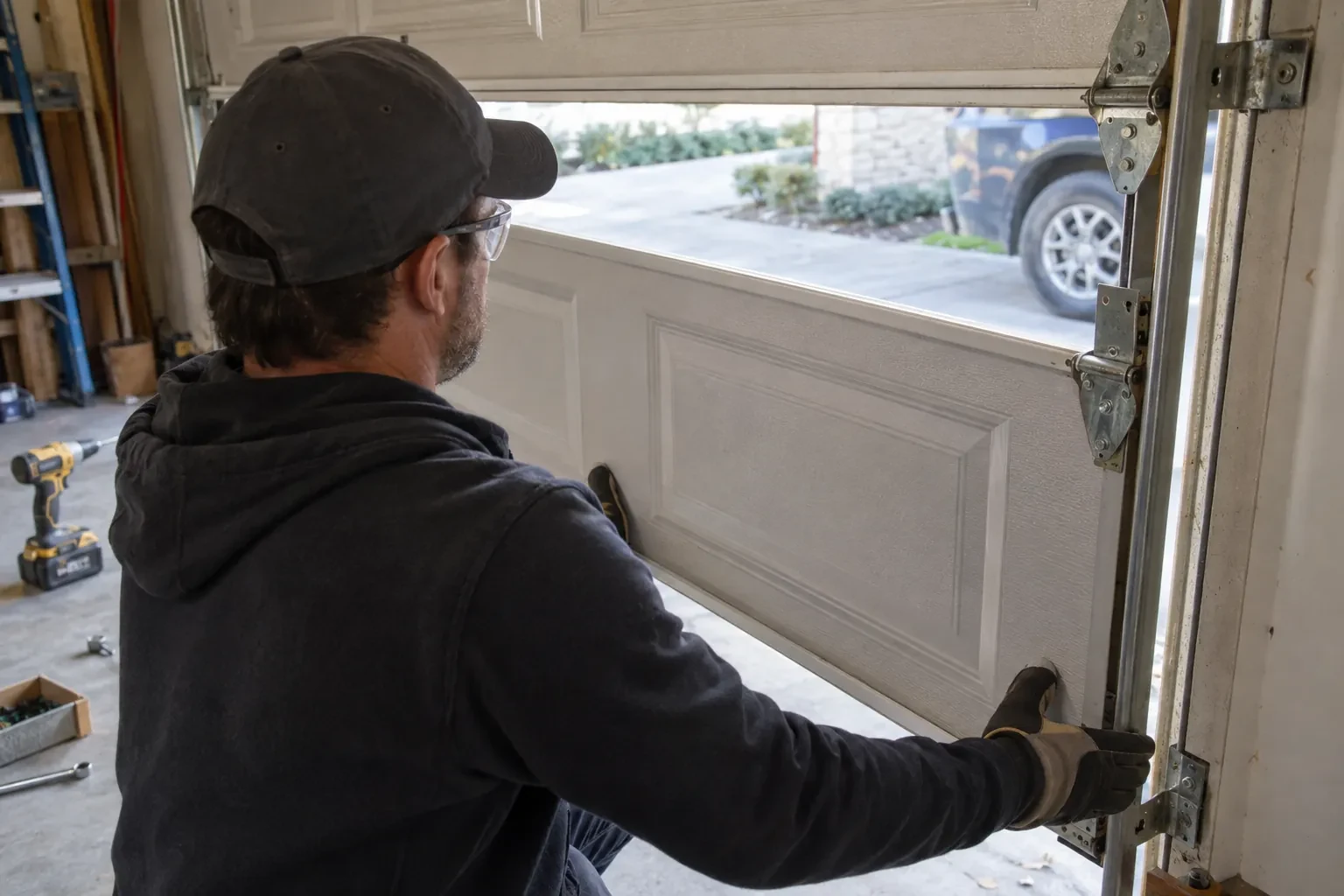
In the van
Rope and red handle kit
Dry lock lubricant and de-icer
Track clamps to hold the door
Release lever and spring
Chain or belt tension hardware
Emergency Release Repair
What affects the quote
Travel and tension reset
Where the trolley was freed or swapped, the chain or belt is re-tensioned and the travel limits are reset, then the reversal tests repeated. That setup time is part of the job and shown as such.
Damage from a door that dropped
A release pulled on an unbalanced open door can bend the arm, the carriage, a bracket or a panel. Anything that took the impact is listed on its own once it has been seen.
Extra keys and a lockbox
Two keys come with an outside release. Additional keys cut for family members, or a small lockbox for the spare, are small add-ons listed as separate lines.
What to have ready
- Has the door or the opener been replaced since the release was last used?
- Is there a small keyed lock near the top of the door outside, and do you have its key?
- Does the garage have a side door or a door into the house?
Emergency Release Repair: questions
QuestionsWhat exactly is the emergency release on a garage door opener?
It is the manual disconnect between the opener and the door: a red handle on a cord below the rail, connected to a lever on the trolley. Pull it and the trolley lets go of the door so you can move the door by hand, for instance during a power outage. Push the lever back, or run the opener, and the two reconnect. It is required on residential openers, coloured red so it stands out from everything else overhead.
Should I test the release regularly?
Once a month is the industry rhythm for the door and opener, and the release fits into it. With the door closed, pull the handle, raise the door by hand to about halfway, feel that it moves freely and holds, then lower it and reconnect. It takes a minute and tells you two things: the release works and the door is balanced. Follow with the 2x4 and beam reversal checks so the whole system is proven together.
The motor hums and the trolley is jammed at the end of the rail. What happened?
The trolley has been driven into the stop bolt or stop tab, usually because the travel limit let it run too far. The technician frees it by pulling the release, slackening the chain or belt a few turns, running the motor so the trolley walks off the stop, then correcting the travel limit and re-tensioning the drive. The reversal tests are repeated afterwards, since the limits were changed.
Related services
- Chain-Drive Opener RepairHalfway up, the door lurches.
- Belt-Drive Opener RepairPress the remote and the motor runs its full cycle, lights on, the usual whir, but the door does not move a centimetre.
- Garage Door Opener ReplacementThe remotes only work from the end of the driveway now, and one of them disappeared with a set of keys last month.