Springs · Aurora
Extension Spring Replacement
The home inspector's report on the house you are buying flags the garage door: extension springs with no safety cable running through them, coils showing rust, and a door that sank when he lifted it partway.
In plain words
Extension springs are common on the detached garages behind older houses, where a low ceiling left no room for a torsion shaft, and those garages are rarely heated. Damp summers, hard frosts and salt carried in on the car pit the spring wire over the years, and a fatigued spring most often lets go on a cold morning when the steel is stiffest. Replacement fits a new pair rated for the door, renews the pulleys and cables that have rusted alongside them, adds containment cables where the original installation never had any, and leaves a door that lifts easily by hand when the power is out.
How the visit goesThe door climbs with the left corner ahead of the right, then twists as it turns into the ceiling track. Looking up, the spring on the right side is stretched longer than its partner, with daylight showing between the coils.
Extension Spring Replacement
How the visit goes
Containment cables, present or missing
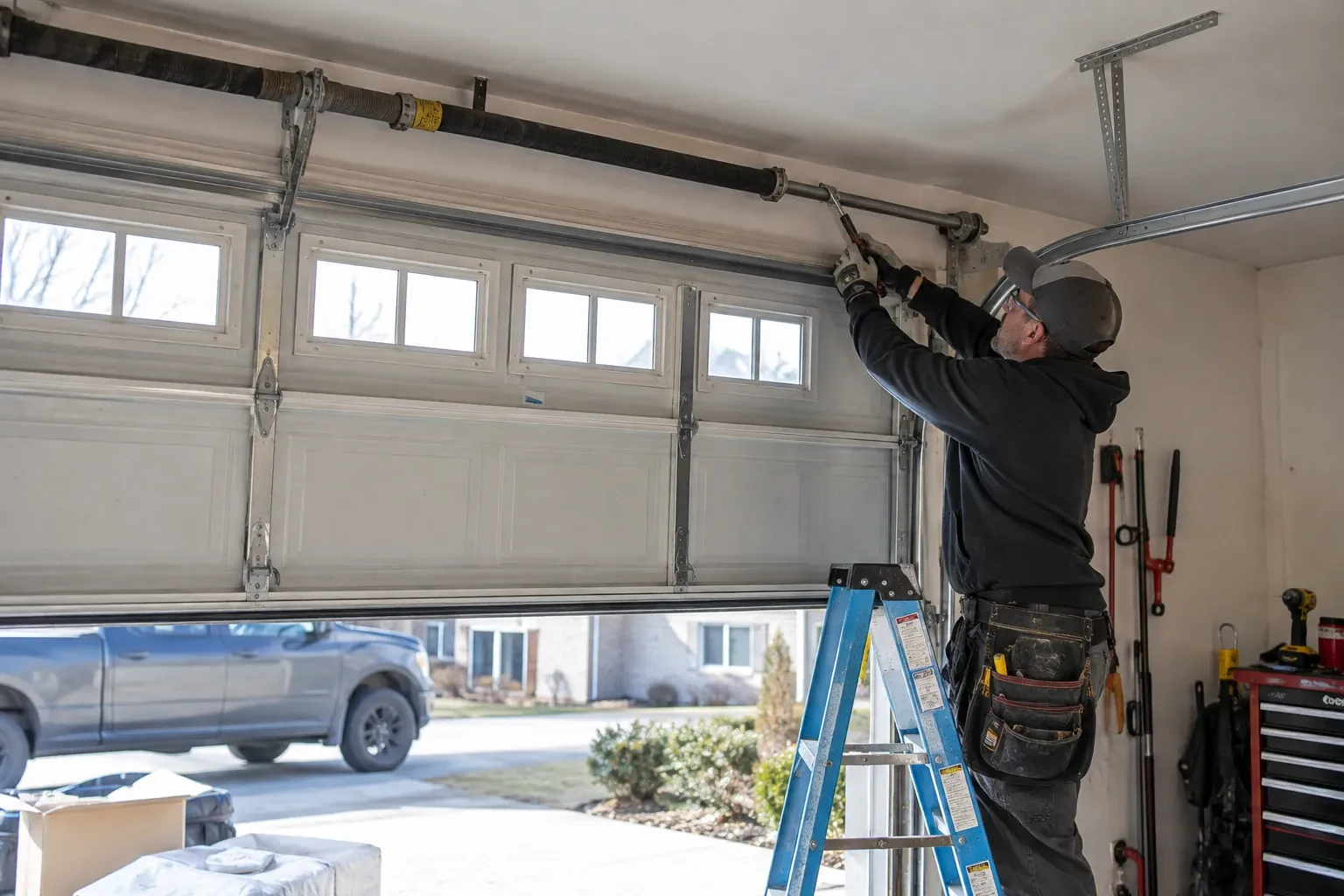
The question the industry's own inspection checklist asks of every extension-spring door is whether each spring has a cable running through its centre, anchored at both ends. The technician checks for it on both sides, then checks its condition: a cable that is frayed, kinked, anchored to a loose screw or simply tied off to the hanger is not doing its job. Doors installed decades ago often have none at all, and doors that had a spring changed by a previous owner sometimes have one side fitted and one forgotten. Fresh containment cables go on with the new springs, and their anchor points are set into solid framing so that a spring which breaks stays on its cable.
Taking the old springs down
With the door open and clamped, each old spring is nearly slack, and removal is straightforward. The technician unhooks the lift cable from its S-hook or clip at the front, which lets the spring's pulley end drop free, then lifts the rear loop off the hanger. The old containment cable is unclipped from its anchors and pulled out of the coil. On a door with a broken spring, the two halves are gathered and the containment cable, if there was one, is inspected for the marks of having done its job. Everything that comes down is laid out on the floor so the old spring can be measured against its replacement and you can see the wear.
Lubrication that keeps the new set turning
Twice a year, in spring and before winter, a can of garage-door lubricant does most of the maintenance the springs need. Spray a light coat along each extension spring, working from the hanger to the pulley; it slows rust in a damp garage and quiets the coils. Put a drop on each pulley axle and on the bolts through the pulley forks, then on the hinge pins and roller stems. Leave the tracks dry and wipe them clean, since grease there collects grit and stops rollers rolling. Heavy grease and general-purpose oil are avoided on the springs because they hold moisture against the wire. Run the door a few times afterwards to spread the film.
Extension Spring Replacement
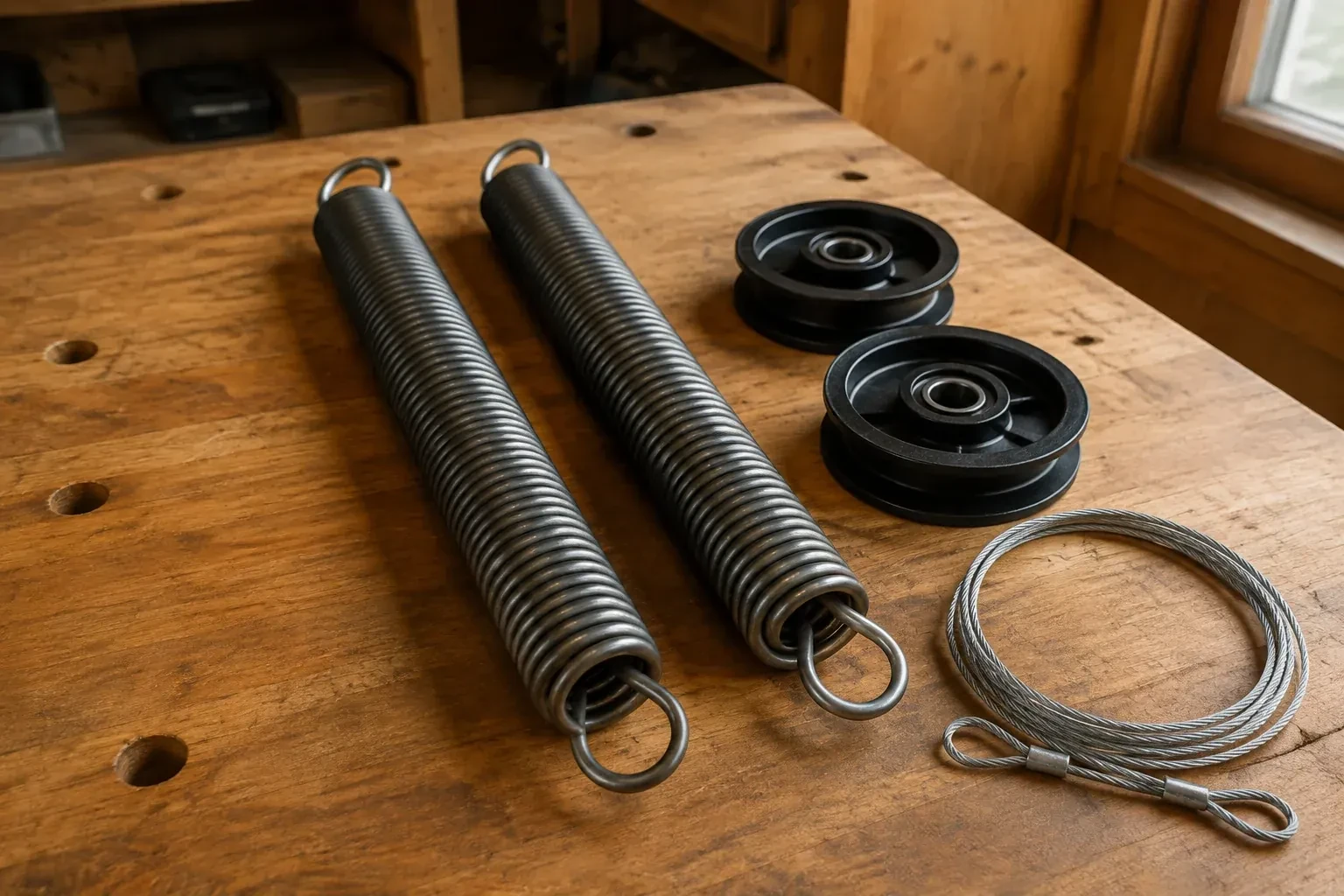
In the van
Containment (safety) cables
Track clamps or locking pliers
Door-weighing scale
Replacement rollers and hinges
Lift cables
Extension Spring Replacement
What affects the quote
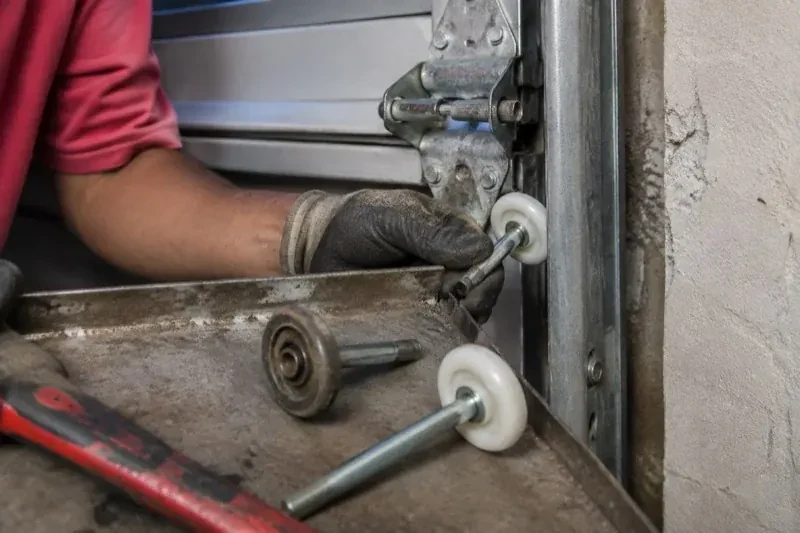
Rollers, hinges and bottom brackets found worn
Cracked roller wheels, split hinges or a bottom bracket rusted at the cable pin are pointed out during the inspection and offered as optional items, since the door is already open and secured.
Converting to torsion instead
Where the garage has the headroom, some owners take the opportunity to move to a torsion system. That is a different job with different hardware and is quoted as its own option.
Corroded fasteners
In an unheated garage the bolts through pulley forks and hanger brackets rust solid; freeing or cutting them and fitting new hardware takes time and shows in the parts list.
What to have ready
- Does the door drop the last bit, or drift up on its own?
- Is there anything stored beside the tracks or under the springs?
- Is a spring broken in two, hanging loose, or just looking stretched?
Extension Spring Replacement: questions
QuestionsThe door creeps open on its own. Is that a spring problem?
Usually, yes. A door that rises from the floor or from halfway without help has springs pulling harder than the door weighs, which happens when a heavier-rated pair was fitted, when the hooks were set with too much stretch, or when a door has been made lighter by a panel change. It also puts strain on the opener, which has to hold the door down. Weighing the door and fitting the correct rating, set evenly, settles it.
What does the paint colour on the end of the spring mean?
Manufacturers dab a colour on the end coil to indicate the spring's weight rating, which is a handy starting point. It is not the final word: a faded or repainted end coil tells you little, and the pair on an older door may have been a near match rather than the right one. The technician treats the colour as a hint and confirms the rating from the door's measured weight and the spring's own dimensions.
Can I use the door as soon as the work is done?
Yes. The last steps of the visit are the balance test by hand, several full cycles under power and the opener's reversal checks, so the door is ready for normal use when the technician leaves. New springs need no settling period. It is worth running it yourself once or twice while the technician is still there, so you know what a properly balanced door sounds and feels like from now on.
Related services
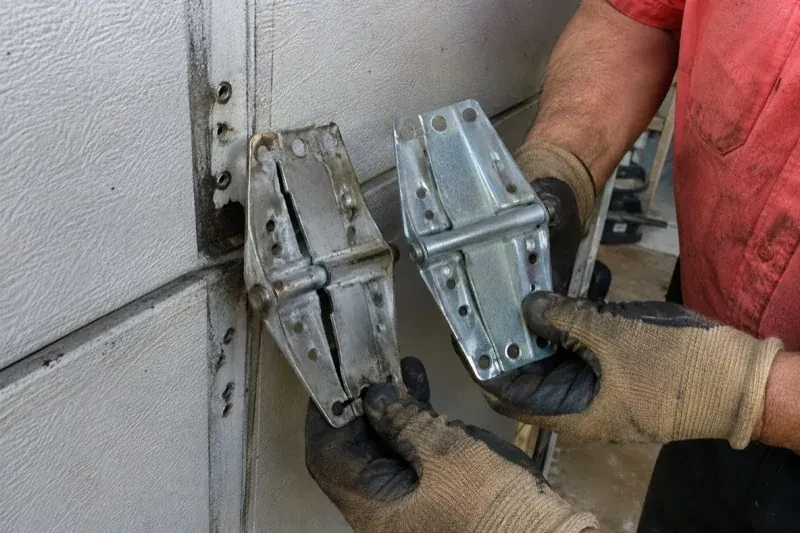
- Garage Door Hinge ReplacementThe roller at the top of the second panel is leaning outward and only half of the wheel is still in the track.
- Garage Door Track Repair or ReplacementBacking out this morning, the mirror caught the track beside the door.
- Garage Door Cable ReplacementAfter years of slushy winters the cables look thinner near the bottom brackets, with rust streaks running down the door where they attach.