New Doors · Aurora
High-Lift Garage Door Conversion in Aurora
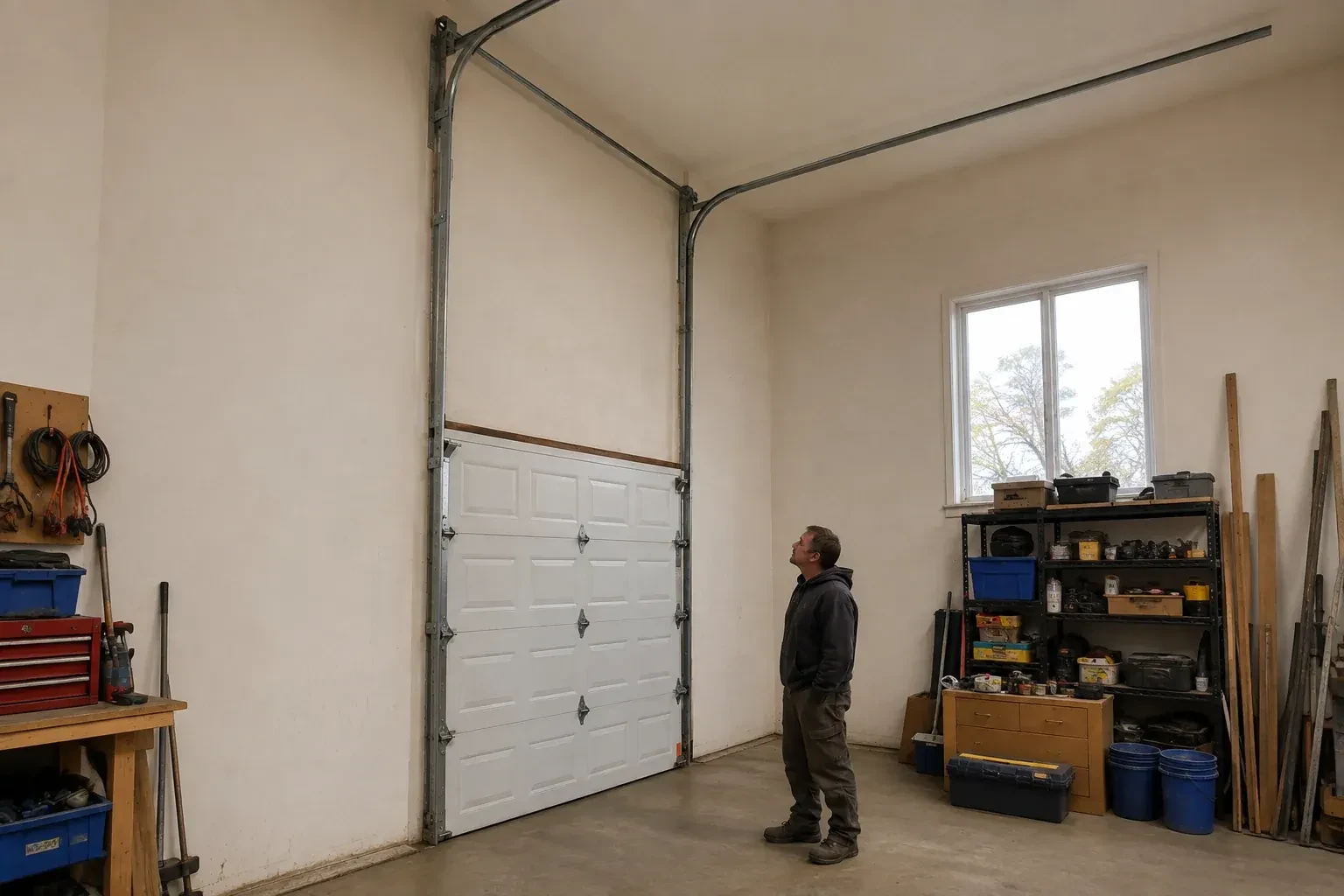
You want to keep the sectional door, but its standard track layout conflicts with a renovation above the parking bay.
In plain words
A high-lift conversion changes where a sectional door turns from vertical to horizontal travel. Extended vertical track carries the panels farther up the wall, then a new transition guides them toward the ceiling. Because that geometry changes cable movement and the force needed through the cycle, the conversion normally includes matched drums, cables and torsion springs rather than track alone. The result is more usable space beneath the open door for a vehicle lift or another planned use, provided measurements, structure and operator placement support the design.
How the visit goesThe door works well, although the open panels sit far beneath a sloped or raised ceiling. You are exploring whether the track, counterbalance and operator can be redesigned to follow the room more closely.
High-Lift Garage Door Conversion
How the visit goes
Map every overhead obstruction
A laser and tape are used to build a three-dimensional picture of the bay. Beams, bulkheads, ducts, pipes, lights, attic access, ceiling slopes and roof framing all affect where tracks and panels can travel. Sideroom and backroom matter alongside headroom, since the raised transition still needs space behind the opening. The map also reserves access around springs, bearings and the operator. With those boundaries recorded, the proposed route can weave through the available volume without trading new clearance for a conflict elsewhere.
Secure the door before changing its geometry
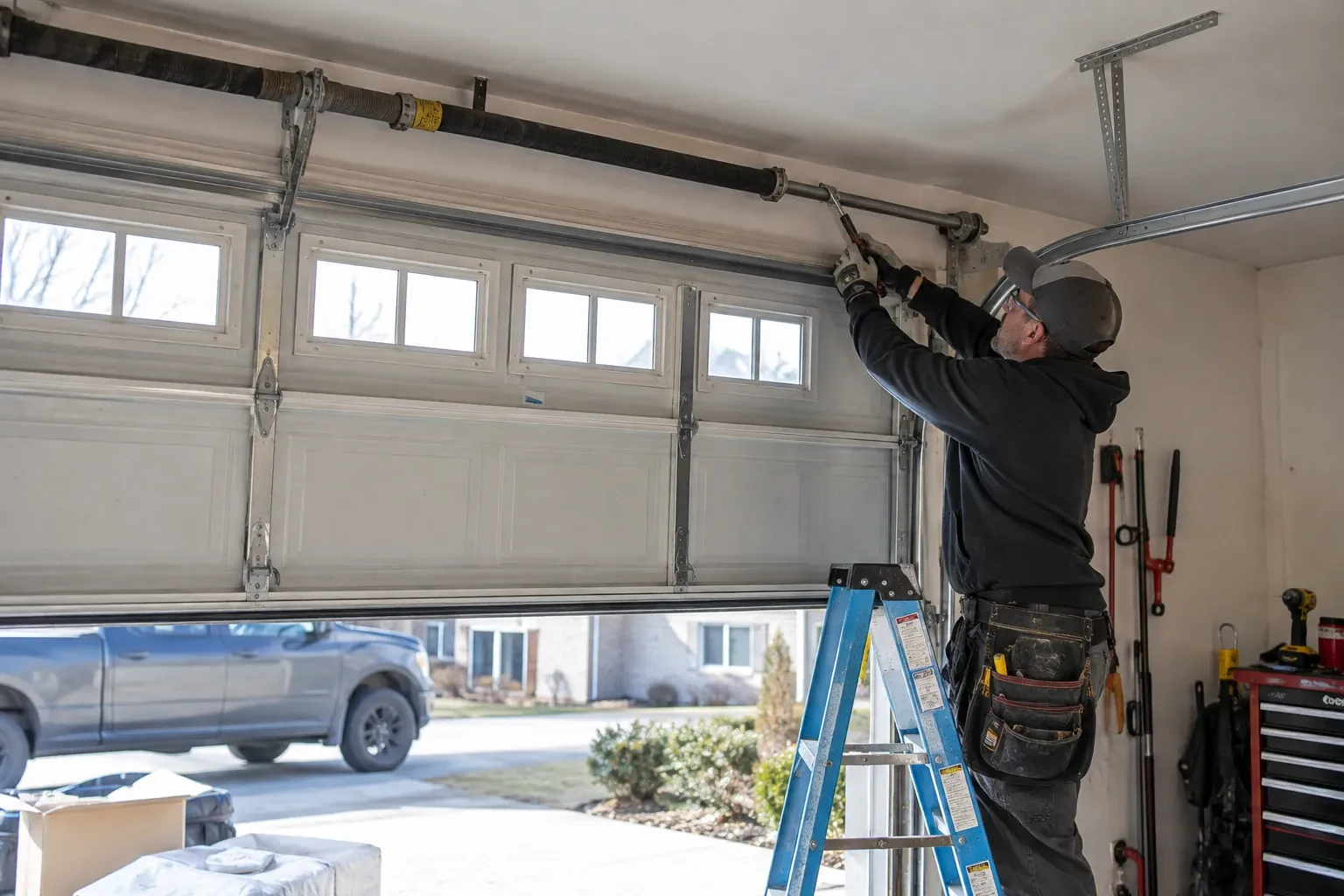
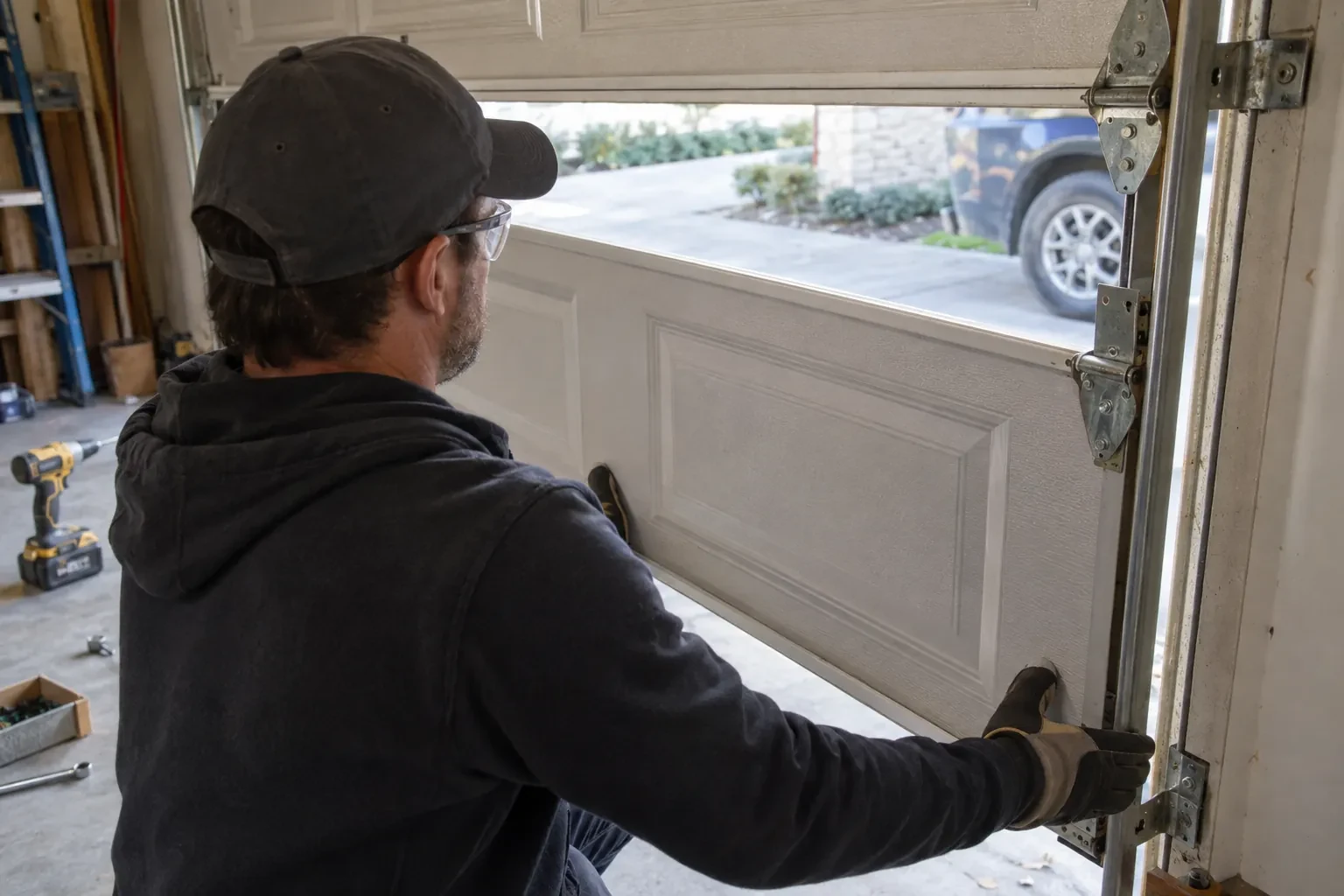
Conversion begins with the door closed, the work area organized and the panels firmly supported. The operator is disconnected from door movement, and the spring system is released through controlled professional procedures. Clamps and lifting equipment keep the door from shifting while loaded components are removed. This deliberate setup gives technicians stable access to tracks, cables, drums and shaft hardware. It also protects the reusable sections and creates a known starting condition for building the new path rather than dismantling parts around an unsupported door.
A balanced door you can understand
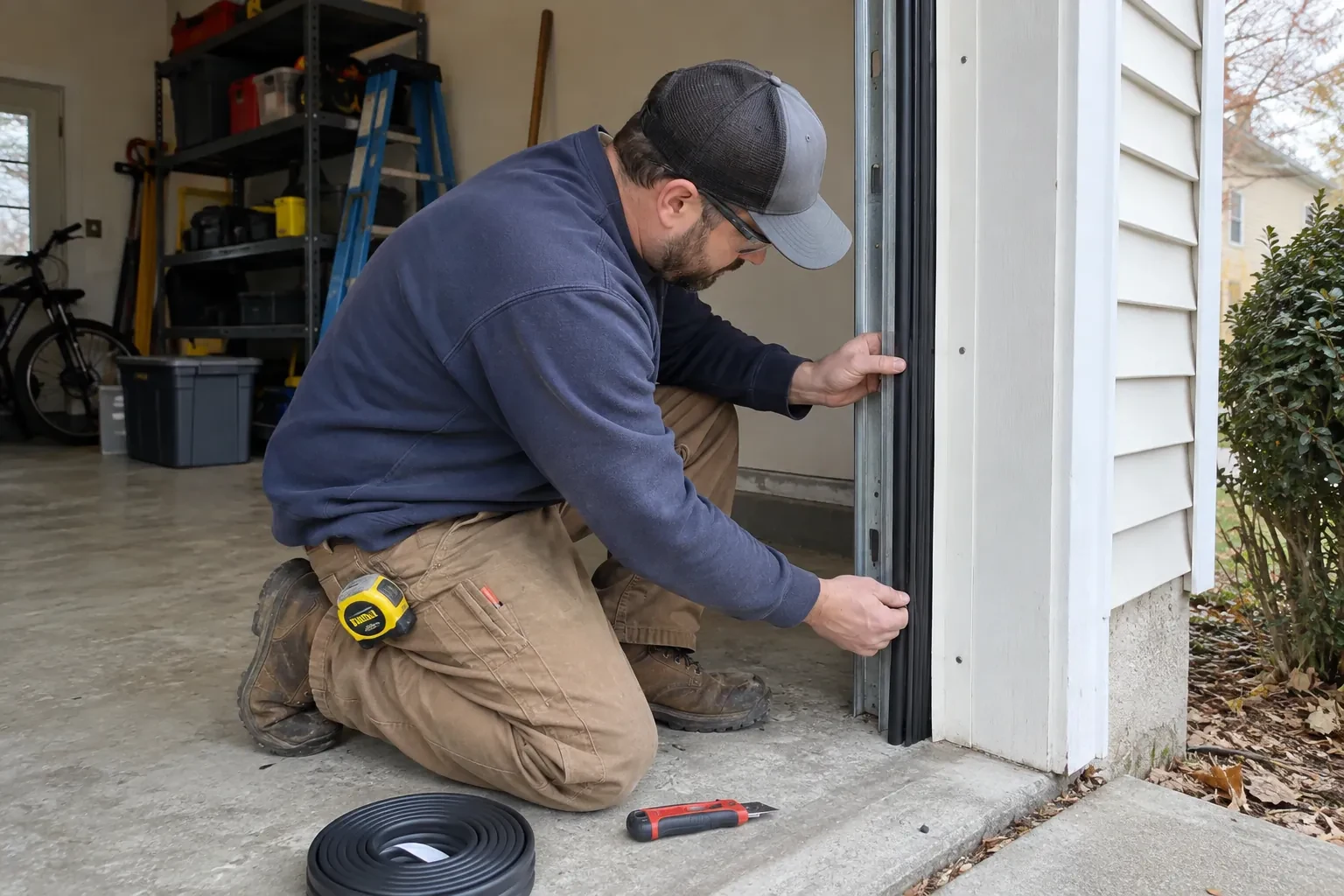
You receive a demonstration of powered operation and the intended manual-release function. With the operator disengaged under the proper conditions, the converted door should feel controlled rather than depending on the motor to overcome its weight. The technician explains what normal movement sounds and looks like, including even cables and a level bottom edge. Knowing that baseline makes future changes easier to notice. The opener is then re-engaged, and its limits and applicable protective functions are shown during a complete closing and opening cycle.
High-Lift Garage Door Conversion
In the van
Transition track sections
Centre bearing support
Track and flag brackets
End bearing plates
Braced back hangs
High-Lift Garage Door Conversion
What affects the quote
Opener compatibility and placement
Keeping an approved existing arrangement, repositioning compatible equipment or fitting another operator setup changes the parts, controls, mounting and commissioning included.
Ceiling and wall obstructions
Beams, ducts, pipes, lights, attic openings and sloped ceilings can change track routing, support placement and the amount of usable clearance delivered.
Door size and actual weight
Panel construction, reinforcement, glazing and added finishes influence the measured load used to select drums, cables, torsion springs and shaft components.
What to have ready
- Do you have vehicle-lift drawings or planned equipment dimensions?
- Are there beams, ducts, pipes, lights or attic access above the bay?
- What door material, insulation and window configuration is installed?
High-Lift Garage Door Conversion: questions
QuestionsWhich parts are commonly replaced in a conversion?
Typical system changes include vertical and transition track, raised horizontal track supports, high-lift drums, longer lift cables, calculated torsion springs and related shaft or bearing hardware. Top fixtures, rollers, brackets and the operator arrangement may also change according to the design. The final list follows measured compatibility rather than a universal kit applied to every door.
Will the conversion make the garage door louder?
A properly aligned system should travel smoothly, although its sound may differ because rollers follow a longer vertical route and the operator arrangement may change. Track spacing, roller condition, hinge movement, spring setup and secure supports all influence noise. Final cycling establishes a normal sound baseline, while care follows the lubrication guidance for the installed door components.
What records should I receive after the work?
Keep a record of the high-lift dimension, final open-door clearance, track arrangement, drums, cables, spring specification, shaft parts and operator configuration. Component labels, manuals, layout notes and completed test results are also useful. These details help future service and allow other garage projects to respect the door's movement, attachment and access requirements.
Related services
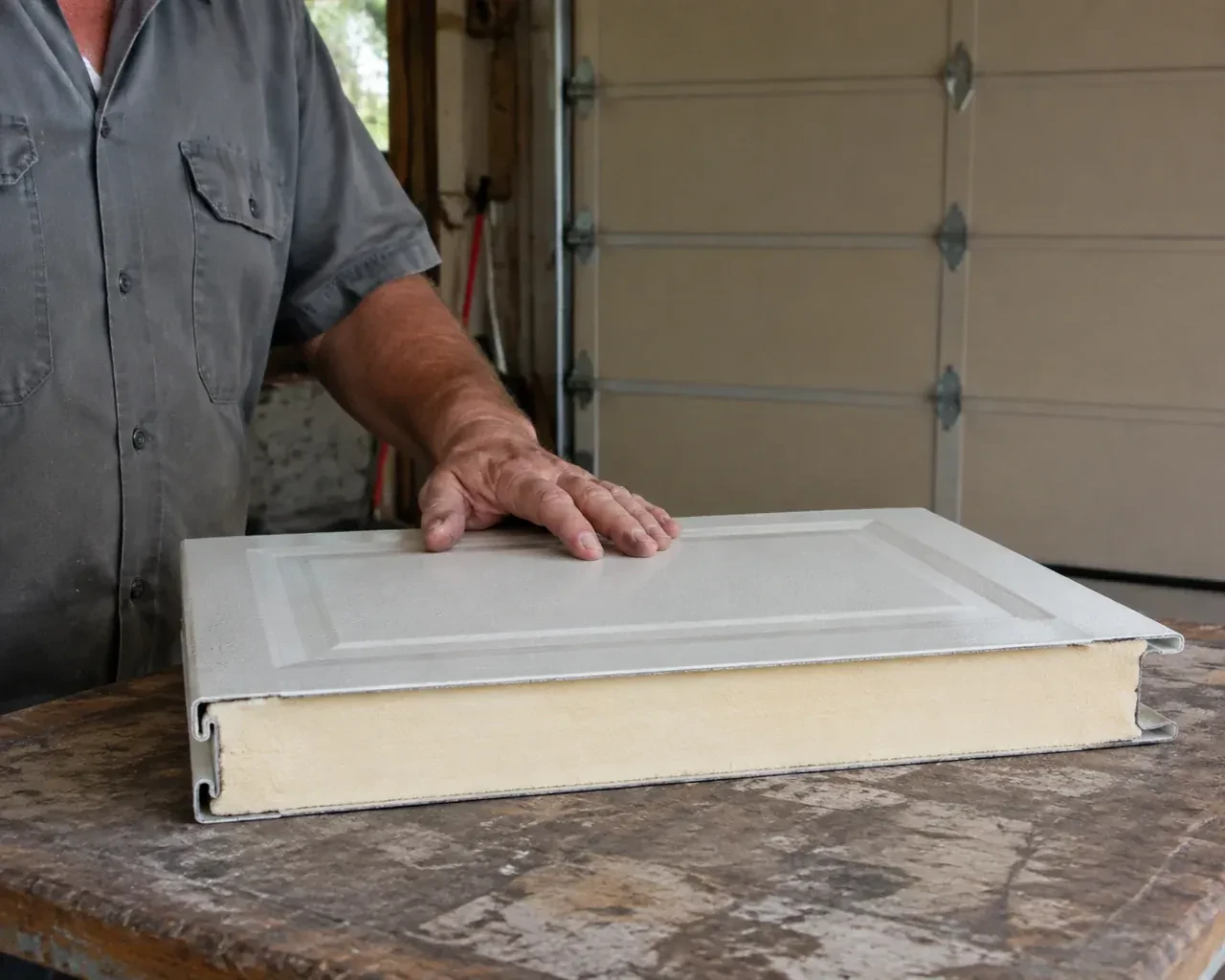
- Insulated Steel Garage Door InstallationThe opener strains as the heavy older door starts upward, and manual movement feels uneven.
- Wind-Rated Garage Door ReplacementThe current double door shudders when pressure changes outside, and daylight appears briefly along one edge.
- Carriage-House Garage Door InstallationA front elevation update has brought new trim, lighting and a deeper colour palette, leaving the garage door as the remaining piece.