Repairs · Aurora
Garage Door Bottom Seal Replacement in Aurora
The gap under the door is a finger wide at one end and nothing at the other.
In plain words
What you have afterwards is a door that closes onto a single soft line of contact from jamb to jamb. Daylight under the door is much reduced, the draft across the floor eases, wind-blown leaves and snow are kept out more effectively, and the tighter gap makes the route in harder for mice. The opener has been reset so the door lands gently on the new strip instead of pressing it flat. You also leave knowing the seal's profile and size, which makes the next replacement a matter of one phone call, and a couple of simple habits for winter that keep the new seal from freezing to the floor.
How the visit goesOne end of the bottom seal has slipped out of its channel and hangs down like a loose shoelace. Each time the door closes it folds under, each time it opens it flaps, and the gap beside it keeps growing.
Garage Door Bottom Seal Replacement
How the visit goes
Retainer condition and fasteners
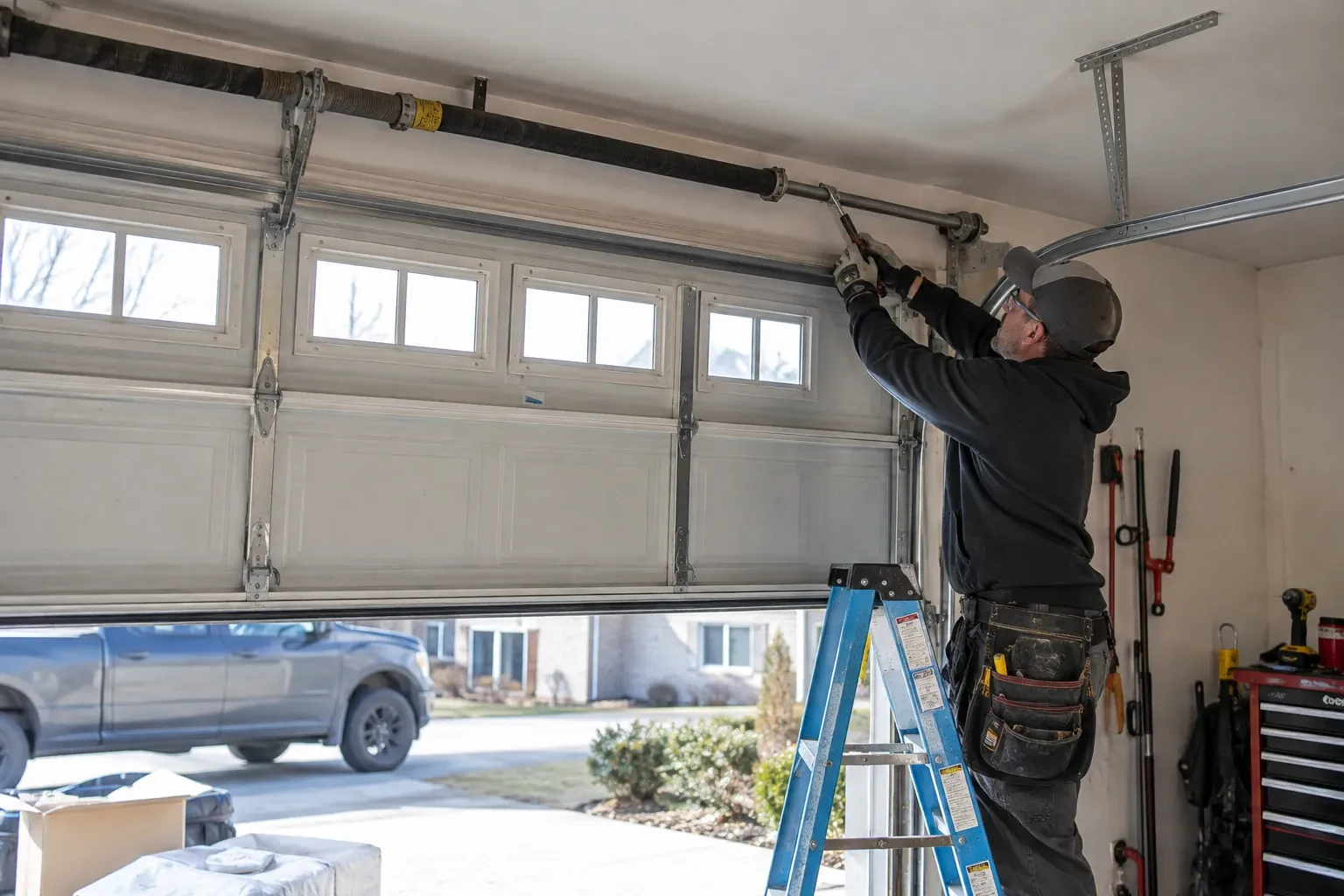
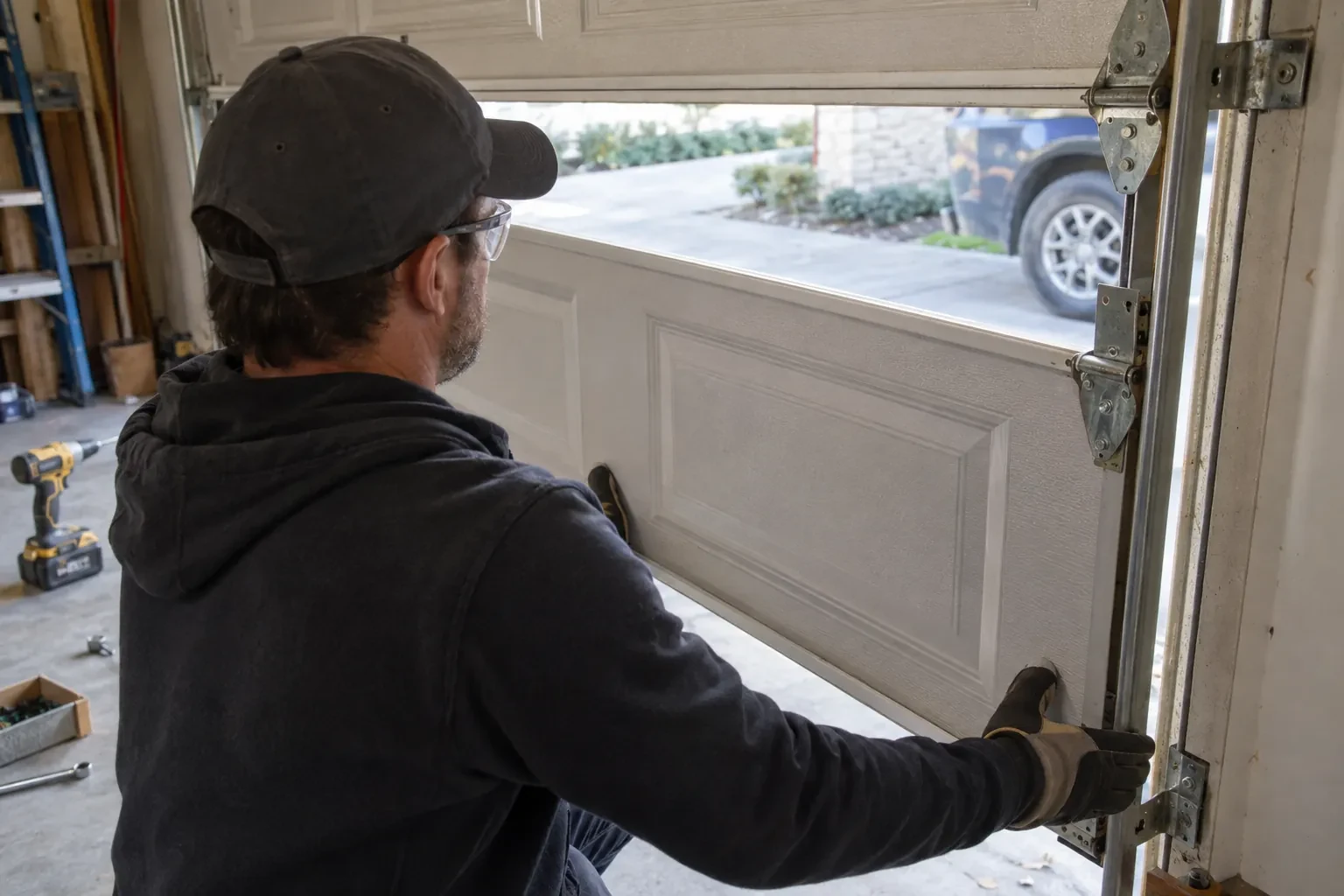
The aluminum or plastic retainer that grips the seal is inspected along its full length. The technician looks for kinks where something struck it, channels that have been spread open, corrosion where salt has sat, and screws that have rusted or pulled loose from the rail. A retainer that is straight and tight is reused; one that is damaged is measured for a matching replacement so both channels line up with the new seal. On doors where the retainer is part of a plastic bottom cap, a cracked cap is noted and a screw-on aluminum retainer is offered as the practical repair.
Taking the old seal out
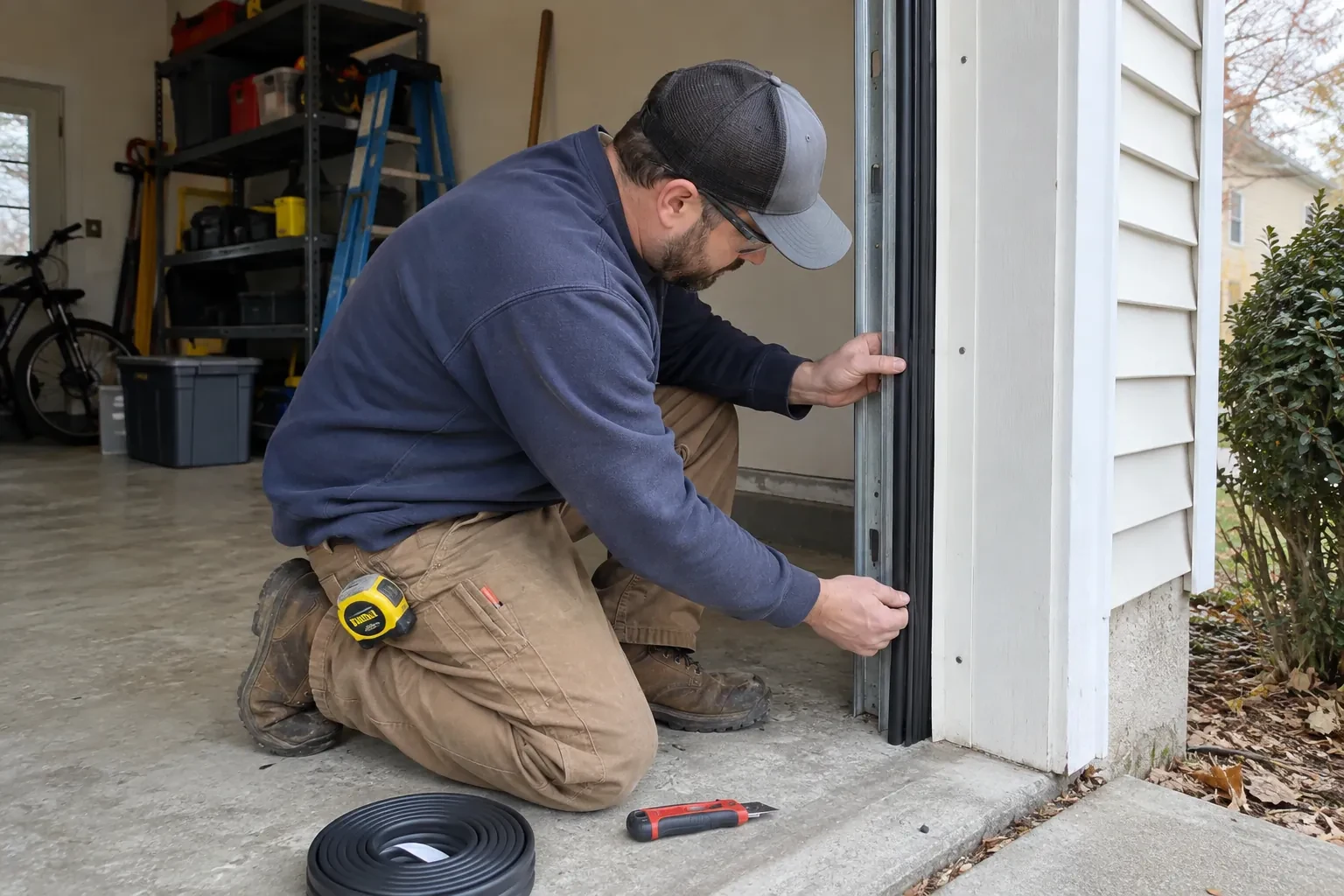
With the door secured, the ends of the old strip are freed from any caps or folds and the seal is drawn out of its channels from one end. A supple seal slides; a hardened one is coaxed with a flat blade and a little silicone, or cut into short lengths and removed a piece at a time. Old nails come out of a wood rail with a claw. The channels are then cleaned of grit, rust flakes, salt crust and any remnants of the previous strip with a wire brush and a scraper, because a clean channel is what lets the new seal feed through without tearing.
A door that meets the floor in one line
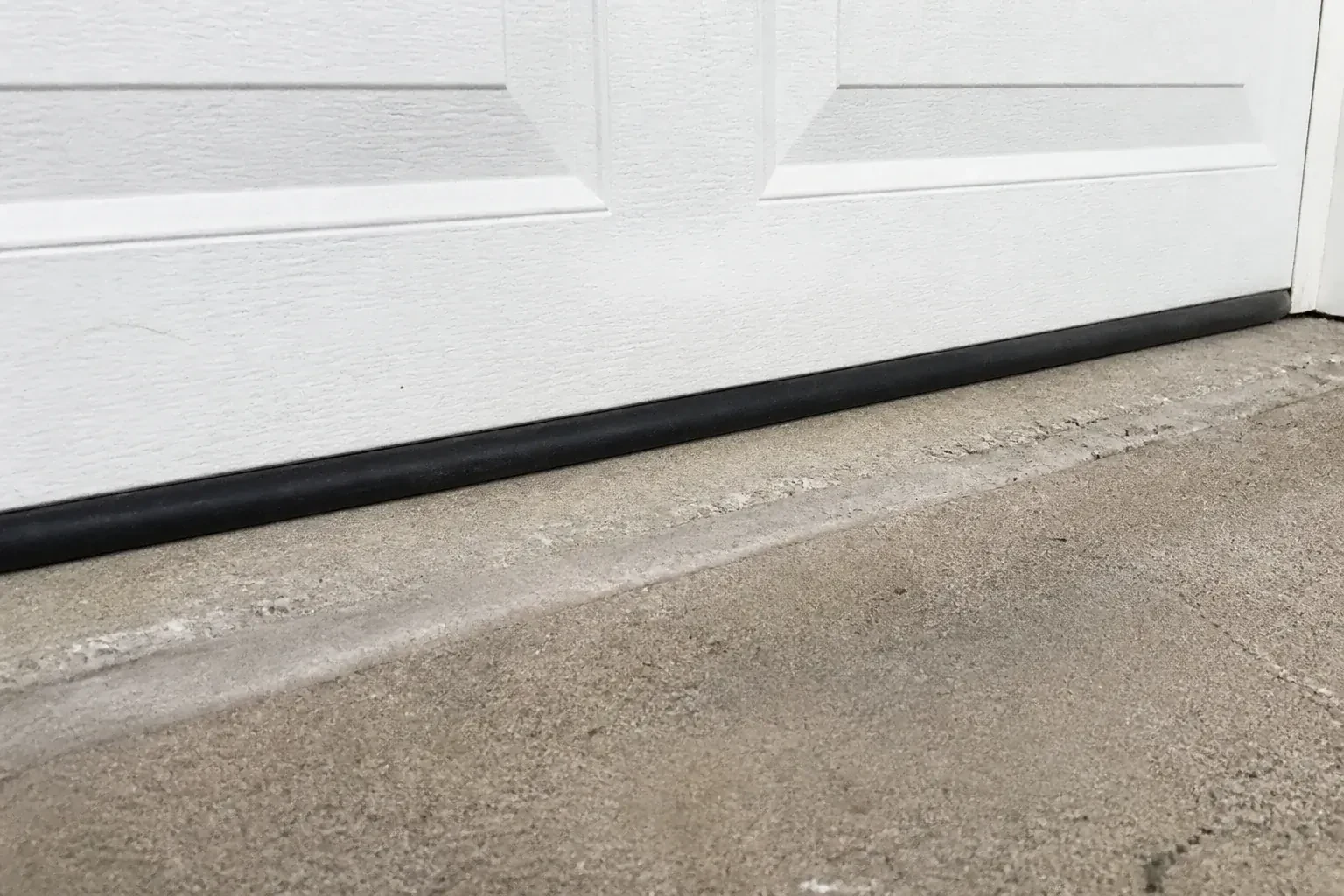
The first thing you notice is the absence of daylight. With the door closed and the lights off, the floor line is dark from one jamb to the other, and the draft that used to move across the floor is much reduced. The door lands softly, because the opener now stops when the seal is gently compressed rather than driving the section into the concrete. Leaves, grit and drifting snow are kept out far more often. If you crouch and look, the new bulb sits evenly along the slab, filling the low corner the old strip used to hover above.
Garage Door Bottom Seal Replacement
In the van
Bulb or U-style bottom seal
Nail-on vinyl strip for wood doors
Threshold seal and adhesive
T-style bottom seal
Track clamps
Garage Door Bottom Seal Replacement
What affects the quote
Condition of the old seal
A supple strip slides out in a minute. One that has hardened and seized in its channel, or been torn and frozen into the corners, has to come out in pieces, which takes longer.
Material chosen
Standard vinyl, cold-flexible rubber and silicone are priced differently. Where the door faces the weather, the technician explains what the step up buys in flexibility and working life.
Door width
A single door takes a shorter length of seal than a double, and the widest doors need more time to feed the strip evenly across. The quote starts from the width measured on the day.
What to have ready
- Does the door stop short of the floor or reverse before it closes?
- Can you send a photo of the end of the bottom section showing the retainer?
- What is getting in: light, drafts, water, snow, leaves or pests?
Garage Door Bottom Seal Replacement: questions
QuestionsWhat are bottom seals made of, and which suits cold weather?
Most are vinyl, which resists sun and moisture well but stiffens in deep cold. Rubber compounds stay flexible at low temperatures and follow an uneven floor closely, though they can harden after many years of sun. Silicone stays supple in heat and cold and resists cracking, at a higher cost. For a door that faces the weather, a rubber or silicone profile is usually the sounder long-term choice.
What happens during the visit?
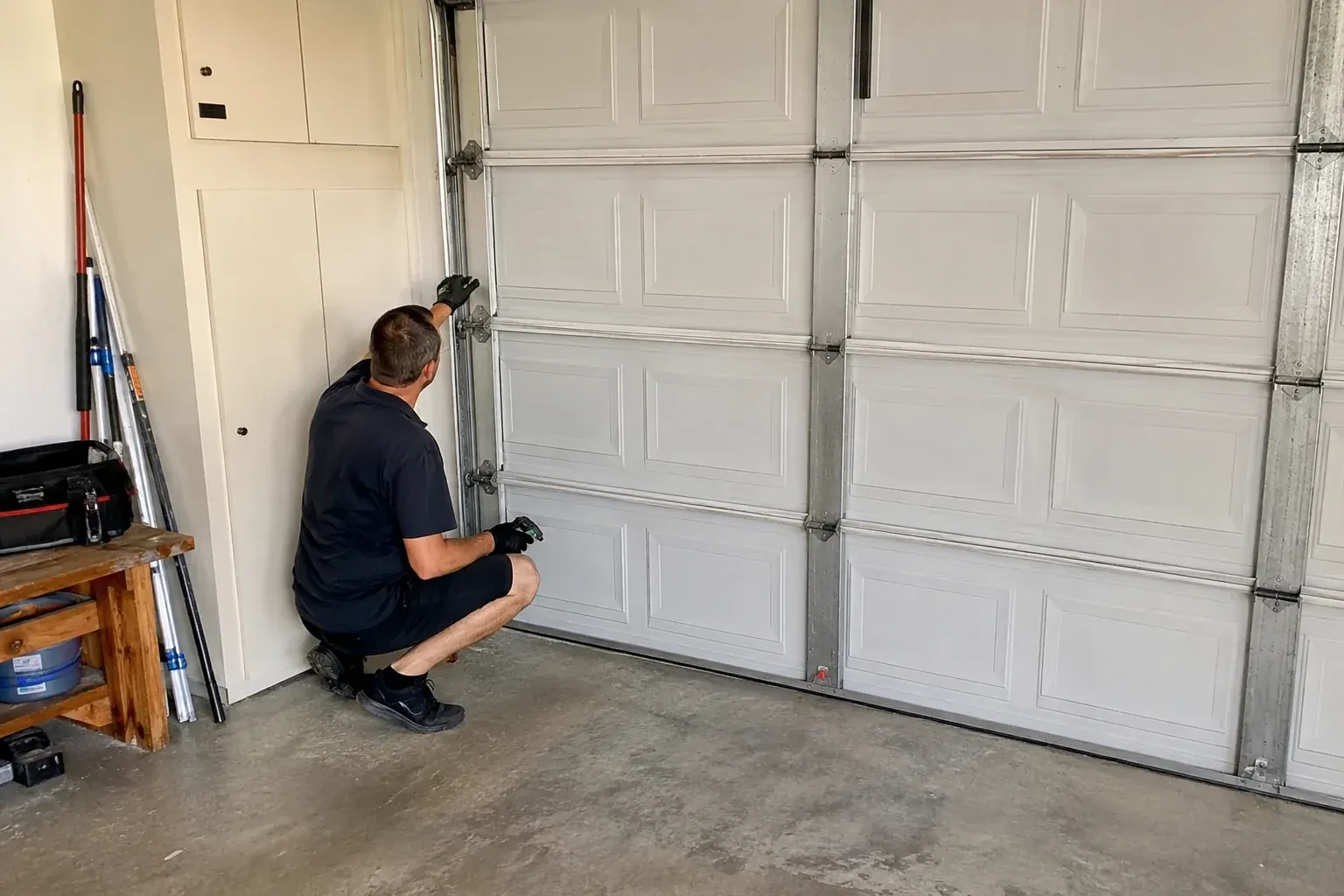
The technician maps the gap with the door closed, checks the door is level and the bottom section straight, and identifies the retainer and profile. The opener is disconnected and the door clamped at working height. The old seal comes out, the channels are cleaned, a new seal is cut and fed in, and any retainer work is done. The door is then closed under power, the opener reset, and the reversing and photo-eye tests run.
Is the seal on an insulated steel door different?
Sometimes. Many insulated doors have the seal channel moulded into a plastic cap that wraps the bottom rail, which takes a specific profile rather than a generic one. If that cap is cracked or the channel has opened, a screw-on aluminum retainer can be fitted over the rail so a standard T-style or bulb seal can be used from then on. Identifying the retainer at the first look settles which route applies.
Related services
- Garage Door Tune-UpEvery morning the door announces itself to the whole street: a long metallic squeal as it climbs, a rattle at the top, and a groan on the way back down.
- Off-Track Garage Door ResetYour car is inside and the door is stuck crooked across the opening.
- Garage Door Panel ReplacementThe top section has developed a bend where the opener arm pulls on it.